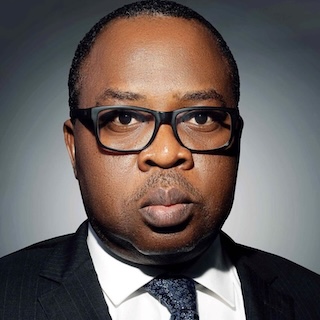
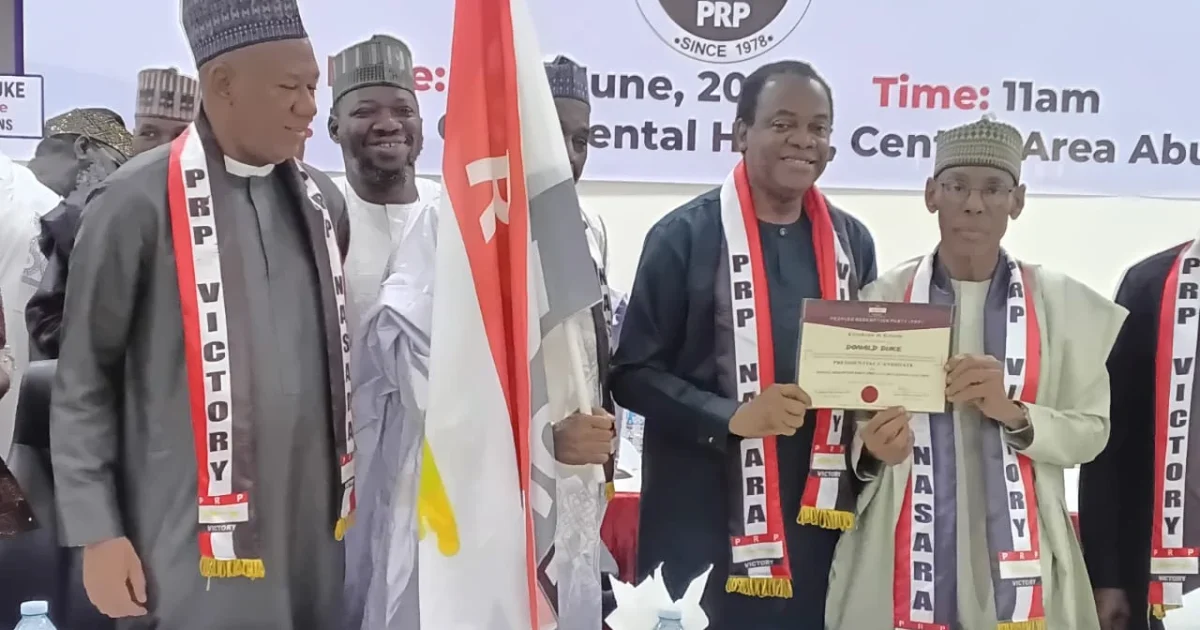
Donald Duke's recent comments about Nigeria's Paris Club debt deal do not match what really happened. In an interview on SYMFONI TV on 22 August 2026, he accused Ngozi Okonjo-Iweala of taking "vain glory" for the debt relief. He said, "It wasn’t her. It was President Obasanjo." He dismissed her work as presidential "runs" and told her not to take credit.
Duke's Selective Memory
Duke's story stops short when it comes to his own role. He recalls going with President Olusegun Obasanjo to debt talks during the early campaign and mentions Tony Blair's support. But he skips over six important years, missing key events like the failed demand for cancellation, the 2000 rescheduling, and the reform program. He ignores the IMF instrument, the unsettled terms in October 2005, and the minister who led Nigeria's delegation when the deal was finally made.
Duke did play a part in the early campaign. The Guardian described him on 15 June 1999 as Nigeria's "leading debt negotiator" and noted Britain's demands for reform. He was quoted as accepting IMF monitoring. But that work was just the beginning and did not lead to cancellation. After Obasanjo pushed Nigeria's case in Washington, President Bill Clinton told him in October 1999 that Nigeria was not eligible for total cancellation and that rescheduling was the only option.
When Nigeria went back to the Paris Club in December 2000, the Club's official account shows a US$24.297 billion rescheduling under a delegation led by Chief Philip Asiodu. Duke's version misleadingly combines an unsuccessful appeal and a later rescheduling into the cancellation achieved five years later. Neither was a cancellation.
Obasanjo later said about that first-term effort that it had attracted "sympathetic hearings, but not much action." After he was re-elected, he sought out Okonjo-Iweala and convinced World Bank President James Wolfensohn to release her to Nigeria. By then, she had spent 21 years at the Bank and was vice-president. Nigeria's first female finance minister was not brought in just to carry messages for a finished deal. She was needed because the deal was still unfinished. Her work on the debt started earlier. As she wrote in her published account, Obasanjo brought her home in 2000 to sort out Nigeria's debt records and set up the Debt Management Office, which was officially created on 4 October that year.
Challenges and Creditor Trust
The problem she faced was not a lack of presidential goodwill but distrust from creditors. Euromoney’s report from that time shows that Britain, France, and Germany were not sure that debt relief for an oil-producing country like Nigeria, with its financial reputation, would work without economic reforms. The economic team she formed proposed a fiscal rule based on oil prices, tighter spending, published federal allocations, and bigger reserves. These were not just for show; they provided the fiscal proof Nigeria needed. The IMF country report shows the program and the Policy Support Instrument requested by Okonjo-Iweala and Central Bank Governor Charles Soludo. For 18 months, they carried out a home-grown reform program that the Fund said met its standards for negotiations.
Okonjo-Iweala's work went beyond Abuja. Euromoney tracked six months of talks in Britain with Gordon Brown, Hilary Benn, senior Treasury official Jon Cunliffe, and Tony Blair, plus efforts to secure Nigeria’s IDA-only classification. Britain was Nigeria’s biggest creditor, and Brown helped get other creditors on board. But the Paris Club operates by consensus. Blair could support Nigeria’s case, but he could not decide for the other creditors. Working with Okonjo-Iweala, the Centre for Global Development made the case for reclassification and proposed the discounted buyback. This change, announced in June 2005, allowed substantial negotiations to finally start.
From Agreement to Negotiation
By June 2005, the deal was still not done. The G8 finance ministers said they were "prepared" to support a Paris Club solution. On 29 June, the Paris Club announced a framework in principle and said negotiations would follow after the IMF Policy Support Instrument concluded. Gordon Brown told the House of Commons the next day that negotiations were still going on. The agreement Duke now claims as Obasanjo's completed achievement was still a conditional framework waiting for negotiation.
The main terms were still unclear in October. On 7 October, the IMF listed the cancellation rate, phasing period, and possible trigger clauses as unresolved. These were the important details of the deal, not just a ceremonial task. The Fund approved the Policy Support Instrument only on 17 October, and negotiations began the next day. By the time of the Paris meeting, no one had agreed on how much debt would be cancelled.
The Final Agreement in October 2005
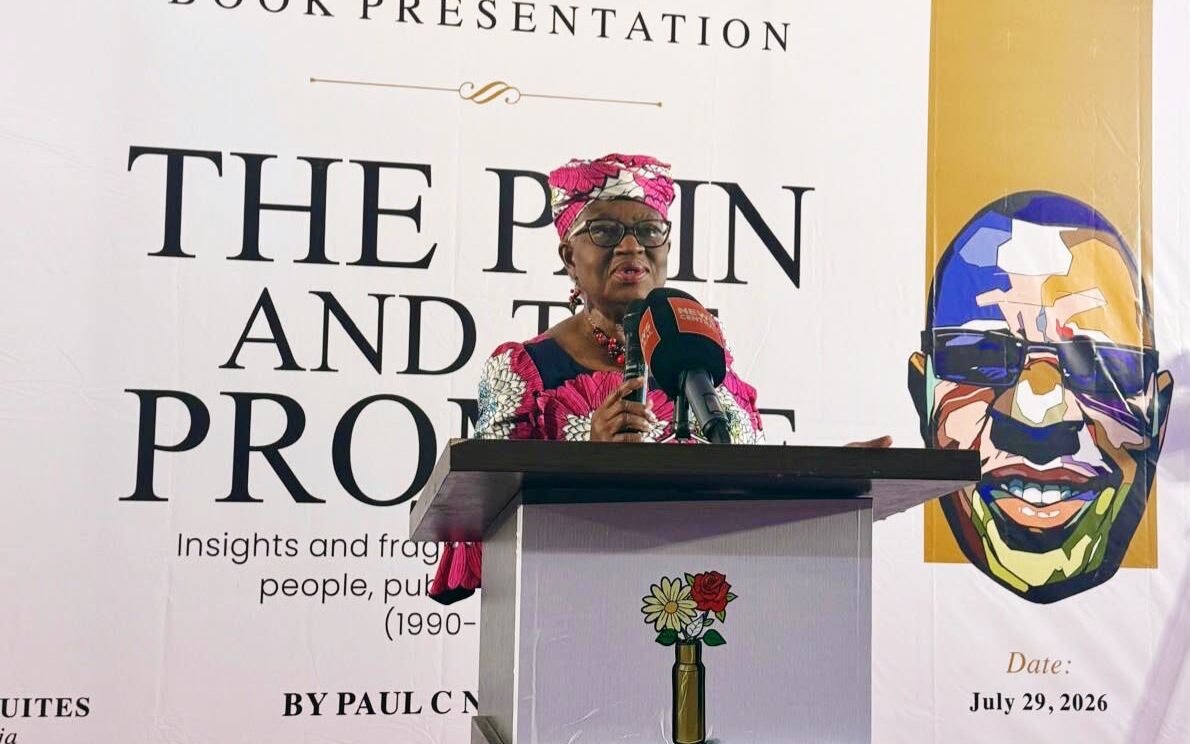
Then came the negotiation that Duke seems to want to forget. The Paris Club's account of the 18, 20 October meeting states that Nigeria's delegation was led by "Mrs Ngozi Okonjo-Iweala, Minister of Finance." It records an agreement that dealt with US$30.066 billion, cancelled about US$18 billion, and required Nigeria to pay roughly US$12.4 billion through clearing arrears and a discounted buyback. The formal buyback cleared about US$7 billion in claims for around US$4.3 billion. The rest of the cash payment cleared arrears and post-cut-off debt. CGD calls it the first discounted buyback in a Paris Club deal. When Nigeria finished the transaction in April 2006, it cleared its Paris Club debt. This is the work Duke belittles as "runs."
Duke's words are disrespectful, but the thought behind them is worse. A president sets policies and ministers carry them out; just because the president has authority does not mean the minister's work disappears. If Duke's idea held, every achievement his government claims would belong solely to him, while every commissioner who worked on it would be seen as just an errand runner. That logic does not hold up.
The Debt Management Office offers a more straightforward and accurate account. It says the deal resulted from "concerted efforts" involving Obasanjo, the Finance Ministry, the DMO, the Economic Management Team, the National Assembly, civil society, and external partners. Charles Soludo and other officials played important roles; Duke had his moment in the early campaign; Okonjo-Iweala led the Finance Ministry’s work and the final delegation. Obasanjo's credit was never in danger and did not need Duke to undermine others' contributions.
Background to Duke's Claims
Duke is selective about Okonjo-Iweala’s 2006 switch from Finance to Foreign Affairs, which he uses to argue that Obasanjo rejected her achievement. Reuters reported that Obasanjo kept her as chair of the Economic Management Team and maintained her oversight of international financial institutions. When she later resigned, Obasanjo praised her World Bank experience and international connections for helping to secure the relief that had "eluded us for so long." The man Duke claims deserves the credit did not support the story Duke now tells.
This disagreement did not start with this interview. When Okonjo-Iweala's memoir mentioned that Duke had advised her against joining Goodluck Jonathan’s government, TheCable reported in 2018 that he called the book "self-laundering," claimed her earlier departure from Finance was a dismissal, and stated she had left Nigeria poorer than she found it. He later told The Africa Report that she had lied. This is not new evidence but an old argument, reheated and presented as history.
Duke's record since leaving Government House makes his attitude almost funny. He sought the PDP presidential nomination in 2007 and failed. In 2018, he left the party for the SDP, survived a legal battle over its presidential ticket, polled 34,746 votes in 2019, and returned to the PDP in 2021. That same year, Okonjo-Iweala became Director-General of the World Trade Organisation. These careers do not compare, and Duke's efforts to downplay hers do not improve his own position.
Duke can keep the argument, but he cannot change the facts.
Drop your comment
No comments yet — be the first to drop the gist 👇