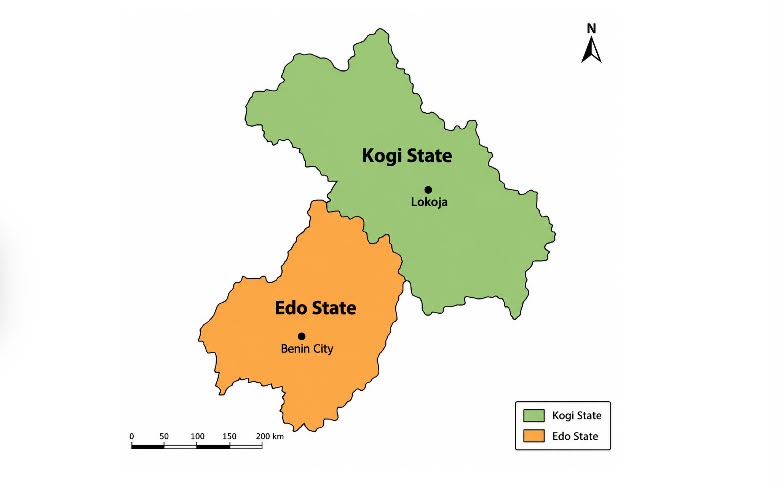
The boundary disputes between Edo and Kogi states are still not settled. This is due to lost landmarks, conflicting claims, and resistance from local communities.
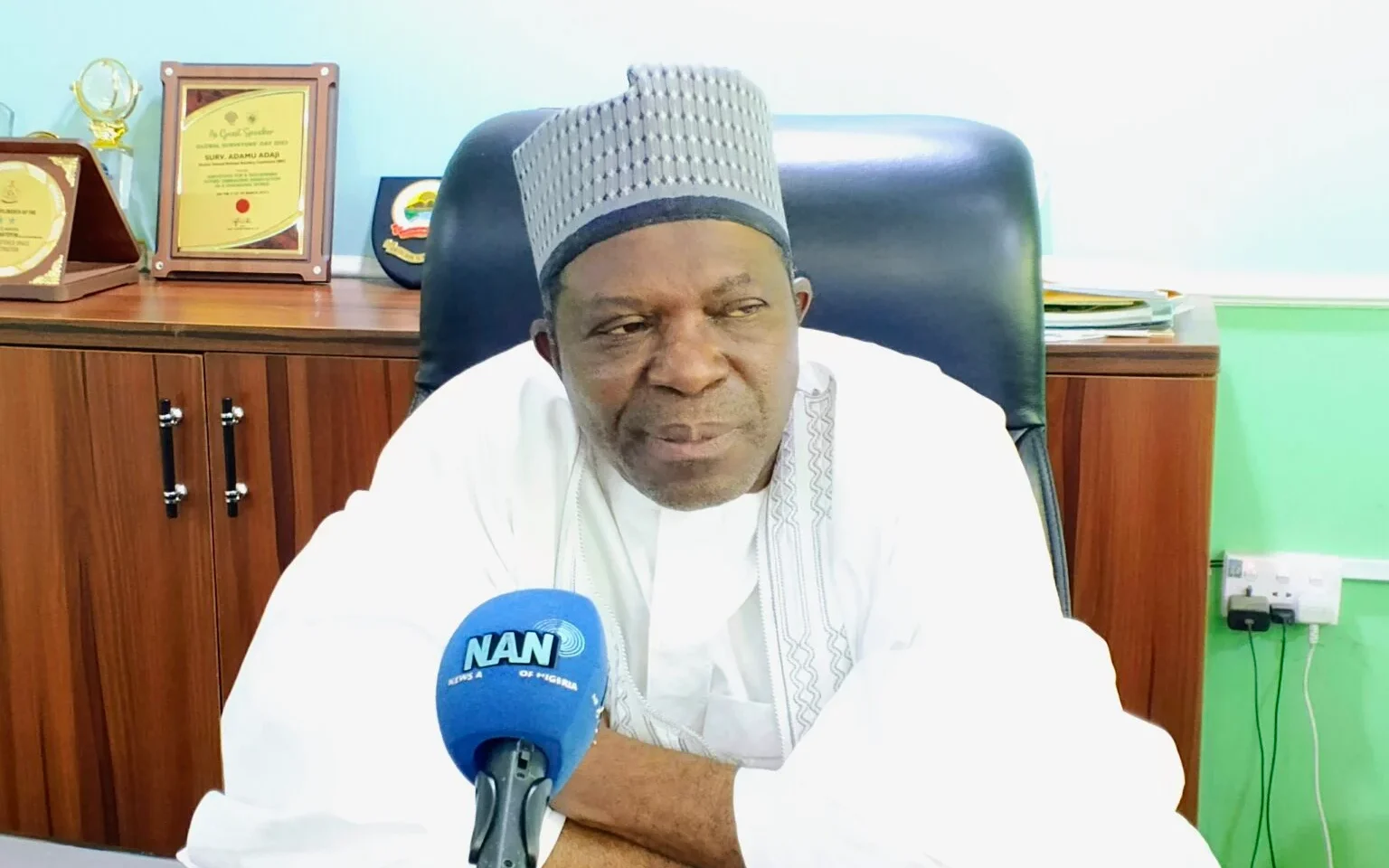
Adamu Adaji, the Director-General of the National Boundary Commission (NBC), shared this in an exclusive interview with the News Agency of Nigeria in Abuja on Sunday.
He mentioned that technical and administrative work had created an approved boundary line, but local communities were resisting its implementation.
Mr Adaji explained that the boundary between Edo and Kogi was defined in Legal Notice No. 126 of 1954, which outlined the boundary between the Northern and Western Regions.
He said that some physical landmarks referenced in the 1954 document have disappeared over time. This makes it hard for experts to accurately trace the boundary.
Mr Adaji noted that technical experts have tried to interpret historical documents, but with the landmarks gone, there is a lot of personal judgment in deciding the boundary.
“This has led the parties to continue laying claims in different areas,” Mr Adaji said. He also mentioned that efforts to settle this boundary issue began back in 2006.
He said the commission took into account the claims from both states and created a line that is accepted as the boundary between Edo and Kogi.
Mr Adaji stated that this proposed boundary was later approved by the Internal Boundary Committee, which allowed for the physical demarcation to begin.
But he pointed out that the process faced pushback when the contractor tried to mark the approved boundary on the ground.
He explained that communities along the boundary objected, claiming that the proposed line did not match their understanding of the boundary.
“The affected communities consequently resisted the demarcation, prompting the commission to engage stakeholders and seek broader agreement,” he said.
Mr Adaji mentioned that the parties met again earlier this year to discuss how to physically establish the approved boundary and its implications.
He said the agreement faced challenges when some parties did not fully cooperate and provided documents suggesting changes to the boundary.

“Some documents included court judgments that have not previously been brought to the commission’s attention.
“We have to examine these issues and engage the states so that we can arrive at a common understanding,” he said.
Mr Adaji confirmed that the process for the Edo-Kogi boundary is still ongoing and that the commission plans to start demarcation when they have the needed resources.
“We are still looking for the resources to undertake it.
“Where challenges arise, we will address them as we encounter them,” he said.
NAN reports that the Edo-Kogi boundary dispute includes areas like Ogori, Ekpedo, Okene, Okpella, and the Ake axis. These areas are where boundary interpretation and demarcation are still contested.
Mr Adaji called on communities to work together. He emphasized that the commission is focused on promoting understanding and cooperation among states, local governments, and boundary communities.
He also advised governments and stakeholders to protect the property rights of people living near boundary areas, no matter which state is in charge of those locations.
“Boundaries are primarily for administrative purposes. People can own properties across boundaries,” Mr Adaji said.
He urged State and Local Government Boundary Committees to team up with the commission to properly inform residents about the purpose and effects of boundaries.
Mr Adaji stressed that traditional institutions, community leaders, and state and local governments should promote cooperation and discourage actions that could cause conflict.
“Any crisis that results in the loss of lives and property because of boundaries is unnecessary and should not be encouraged in any way,” he said.
He encouraged Nigerians living along boundary areas to see themselves as one community and feel free to live and own property across different administrative boundaries.


Drop your comment
No comments yet — be the first to drop the gist 👇