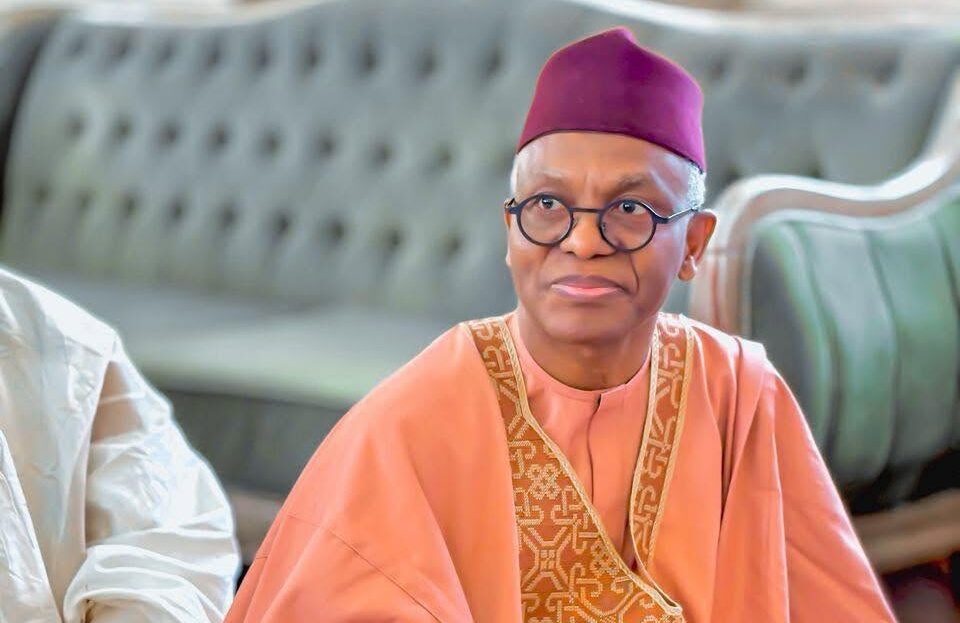
A forensic investigator from the State Security Service (SSS) has claimed that former Kaduna State Governor Nasir El-Rufai planned to bribe Economic and Financial Crimes Commission (EFCC) officials with $600,000 to stop an investigation.
Segun Kayode testified on Tuesday as the first prosecution witness in El-Rufai’s trial before Justice Darius Khobo at the Kaduna State High Court in Kawo. He explained that $500,000 and $100,000 were allegedly set aside for this illegal act.
According to Channels Television, the witness told the court that forensic audio recordings captured talks between Mr El-Rufai and several suspected accomplices.
The conversations were said to be about ways to obstruct an EFCC investigation into a company called Singularity.
Mr Kayode said that those mentioned in the recordings included a senior advocate of Nigeria (SAN), another unnamed person, and Bashir El-Rufai, the former governor’s son. He claimed that the SAN and the associate were told to get a template from one Ahmadu Sule, which was used to liquidate another firm, to apply to Singularity.
The witness also claimed that the discussions involved plans to shut down Singularity in Nigeria and Mauritius, where the company was reportedly under investigation by the Nigerian Financial Intelligence Unit (NFIU).
The audio recordings also contained plans to block the EFCC from investigating a company listed on the New York Stock Exchange. These allegations are part of the prosecution’s case against the former governor but have yet to be proven in court.
Tuesday’s court session lasted nearly eight hours, with about two hours spent playing the recorded audio evidence.
Earlier, lead defense lawyer Paul Erokoro (SAN) objected to Mr Kayode’s testimony. He argued that the witness's name and a summary of his evidence were missing from the prosecution's proof of evidence.
Mr Erokoro said this omission violated his client’s right to a fair hearing. He stressed that the defense needed prior notice of the evidence it had to counter.
In response, lead counsel for the Independent Corrupt Practices and Other Related Offences Commission (ICPC), Ayodeji Adedipe (SAN), explained that Mr Kayode was a subpoenaed witness, so the omission did not make his testimony invalid.
Mr Adedipe pointed out that the subpoena was issued and signed by the court on 30 June 2026, and the defense would have a full chance to cross-examine the witness.
Mr Erokoro clarified that his objection was about whether the defense had enough notice to prepare, citing Section 210 of the Administration of Criminal Justice Law, 2017. He argued that the prosecution should have served the subpoena on the defense.
Justice Khobo acknowledged the absence of the witness’s name and evidence summary in the proof of evidence. But he noted that court records confirmed he was subpoenaed.
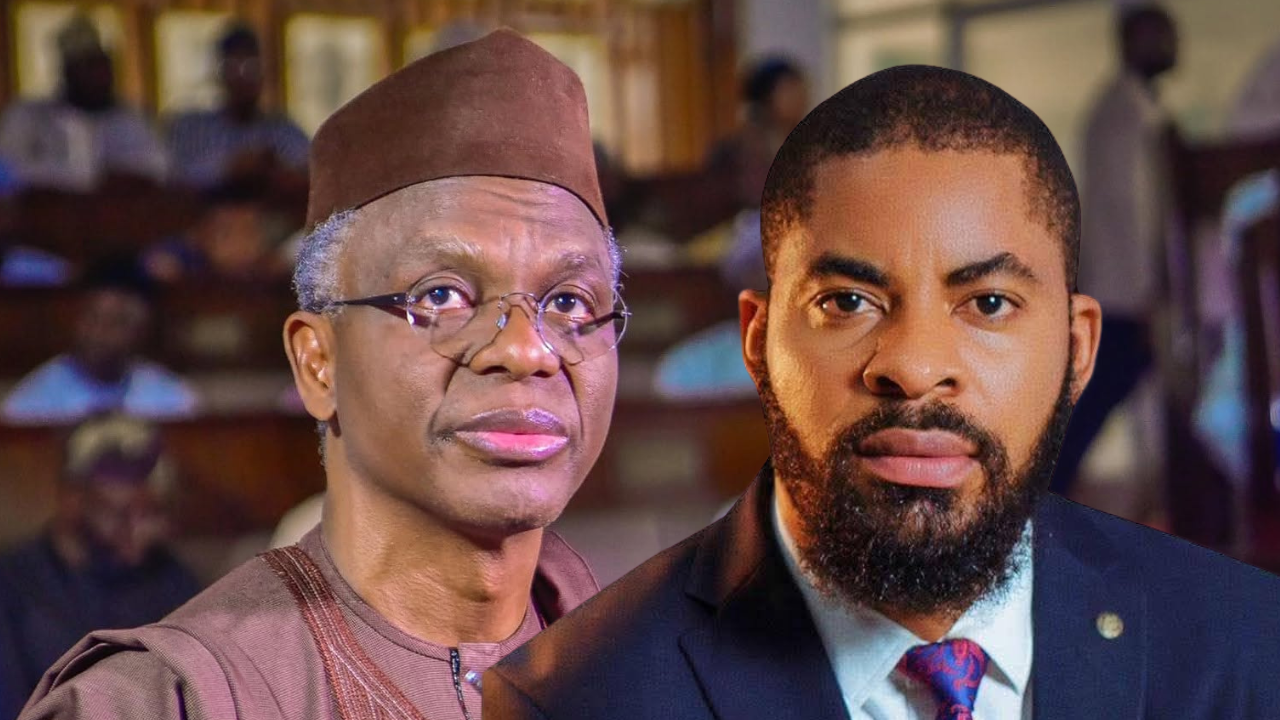
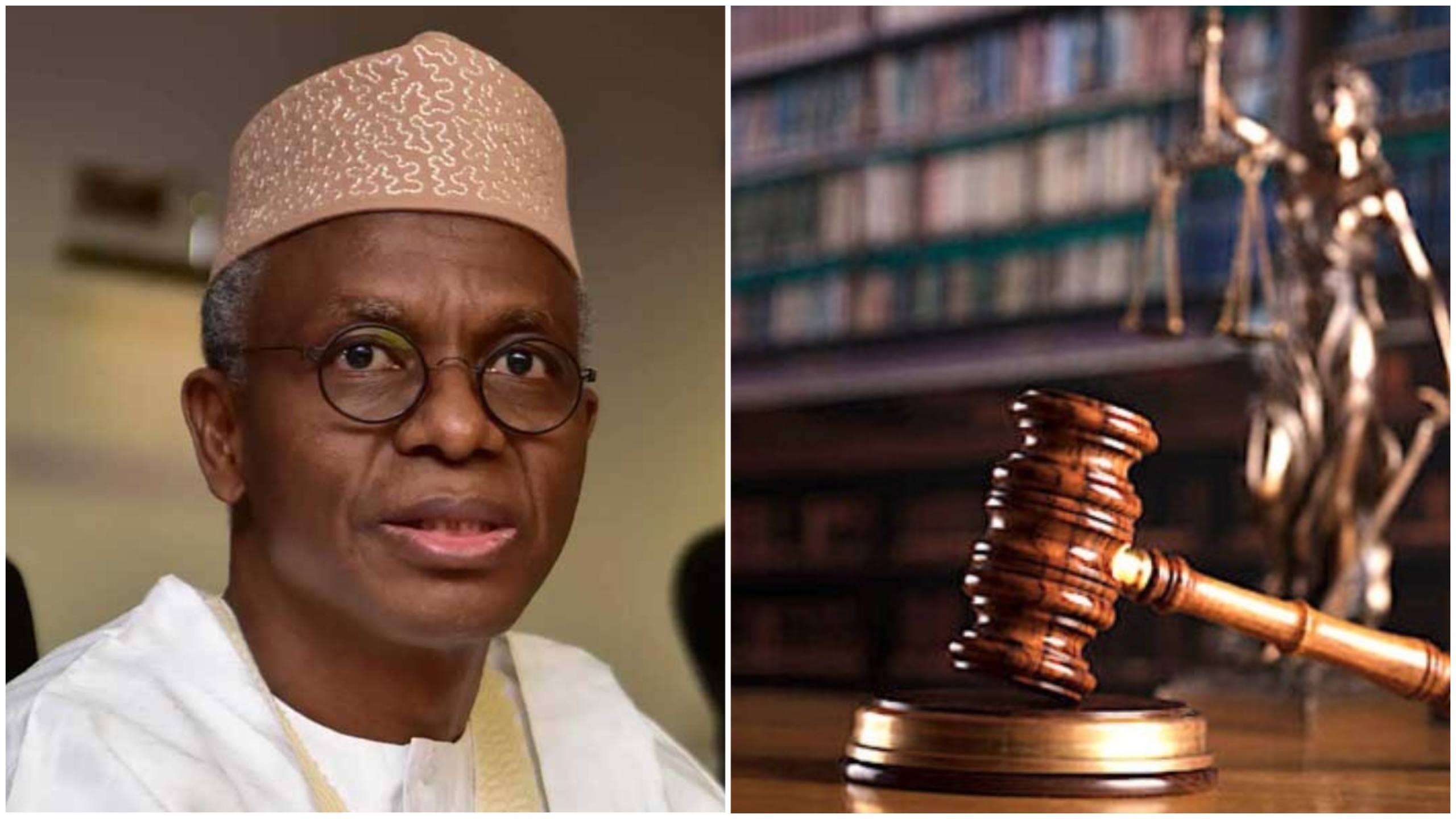
The judge ruled that this omission did not automatically cancel the testimony, as long as the defense was allowed to cross-examine the witness.
After admitting Mr Kayode’s hard-copy findings into evidence as Exhibit 1, the defense raised more concerns about late service.
Justice Khobo ruled that the defense could get a Certified True Copy (CTC) of the document for a detailed review.
By agreement of both prosecution and defense teams, the court adjourned the case to 30 November and 1 December 2026 for further cross-examination.
Mr El-Rufai arrived at the court with heavy security around 11:50 a.m., ahead of the noon hearing, and was accompanied by Isah Ashiru, the governorship candidate of the African Democratic Congress (ADC) in Kaduna State.
This appearance followed a clear order by Justice Khobo directing the ICPC to present him in court.
The hearing came days after the Court of Appeal in Kaduna dismissed Mr El-Rufai’s appeal against the High Court’s refusal to grant him bail.
In its ruling on 9 October, the appellate court backed the lower court’s decision, stating that the former governor did not provide enough reasons for intervention.
The ICPC is prosecuting Mr El-Rufai mainly based on recommendations from a 2024 Kaduna State House of Assembly report. This report accused his 2015, 2023 administration of mismanaging public funds.
The ICPC has filed several charges against the former governor in federal and state courts. One charge claims he tapped the phone of the National Security Adviser, Nuhu Ribadu.
Mr El-Rufai has pleaded not guilty to all charges, insisting that the prosecution is politically motivated. He remains in ICPC custody under court orders while his legal team fights against his continued detention.
Mr El-Rufai has been in ICPC custody since 18 February.

Drop your comment
No comments yet — be the first to drop the gist 👇