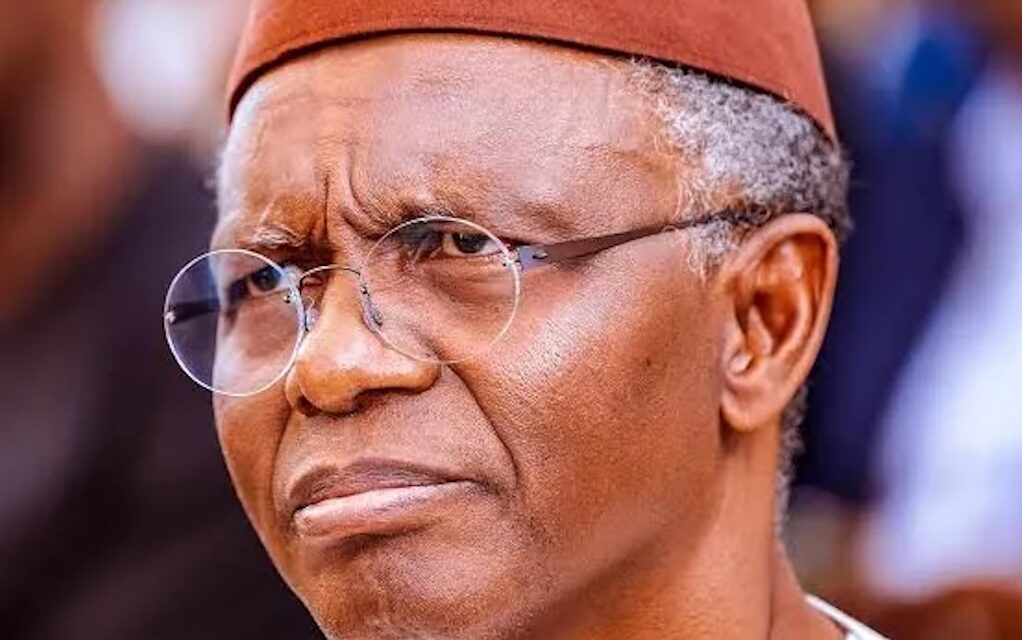
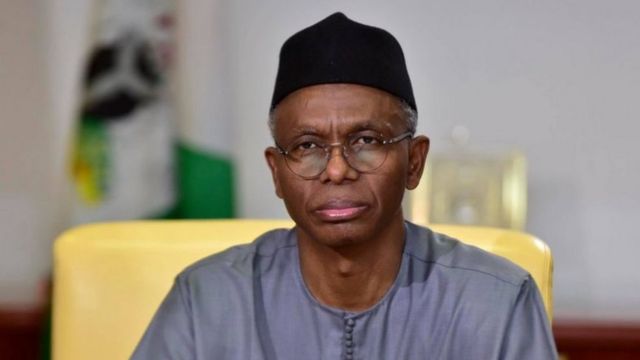
There is a strange situation happening in Nigeria right now. Nasir El-Rufai, the former governor of Kaduna State and a key player in the All Progressives Congress, is now in detention. He faces prosecution from the same government he helped bring to power.
No matter what people think about El-Rufai and his time in office, we cannot ignore his role in Bola Ahmed Tinubu becoming president in 2023.
El-Rufai was one of the important northern politicians who argued that power should go back to the South after Muhammadu Buhari's eight years. This view was based on the informal political understanding known as zoning, which rotates power between the North and South.
I personally disagree with zoning. Nigeria has many serious issues, and the presidency should not just rotate based on region. What matters more is competence, capacity, and character.
But whether I like zoning or not, that was the reality in the 2023 election. El-Rufai helped ensure Tinubu received strong support from northern leaders.
He campaigned hard for Tinubu and was one of the most visible northern politicians defending him.
When the Buhari government introduced the controversial naira redesign policy months before the 2023 election, El-Rufai was one of the loudest critics. Kaduna, Kogi, and Zamfara states even took the Federal Government to the Supreme Court over the issue.
This currency redesign caused major cash shortages across Nigeria, making life tough for many people. At that time, Tinubu's supporters believed the policy aimed to weaken his chances in the election.
During that period, El-Rufai was firmly on Tinubu's side. Their political bond was clear before the election, too.
At Tinubu's event at Chatham House in London in December 2022, he asked his team to answer some questions. El-Rufai was one of those called upon. This caused a stir in Nigeria, as many expected Tinubu to answer himself.
It showed how much trust Tinubu had in El-Rufai. He was not just an audience member; he was part of the team Tinubu relied on. Tinubu had also urged El-Rufai to reconsider his plans after leaving office and to join him. Given this history, it is hard to understand how a trusted ally became a detainee.
This article does not argue that El-Rufai should be protected from prosecution just because he helped Tinubu win.
That would be wrong.
If El-Rufai did wrong while in government, he should face the law like any other Nigerian. Helping someone win an election should not give anyone immunity from prosecution. But political disagreements should not lead to persecution either. That is where things get concerning.
The bail conditions set for El-Rufai in one of his cases have raised serious issues. A court granted him bail, but one condition requires a surety who is a senior federal civil servant at Grade Level 17, owning property in Maitama or Asokoro in Abuja.
On paper, this is bail.
In reality, Nigerians have every right to question whether bail that is hard to meet is really bail at all.
A person can be granted bail but still be held in detention if the conditions are too tough to meet. This makes the difference between being denied bail and being given unreasonable bail very small. El-Rufai also faces more than one legal case, including one in Kaduna where bail was denied. His continued detention cannot be blamed only on one set of bail conditions.
When all this is considered, it is fair to ask whether this is just prosecution or if it is starting to feel like punishment before a conviction.
That difference is important.
Nigeria has a long history where governments have been accused of using state institutions against their opponents. Because of this, Nigerians should be worried when a prominent opposition figure is detained for a long time, especially with another major election approaching.
This should not be about whether people like El-Rufai.
I disagree with many of his positions and decisions.
The real question is simpler.
Would El-Rufai be treated the same way if he were still one of President Tinubu’s strongest allies? This is a question the government cannot ignore. Since leaving the APC, El-Rufai has become more critical of Tinubu and aligned himself with opposition forces for the 2027 election. This changes how Nigerians view his detention.
This does not prove that President Tinubu ordered his detention.
It also does not prove every claim against El-Rufai is false.
But Nigerians are right to question the timing, the length of detention, the bail conditions, and El-Rufai’s growing opposition role.
Governments should expect such questions.
Now, let’s talk about the 2027 election.
I worry that El-Rufai’s ongoing detention might remove a key opposition politician from the field during a critical time ahead of the next presidential election. Whether this is the official aim or not, that is the effect prolonged detention can have.
If he stays detained as Nigeria approaches 2027, it will be harder for the Tinubu government to convince many Nigerians that politics has nothing to do with this situation. There is a clear way for the government and the justice system to ease these worries.
They must present the evidence.
Prosecute the cases openly.
Allow El-Rufai to defend himself.
Where the law allows bail, the conditions should be fair and achievable.
If he is guilty, let the courts convict him based on evidence and let him face the punishment.
No one should be above the law.
But no one should be punished before a conviction either.
If the goal of this process is to keep Tinubu’s political opponent locked up until after the 2027 election, then Nigeria faces a much bigger issue than one ex-governor’s legal problems.
It would raise serious concerns about whether the justice system is being used to control the political landscape. This should worry every Nigerian, no matter their political party. The true test of the rule of law is not how the government treats its friends. Friends usually get treated well. The real test is how the state treats those who fall out of favour and become opponents.
Nasir El-Rufai helped Bola Tinubu become president. That history should not shield him from legitimate prosecution. But it should not lead to endless detention. He does not need political gratitude from Tinubu. He needs a fair legal process. If there is evidence against him, prosecute him and prove it. If not enough evidence exists to keep him detained, then the state should not impose impossible bail conditions or long legal processes to achieve what it cannot justify openly.
As Nigeria moves closer to the 2027 election, this case will keep raising uncomfortable questions. And these questions go beyond Nasir El-Rufai. They are about the kind of democracy Nigeria wants, the independence of its institutions, and if political power will continue to influence justice.
In the end, El-Rufai may be the one in court. But Nigeria’s commitment to the rule of law is also on the line.
Drop your comment
No comments yet — be the first to drop the gist 👇