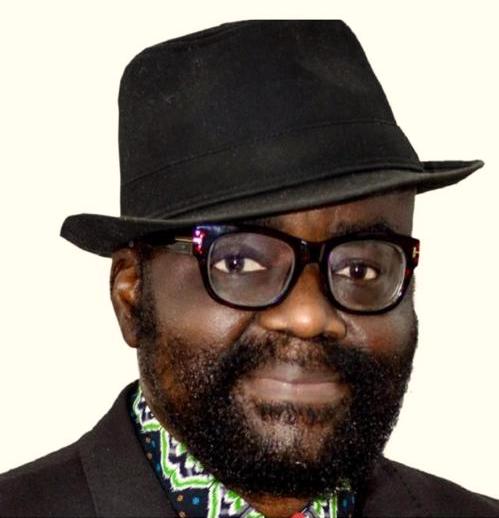
Anyone who stands against the unity of all people and the secular nature of Nigeria is an infidel. This includes those who promote violence as a means to win elections. Sheikh Yahaya Jingir and Senator Francis Fadahunsi fit this description.
Let’s start with Sheikh Yahaya Jingir.
Seventy-six-year-old Sheikh Sani Yahaya Jingir is the National Chairman of the Council of Ulama of Jama’atu Izalatil Bid’ah Wa Iqamatis Sunnah (JIBWIS) based in Jos, Plateau State. He leads one of the largest Salafi Islamic groups in Northern Nigeria. His sermons and public statements greatly influence millions of followers.
However, his long career has been filled with controversies, especially around sectarian issues, political mobilization, and divisive language. As a well-known Salafi cleric, Jingir often targets Sufi groups and Shia Muslims. He has issued strict fatwas, labeling certain practices as acts of disbelief.
He views reality through a very narrow lens, acting like he alone knows the mind of God. His strong views have increased tensions between different Muslim groups in Northern Nigeria. During elections, he urges Muslims to vote strictly along religious lines to keep political power.
Jingir's base in Jos has a troubled history of ethnic and religious conflicts. Still, he does not hold back when he wants to stir division. His speeches carry a lot of weight among his followers. But if the leader is confused, what hope is there for the followers?
One of his most troubling habits is using derogatory terms like ‘Kafir’ for non-Muslims. Human rights groups, including the National Human Rights Commission (NHRC), have called his election sermons hate speech, which goes against the constitution's promise of religious freedom.
I may not be an expert in Islamic theology, but I remember when he showed his lack of understanding of global issues. During the COVID-19 pandemic in early 2020, he dismissed the virus as a plot to stop Muslim prayers and pilgrimage. He later changed his mind after the government stepped in.
Recently, he caused a stir with controversial comments at a political event by Jama’atu Izalatil Bid’ah Wa Iqamatus Sunnah. This event included Kano State Governor Abba Yusuf and Jigawa State Governor Umar Namadi, among others. In a video that went viral on social media, Jingir expressed his support for Muslim-Muslim presidential tickets and praised President Bola Tinubu for this choice in the 2023 elections. He said, “Special thanks to my (political) hero, Bola Tinubu… I am among the staunch advocates of the Muslim-Muslim ticket, and I call on you to come together for a Muslim-Muslim ticket.”
He went on to say that anyone who disagrees with him should make their own statements. “Have I stopped the Christians from their own slogans? Have I stopped traditionalists from a similar campaign? … I urge all of us here to go and get our voters’ cards ready. Let’s show the infidels, who claim they are more populous than us in Nigeria, their limit.”
Christian leaders and groups have condemned his comments. Some Muslim politicians, like Senator Rabiu Musa Kwankwaso, have also criticized Jingir. “Let it be clearly stated: the good people of Kano do not endorse or support these divisive remarks,” Kwankwaso said.
Despite the backlash, Jingir’s followers see him as a strong defender of Sunni beliefs and a key voice for Islamic education and moral conduct in Northern Nigeria.


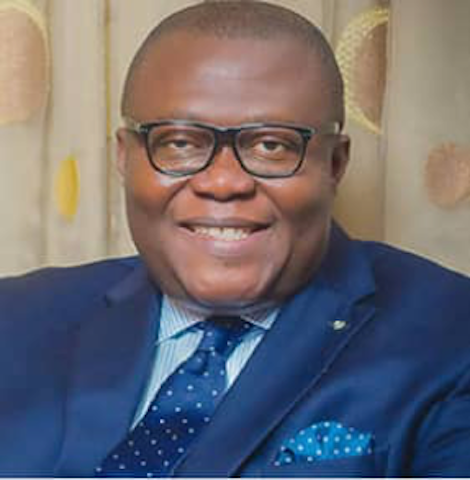
In my view, Jingir is an electoral infidel. He does not believe in democracy. He does not support Nigeria as a whole. His idea of religion is narrow, it only includes his beliefs and those in his sect. Everyone else is an infidel.
I have a question for him. If God is all-powerful and all-knowing, why did He create 2.4 billion Christians and about 1.2 billion Hindus?
Christianity is the largest religion in the world, making up about 31 percent of the global population. Hinduism is third, accounting for about 15 percent. Islam is about 25 percent. There are 508 million Buddhists, making up 6 percent of the world’s population.
Why didn’t God force everyone into one religion?
The mistake of calling people “infidels” comes from where the speaker stands. This label tries to oversimplify complex beliefs into two groups: believers and non-believers. This is a flawed view.
Instead of encouraging understanding, using harsh labels pushes people apart. It creates conflict. Throughout history, labeling others as faithless has justified exclusion, violence, or worse. Real understanding comes not from judging others based on our beliefs but from seeing our common humanity. After all, one person’s infidel can be another person’s saint.
Another electoral infidel is Senator Francis Adenigba Fadahunsi. His recent call for the killing of Accord Party members during the recent Osun State elections drew widespread outrage. This statement raised concerns because it openly called for violence against members of an opposing party.
Senator Fadahunsi (OFR) is a 74-year-old retired Customs officer. He represents the Osun East Senatorial District in the National Assembly. He has served on various national security and anti-corruption committees, including the Senate Committee on Security, and has worked on managing small arms and violent crime.
His weak attempt to retract his shocking statement after facing criticism has not been successful. Many experts have echoed Arise News’ Reuben Abati, who called him a liar and a coward. Only an electoral infidel would suggest death as a way to win votes.
There have been calls to prosecute both Jingir and Fadahunsi. Even if that does not happen, we should reflect on this matter. The real measure of an elder’s importance is not how much they can stir up division or violence but how they can inspire the youth. To paraphrase Oscar Hammerstein II, they should encourage the younger generation to pursue their dreams.

Drop your comment
No comments yet — be the first to drop the gist 👇