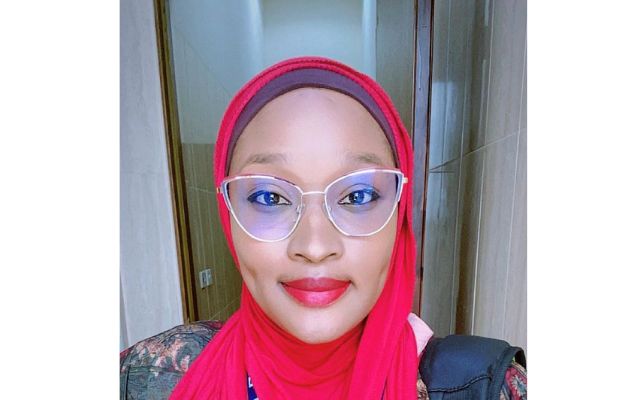
Zainab Bala, a former host of GIST Nigeria, a news show made by BBC Africa and Channels Television, has shared how wearing her hijab on air became a problem during her nine-month time on the show.
Ms Bala talked about this on the second episode of The HSM Tribe, a YouTube channel for Muslim women, which was shown on 28 August.
According to Ms Bala, the hijab issue started after she was hired to work on the show in 2023. She mentioned that she wore her hijab during her job interview and was asked if she would present the show with her head covered if she got the role. “I said yes because this is how I dress,” she said on the podcast.
When PREMIUM TIMES contacted her for more information, she explained that the BBC gave her the job, that she moved from Abuja to Lagos, and that she began training before filming her first episode.
Ms Bala said they recorded the show with her hijab on at the Channels Television office in Lagos, but it did not air for several weeks, while shows hosted by another team member continued to be shown.
She learned from her editor that there had been talks with Channels Television about her appearance.
“The reason why my programme was not aired was that they had been having a back-and-forth with Channels, and that’s because Channels said they do not project a hijab-wearing person on their screens,” she said.
Ms Bala said this made her feel “stereotyped” and demoralised.
She expected this issue to be sorted out during her hiring because she made it clear that she would keep wearing her hijab.
“I don’t think this is something to debate about,” she said.
She said the BBC later tried to come to an agreement with Channels that would let her wear a head covering, but with limits on how she could appear.
Ms Bala said she thought about leaving but chose to stay because she believed her presence could create chances for other Muslim women.
“I stayed because I realised that this was deeply rooted, and there hasn’t been any conversation around this,” she said.
She eventually hosted several programmes and said her background as a Muslim woman from northern Nigeria influenced some stories she brought to the show, especially stories about women fighting stereotypes in northern Nigeria.
Ms Bala also mentioned that the hijab issue was not the only reason she left the BBC. She claimed that she faced what she called “mental and emotional bullying” from her editor.
She said this experience played a part in her choice to leave the organization, even though she originally planned to move between BBC teams and keep growing her career there.
“I just left for my peace of mind. It was the most depressing nine months of my life,” she said.
Ms Bala also claimed that other team members had shared complaints about the editor’s behaviour.
To get responses from those involved, PREMIUM TIMES reached out to Omotola Adebanjo, editor of GIST Nigeria, and Ehizojie Okharedia, head of West Africa at BBC News, on 5 September.
The organization was asked to confirm Ms Bala’s story about her interview, the delay in airing her first show, and whether any rules stopped presenters from appearing on air with a hijab.
PREMIUM TIMES also wanted to know if Ms Bala’s religious identity or appearance affected decisions about her role and if she had raised complaints about bullying before leaving.
Robin Miller, head of communications for BBC News, replied for the BBC. Mr Miller first questioned the basis of the questions, saying the BBC had proof that Ms Bala presented GIST Nigeria multiple times while wearing her hijab.
“This contradicts much of what you have put to us in your questions below,” he said.
PREMIUM TIMES clarified that the question was not about whether Ms Bala had appeared on screen with her head covered, but about the type of hijab she wore, including during her interview, and discussions about her appearance not to “look too Muslim.”
The BBC was also asked to respond to her claim of mental and emotional bullying by her editor.
On 10 September, Mr Miller sent PREMIUM TIMES a photo of Ms Bala presenting in a hijab, along with the BBC’s response.
“The BBC strives to be an inclusive workplace where every colleague feels respected, supported and able to do their best work,” he said.
He added that the BBC has presenters and correspondents who often wear hijab on screen, “and this includes whilst presenting GIST Nigeria.”
“We do not comment on individual HR matters; however, as a general principle, we take complaints about bullying very seriously, and where allegations are made, they are fully investigated,” he added.
PREMIUM TIMES later sent the photo shared by Mr Miller to Ms Bala. She said the photo was from a report she did, not from her presentation of GIST Nigeria.
“This is a report, not a presentation of the show,” she said. She believed there would be no video showing her presenting the programme in the full hijab she usually wore.
She also admitted that other reporters had presented BBC shows wearing their hijabs but suggested that her case might have been different because GIST Nigeria was jointly made with Channels Television.
“I am hoping other Muslim women who come to these platforms are allowed to present shows without making compromises,” she said.
Drop your comment
No comments yet — be the first to drop the gist 👇