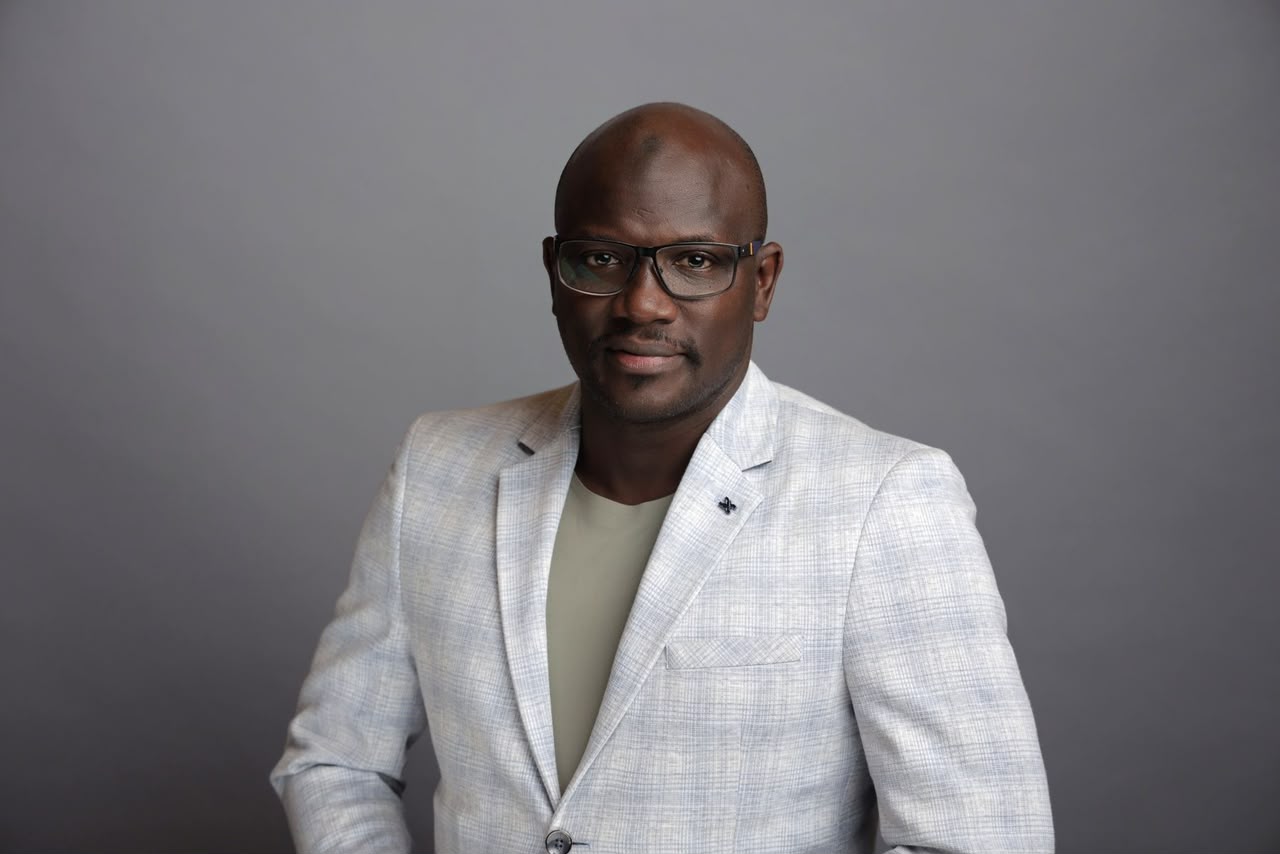
“What happens in Vegas stays in Vegas.” I always thought that was a great rule. But this time, I broke it. I went back to Las Vegas for “The Assembly,” the Association of Certified Anti-Money Laundering Specialists' conference. The trip gave me some stories I couldn't forget.
Getting to Vegas was an adventure on its own. After almost 20 hours of travel, I finally boarded the last flight from New York’s JFK Airport to Las Vegas. I thought the hard part was over. It was a domestic flight, so I expected a quick journey. Five hours later, I wasn’t so sure. ‘Is this what they call a short flight?’ That one flight felt like going from Lagos to Cairo.
While flying over the United States, I thought about how Africa is shown on the world map. It’s right to display the continent at its true size. But a bigger Africa on paper will mean more to its people when they can move across it easily. We need reliable African airlines, good connections, and routes that save travelers from long detours that turn a trip between African cities into a long journey.
I had been in Vegas for “The Assembly” two years before. The city was as bright as everyone says, with shining lights, busy crowds, and buildings that seem to challenge the desert. I returned home with plenty to share, but I followed the Vegas rule. I must admit, it was hard. This year felt different. Since my last visit, I noticed another side of Vegas. Beyond the flashy hotels and casinos, I saw people sleeping outside; some looked like they were struggling with drugs. How can a place with so much wealth have people living like this? This time, I decided to ask.
They say the best way to learn a city's secrets is to ask a taxi driver. In my village, we have the ‘mai shayi.’ Order one cup of tea and, before it cools, you may know who quarreled, who made up, and who is pretending they never quarreled. Vegas was far from my village, but the method worked. I asked my driver about the people I saw sleeping outside. “No be gossip o. Na the why I dey find!”
The driver was Ethiopian. His English came in short, sometimes broken phrases, and I had to pay close attention. When words failed him, his hands did the talking. He pointed toward the casinos and made a small circle in the air as he talked about the path from gambling to drugs, money issues, and for some, homelessness. I got his point. “This is Vegas,” he said. This was just one driver's story, not the full picture of everyone I saw, but his gesture stuck with me, the circle he drew against the backdrop of bright buildings.
Vegas also brought back a different memory. Tupac Shakur was shot in this city, but long before my visit, his music was part of my secondary school days. In “Changes,” he talked about a “war on poverty” and questioned why people seemed more focused on a war on drugs. Decades later, his question felt heavier than when I was a student. It asks if we measure progress only by the problems we face or by the lives we improve. I explored this more in an earlier article, “Nigeria’s violence is not holy war; it’s sustained state of deprivation.” There, I argued that we cannot understand violence just by its slogans; we must also look at deprivation, corruption, and the choices that keep both going. Tupac's line has stuck with me since school.
I never learned to rap, and maybe my loved ones should be thankful for that. But that didn’t stop me from taking the stage at a social night at Federal Government College Kaduna almost thirty years ago. I mimed Usher’s “Can U Get Wit It” in front of an audience. Whether they enjoyed it is a question I wisely never asked. Tupac’s words, though, were the ones I learned to pay attention to. Tupac was killed in Las Vegas in 1996. Thirty years later, just before I returned to the city, a jury found Duane Davis guilty of his murder. The timing was striking. I had come for talks about financial crime and accountability in a city where another long search for accountability had just reached a conclusion.
That question of accountability was on my mind at “The Assembly.” During a session on Artificial Intelligence (AI) and financial crime, Tony Eastin from Google made two points that stuck with me. First, institutions spend a lot on people and processes, yet they still miss warning signs that AI can spot much faster. Second, it’s an uneven game: a fraudster only needs to get past the defenses once, while those protecting the system can’t afford to miss even one attempt.
AI seemed to pop up in every session I attended. At first, I wondered if it was taking over the conference. Then I thought about home. How prepared is Africa for this change? More specifically, what is Nigeria doing to make it useful for its people? I met a few Nigerian bankers and government officials at the conference.
Their presence made the conversation feel closer to home. I began to wonder how the ideas discussed in Vegas could lead to safer banking and better public services in Nigeria. Being part of the talk was a good start; putting the lessons into practice would be the real challenge. For the average Nigerian, the question doesn’t need to start with how the technology works. It can start with something familiar: could it help protect the money in my account? Could it save me time chasing a document in a government office? Could it help a teacher with paperwork and give them more time for teaching? These are the results that would make the excitement real.


Some of these ideas are already being tested. In January 2025, the government announced the launch of DeepTechReady, which involves 3MTT, Data Science Nigeria, and support from Google.org. They aim to train 20,000 young Nigerians in AI and data skills. But training must lead somewhere. Our young people need chances to use what they learn in banks, schools, hospitals, and government offices. Otherwise, we will keep praising their potential at home while celebrating its success abroad. So, we must get the basics right with affordable internet, steady power supply, and proper records. If an office can’t find your file today, an expensive AI system won’t magically fix it tomorrow.
For Africa, especially Nigeria, the goal should be to use AI to create tools that understand our languages and solve our everyday problems. Progress should be measured by what improves for ordinary people, like safer savings, quicker services, and better chances for the talent we have. But excitement must come with common sense.
These thoughts made me remember my late Political Economy lecturer, Mohammed Wader, who introduced me to the works of Samir Amin, Andre Gunder Frank, and Immanuel Wallerstein. Years later, in Vegas, Mr. Amin’s idea of delinking felt close; our engagement with the world should meet our own development needs. For Nigeria, that means embracing AI while allowing our people to build it. Otherwise, we might join the revolution with a lot of subscriptions and very little say in its direction.
Eli Wachs, CEO and co-founder of Footprint, made another point that stuck with me. He said human oversight is still important because trained professionals must keep the final say on decisions made with AI help. The machine might spot something odd, but a person must check the facts. An innocent customer shouldn’t face problems just because a computer was sure. That thought reminded me of Kaduna. In a recent Daily Trust report, the Vice Chancellor of Ahmadu Bello University, Professor Adamu Ahmed, warned that AI must not replace critical thinking. He urged postgraduate students to verify what these tools produce and stay responsible for their work. That advice belonged in the Vegas conversation too. Whether we are doing analysis or protecting someone’s savings, “the computer said so” should never be the final answer.
I left “The Assembly” believing that Nigeria should embrace this revolution with purpose. Start with problems people recognize. Give our young people space to work. Check results, fix mistakes, and build on what works. Earlier in the journey, I had thought about Africa’s size on the map. In the conference halls, I began to think about its future. We should have a say in shaping that future, and ordinary people should feel the difference.
Away from the conference, my taxi driver had one last suggestion. Before we parted, he encouraged me to try the Big Apple Coaster at New York Hotel & Casino. One evening, I took his advice and joined the queue. The ride climbed 203 feet, dropped as far as 144 feet, and reached 108 kilometers per hour. I had read those numbers before. Standing under the track gave them new meaning. Then I remembered India. I once tried a ride there that was nowhere near this high, but it scared me enough to leave a lasting impression. In the Vegas queue, my adventurous side argued that the India experience had prepared me. The other side said India was exactly why I should go back to my hotel room with its mountain view and make a cup of coffee. Each time the coaster roared overhead, that second voice gave me fresh reasons.
Still, I moved up in the queue. I had traveled all the way to Vegas. Surely I could handle a roller coaster? Then I remembered the Vice President of the United States is about my age, though I’m slightly older. At our age, I thought, one must learn to tell courage from unnecessary tests of gravity. I stepped out of the queue, hoping to look composed. A few steps later, I was moving faster than an elite observer should. My taxi driver had encouraged adventure; I listened, thought it over, and made an honorable retreat. “No be every height person must conquer. Me, dis life no tire me o.” I love my Naija.
One of my mischievous friends warned me to “be careful with the Vegas nightlife.” “They call it Sin City,” he said, with more excitement than concern. My dear friend, Sin City has nothing on me. By the time the nightlife started, I was in my room, fast asleep. My body was still eight hours ahead, on Nigerian time, refusing all requests to adjust. If anyone says otherwise, my pillow is my witness. So, there you have it, nothing happened in Vegas. Vegas happened around me while I slept.
Even leaving Vegas had its own drama. On the flight back to New York, three hours seemed to vanish. New York was three hours ahead of Vegas, so flying east meant moving the clock forward. The local arrival time made the journey look three hours longer than the time I spent traveling. I didn't lose those hours in the air, but it felt like the day was slipping away from me. On the way out, traveling west had given me those hours. Coming back, the clock collected its debt. No be only bank dey recover loan.
Let me leave you here and finish the last of the cheese-flavored Doritos I brought back from Vegas. During the conference, jet lag had me sleepy, but the Doritos kept me awake. Now the packet is almost empty. After everything we went through together, finishing it feels like saying goodbye to a friend. “Ha! Doritos fit stay for Vegas, but these lessons must reach Naija. We no fit travel that far come back with only crumb.


Drop your comment
No comments yet — be the first to drop the gist 👇