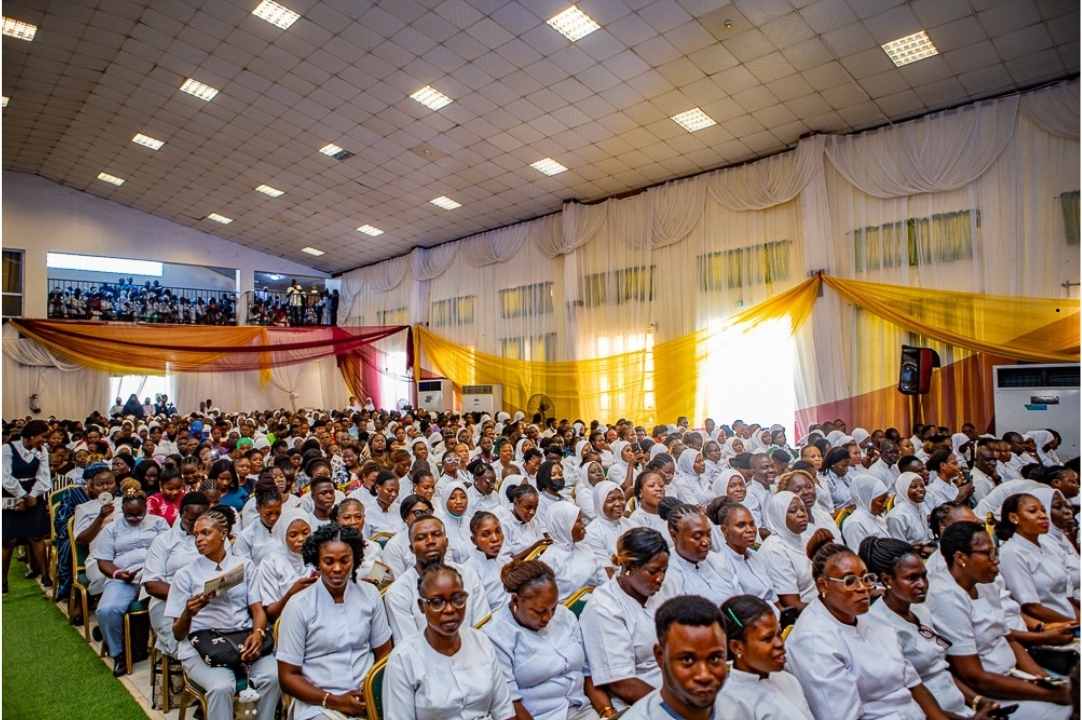
The federal government has ordered immediate steps to protect health workers nationwide. This comes after reports of increased harassment, intimidation, and assault in healthcare settings.
This directive follows a report from the Ministerial Committee on the Harassment of Health Workers by Security Personnel. The Permanent Secretary of the Federal Ministry of Health and Social Welfare, Daju Kachollom, issued the statement on Wednesday.
The committee was formed on 19 May after a troubling incident involving operatives of the Economic and Financial Crimes Commission (EFCC) and staff at the University of Uyo Teaching Hospital in Akwa Ibom State.
Kachollom explained that the Uyo incident disrupted medical services and led to a strike. This pushed the federal government to set up the committee to look into the issue and suggest ways to stop similar events from happening across the country.
The committee reviewed reports from Federal Tertiary Health Institutions and consulted with various professional, regulatory, security, and human rights organizations before sending its findings to the government.
The permanent secretary noted that the Uyo case was not unique. In the past 12 months, 18 cases of assault, intimidation, or harassment were reported in federal tertiary health institutions.
Kachollom said these incidents involved patients, relatives, members of the public, and security personnel. They resulted in physical injuries, psychological harm, damage to hospital property, and service disruptions.
The committee identified several factors contributing to these incidents. These include poor communication, long waiting times, not enough staff, poor infrastructure, emotional distress, abuse of power, and unclear security protocols.
After reviewing the report, the Coordinating Minister of Health and Social Welfare, Muhammad Pate, accepted the committee's recommendations. He ordered immediate action to implement these recommendations.
Pate stated that health workers dedicate their lives to caring for Nigerians. They must work in an environment that is safe and free from violence, intimidation, or harassment.
He assured that the federal government will continue to collaborate with all necessary institutions to protect health workers. They aim to uphold the law and ensure that healthcare delivery is not compromised.
The minister warned that anyone who assaults, threatens, intimidates, or harasses a health worker will face investigation and prosecution if there is enough evidence.



"The lack of a specific law for violence against health workers does not stop us from using existing criminal, civil, or administrative laws to act against offenders," he said.
"Federal Tertiary Health Institutions have been ordered to enhance their internal security and set up Violence Prevention Teams. This is to improve safety in health facilities across the country."
The ministry stated that institutions must also enhance access control, surveillance systems, visitor identification procedures, and security around emergency units and sensitive service areas.
Kachollom further instructed every institution to appoint liaison officers to connect with law enforcement. They must ensure that security operations in hospitals do not harm patients or disrupt essential services.
All cases of assault, threats, or harassment in health facilities must be reported, investigated, and documented quickly. Affected workers should receive institutional support and appropriate referrals, where needed.
Hospital managements are also required to improve complaint-handling processes, enhance patient communication, and train staff in conflict prevention and de-escalation techniques.
The permanent secretary mentioned that broader policy recommendations in the report would be presented to the next National Council on Health. This is to consider adopting a national framework for federal, state, and private health institutions.
She added that the ministry would monitor the implementation of these measures. They will check compliance with assigned responsibilities and timelines, with regular progress reports sent to the Coordinating Minister.
"The federal government asserts that no grievance or disagreement justifies violence against a health worker or interference with healthcare delivery," she said.
Kachollom concluded that existing laws would be enforced, offenders would be held accountable, and all necessary measures would be taken to secure health facilities, protect health workers, and ensure uninterrupted patient care.




Drop your comment
No comments yet — be the first to drop the gist 👇