
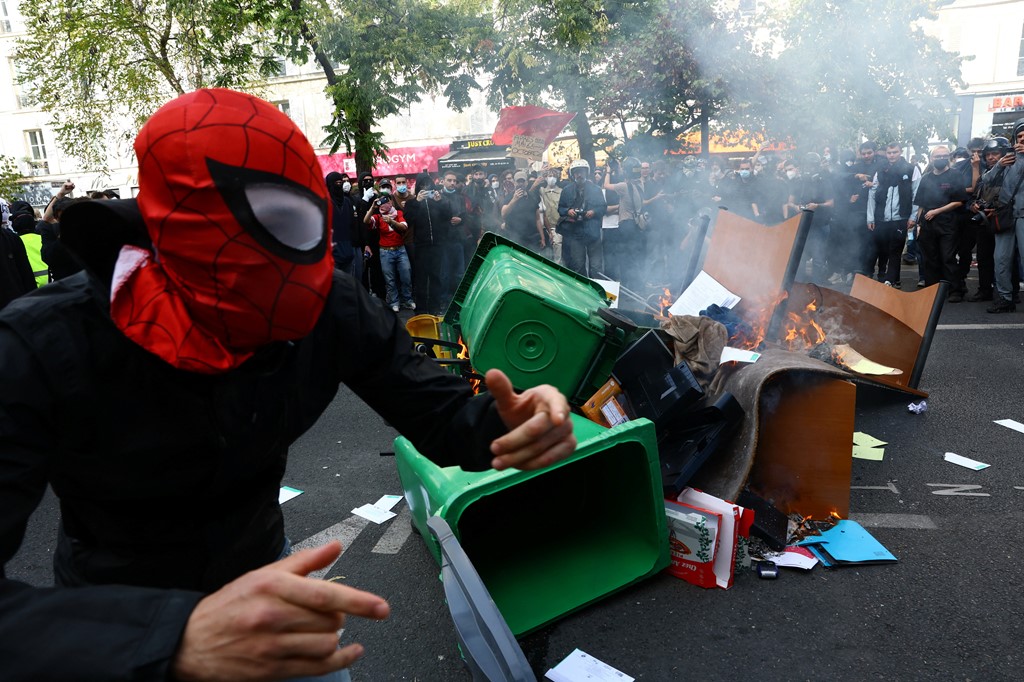
The recent protests in 40 cities across France have been sparked by a shortage of teachers, poor school buildings, overcrowded classrooms, and anger over harsh policing. This wave of demonstrations reached its peak in early October. Notably, October 9 is the anniversary of Che Guevara’s execution in Bolivia. Some critics and left-leaning commentators see a connection between this date and the current protests.
Decades ago, when we were students, we thought there was a link between French radicalism and Guevara's movement. When French youth protest, set up blockades, and clash with police, they often remind us of the protests from 1968. These events make any connection to revolutionary anniversaries feel powerful, even if it is unintentional.
While the date of October 9 is just a coincidence, the spirit of rebellion that Che Guevara became known for is deeply rooted in French student protests. In the famous May 1968 uprisings, Che Guevara was seen as a key symbol of resistance against the establishment. His image was often seen alongside red and black flags on the streets of Paris.
The major protests and school blockades are happening mainly in cities like Paris and the Greater Paris Region, Marseille, Lyon, Rennes, Nantes, Toulouse, Lille, Toulon, Bayonne, Belfort, Nancy, Perpignan, and Tours.
As a Nigerian, I see the French protests as a mix of the Ali-Must-Go and EndSARS movements. Hundreds of thousands of secondary and university students are demanding better resources for education. The police are struggling to maintain order. If you compare the struggles of Nigerian students in the 70s with what is happening in France now, you will see that the youth are the future. They are willing to fight for what older generations might see as idealistic.
Both the Nigerian and French student movements highlight the tension between young people seeking accountability and governments facing economic challenges. Students in France are voicing concerns about long-standing teacher shortages, overcrowded classrooms, crumbling school facilities, and frustration with online admission systems like Parcoursup.
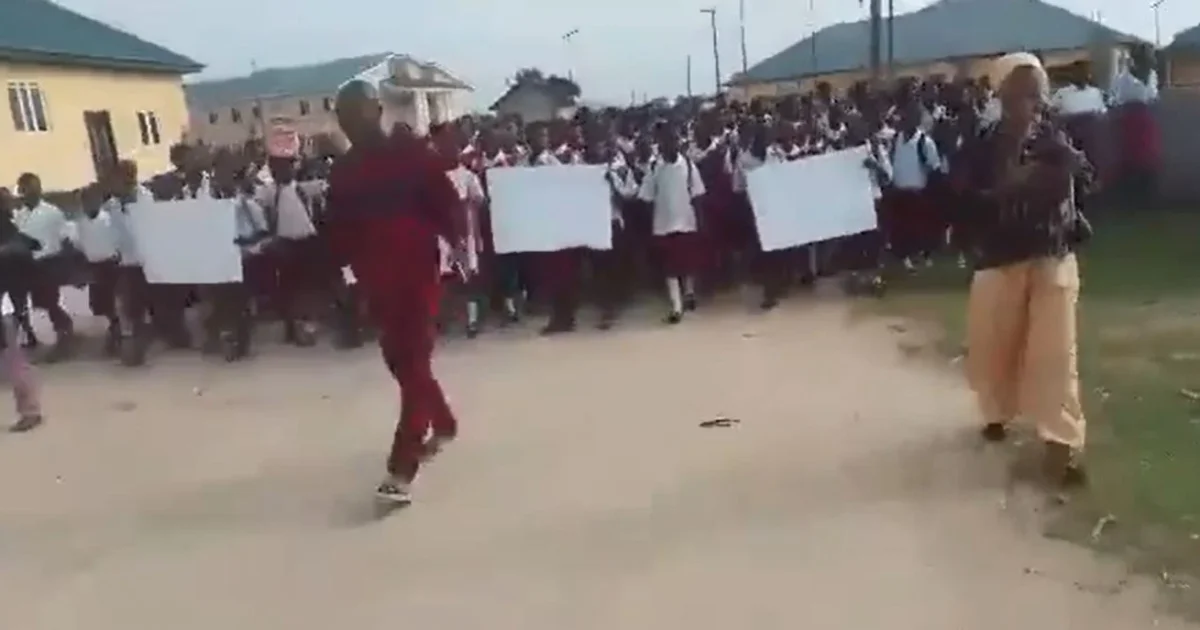
In Nigeria, the student protests of the 70s began with a rise in accommodation and feeding fees. The protests quickly expanded to reject wider socio-economic issues under military rule.
The current protests in France are marked by fast, decentralized mobilization led by high school student unions and boosted by social media. In contrast, the Nigerian protests of the 70s were organized through a strong central body called the National Union of Nigerian Students (NUNS). This organization acted like an unofficial opposition party during military rule. Its strength helped protests happen across Nigeria quickly.
While French authorities have used tear gas, curfews, and mass arrests to control the protests, they operate within a democratic system. Unfortunately, Nigerian students during military rule did not have that advantage. Soldiers and police used live ammunition against unarmed students, leading to tragic deaths, including that of student leader Akintunde Ojo. The Nigerian government relied on force, shutting down universities, banning NUNS, expelling student leaders, and targeting leftist academics.
But we should not confuse things. Protests during Che Guevara's time were ideological and aimed at changing the system. The protests in France today are practical and focused on immediate needs, like a €10 billion boost for public education, better classrooms, working heating, and safe student transport.
The timing of the French protests with the anniversary of Che Guevara’s death offers a striking image for those watching global youth unrest. It also gives a chance for some right-wing nationalists to link these protests to immigration.
President Trump of the United States has blamed these issues on open borders. He connected the unrest in France to mass migration, suggesting that unchecked immigration threatens stability in European nations. He criticized French President Emmanuel Macron, framing the protests around identity politics and stating that "Islam wants to take over France."
Many in France have criticized Trump’s claims as a distortion of reality. His remarks seem more about his political agenda than understanding the real issues at play. The protests are about education and student policies, not identity conflicts.
This is not the first time Trump has commented on unrest in France. He previously made claims during the "Yellow Vest" protests, suggesting that protesters were chanting his name, which was proven false by fact-checkers.
What is happening in France is bigger than Trump. It is a result of long-standing issues. France knows it relies on its former colonies. Former French President Jacques Chirac once said, “Without Africa, France will slide down into the rank of a third [world] power.”
This is not just about African immigrants stressing a European country’s resources. It is about the failures of a broken system.
We can learn from the French protests or repeat the same mistakes that led to past demonstrations. The youth in France teach us four important lessons: (a) Decay leads to anger; (b) Leaders who ignore problems deepen distrust; (c) Relying only on police to manage unrest from systemic failures does not work; (d) Young people are not willing to wait for change.
A generation that feels cheated will not use slow, traditional methods. They will turn to digital organizing and street protests, which can quickly spread across cities to force government action.
But will the political elites learn anything from this?
Drop your comment
No comments yet — be the first to drop the gist 👇