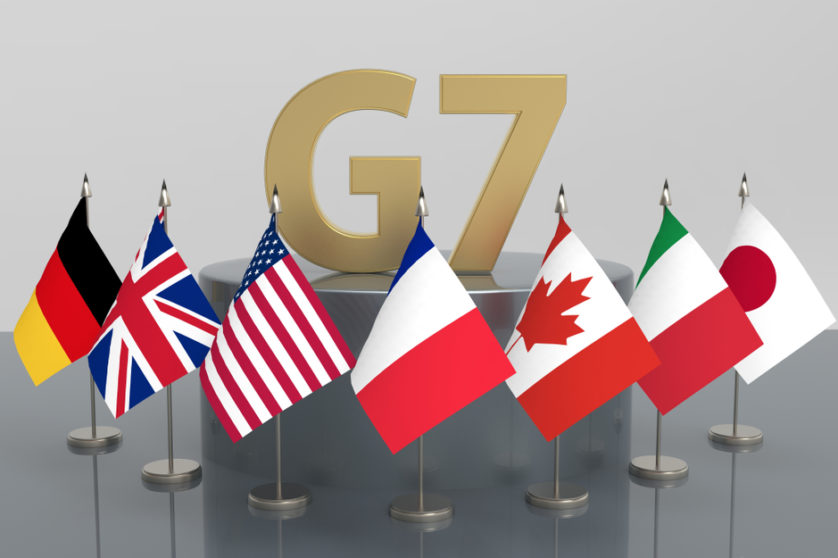
Leaders of the Group of Seven (G7) have said they will release up to 100 million barrels of oil from strategic reserves. This move comes as global oil prices keep rising due to the ongoing conflict involving the United States, Israel, and Iran.
The decision follows stalled talks and rising geopolitical tensions. These tensions have raised fears of long-term disruptions to crude oil exports and shipping routes in the Middle East. There are worries about the recovery of global oil supplies, even with hopes for a ceasefire.
Crude oil prices have been rising steadily. Prices are now between $104 and $108 per barrel because of ongoing supply concerns and the uncertainty in the region.
After a meeting led by French President Emmanuel Macron, the G7 announced that the release would be coordinated through the International Energy Agency (IEA) over the next four months.
The group also mentioned that there would be a "frontloaded substantial diesel release within the first 20 days by G7 members and partners". They plan to meet soon under the IEA to discuss more diesel releases if needed.
This announcement came right after US President Donald Trump posted on his Truth Social account that Europe had "just agreed to release a massive amount of their heavily stocked Diesel Oil", according to Al Jazeera.
The G7 includes Canada, the United States, France, Germany, Italy, Japan, and the United Kingdom, with the European Union as a non-listed participant in the group.
Mr Trump has been pushing European nations, especially Germany and France, to release their diesel reserves. He believes this will help lower skyrocketing energy prices caused by issues in the Strait of Hormuz. Still, many European officials are hesitant about this idea.
The conflict involving the US, Israel, and Iran began on 28 February. It has caused a spike in global energy prices, with shipping disruptions and worries about crude oil supplies leading to market instability.
As of June 2026, data from Eurostat shows that EU countries and the UK have about 52 million tonnes of gas, oil, and diesel. This total includes nearly 38 million tonnes of emergency reserves from EU member states.
EU rules require countries to keep emergency oil stocks of at least 90 days of net imports or 61 days of domestic use, whichever is higher.
Mr Trump had previously threatened to stop US diesel exports if European countries did not release their reserves. The European Union, which heavily relies on diesel imports, firmly rejected this threat earlier on Friday.

In the US, the average price of diesel was $6.37 per gallon on Friday, according to the American Automobile Association (AAA). The price hit a record high of $6.52 on 22 September.
Rising fuel prices have become a sensitive issue for Mr Trump and his Republican Party ahead of the US midterm elections in November. His approval ratings on the economy are dropping as the elections approach.
Diesel is vital for many sectors in the US economy, such as transportation, construction, and agriculture. Increasing prices are worrying for both businesses and consumers.
US diesel inventories dropped to a record low of 107.9 million barrels as of 11 September 2026. This highlights worries about domestic fuel supplies.
In March, the IEA’s 32 member countries agreed to release 400 million barrels of oil from their emergency reserves due to supply disruptions. However, officials note that this release is not yet fully complete.
For Nigeria and other African countries, the ongoing disruptions pose serious economic risks. Higher global crude oil prices affect domestic energy costs, transport expenses, and inflation rates.
In Nigeria, rising oil prices have led to increases in petrol, diesel, and aviation fuel prices. This is putting pressure on households, businesses, and the aviation sector.
There are also concerns about possible interruptions to air travel. Aviation unions are threatening to take action due to rising operational costs.
In parts of Nigeria, petrol prices have jumped to nearly N1,500 per litre from between N1,200 and N1,300. This spike comes after an earlier ceasefire agreement, showing renewed market uncertainty as talks stall.
The rising fuel costs are expected to add pressure on transport and food prices, worsening the cost-of-living issues for many Nigerian families.
Though the government is rolling out compressed natural gas (CNG) buses and other measures to cut transport costs, the ongoing rise in fuel prices is still challenging for businesses and consumers.



Drop your comment
No comments yet — be the first to drop the gist 👇