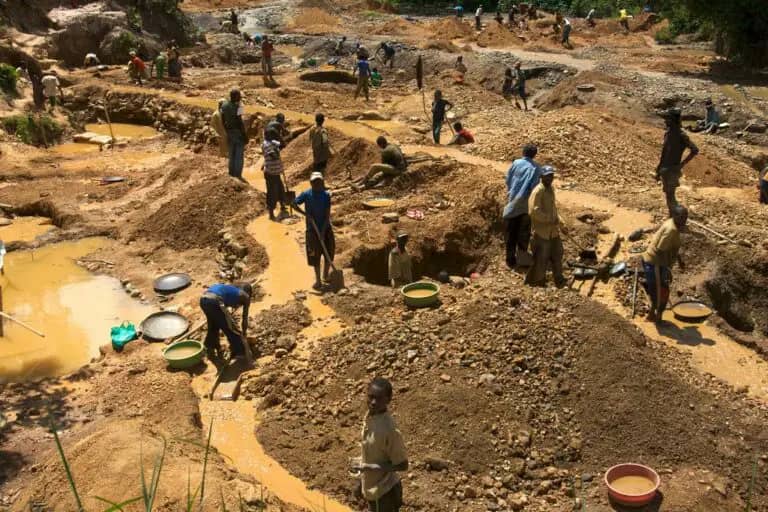
Before the sun rises over New Rayfield in Jos, the sound of shovels digging through the reddish soil can be heard from a forest behind the New Government House.
In that forest, young men and boys go down into narrow pits, searching for tin. Their clothes are stained with red mud. Mounds of dug-up earth surround the makeshift mining site.
Among them are two brothers, Abdullahi Garba, 16, and Sule Garba, 14.
The boys, who live in Topp Rayfield, Jos, should be getting ready for school. Instead, they spend their days digging in the earth.
"We are doing this because we need money for our school fees," Abdullahi told PREMIUM TIMES at the site. "We want to go back to school, but without money for the fees, it is difficult."
His younger brother, Sule, works beside him, helping to dig and process the earth.
"The work is hard, but we need the money," he said.
Their story highlights a troubling situation in Plateau State and other mineral-rich areas of Nigeria. Children and young people are getting into dangerous mining, not because they want to, but because poverty has limited their options.
For Abdullahi and Sule, mining is a way to pay for school fees.
For many others, it is a replacement for low-paying jobs that no longer meet their basic needs.
Recent events in other parts of the country show how deadly this choice can be.
A National Warning from Niger
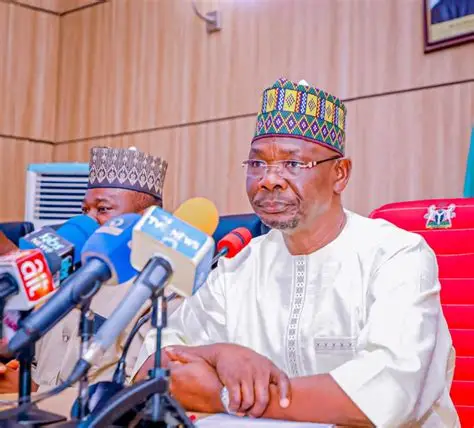
On September 17, 37 people lost their lives while in custody of the Nigeria Security and Civil Defence Corps in Minna, Niger State. They were arrested during operations against illegal mining.
The suspects were taken into custody around the M.I. Wushishi and Lukoto areas of Minna on September 15 and 16.
The details of the deaths are still under investigation.
The NSCDC initially claimed the detainees died from a suspected disease outbreak. However, reports from survivors raised questions about the conditions they faced in custody.
The federal government has ordered an investigation, and the Niger State NSCDC commandant along with other officials have been suspended while this is ongoing.
The ages of the victims add to the distress of the situation. Niger State Governor Mohammed Bago said they were between 14 and 18 years old.
This means that some of the deceased were children.
On Saturday, the federal government set up a 10-member independent committee to investigate the deaths and suspended 20 more NSCDC officers.
The Federal Ministry of Solid Minerals Development has sent mining and technical experts to help find out what happened.
Taraba Deadly Pit Collapse
The danger was highlighted again in nearby Taraba State on Thursday.
A mining pit collapsed in the Mayo Kam community in Bali Local Government Area, trapping miners underground.
Early reports said more than 20 people, including women and children, were trapped. Police later confirmed that five bodies had been found while rescue efforts continued.
This incident happened just days after the state tried to remove illegal miners from the site, according to police.
The state government has banned illegal mining activities through Order 6, while authorities urge for better mining practices.
The tragedies in Niger and Taraba have drawn attention to why young Nigerians are getting into mining.
In Plateau, that issue is clear in the red earth of New Rayfield.
Mining for School Fees
Abdullahi said he used to rely on menial jobs, but the pay was not enough to meet his needs or help him with school fees. Mining, he said, offers a quicker way to earn money.
"I was doing menial work before, but what I was getting was not enough," he said in Hausa. "Here, if you are lucky, you can make something that will help you pay your school fees."
His choice was not because he wanted to leave school. It was quite the opposite. Their stories show how hard times can push children into dangerous work.
The brothers are not alone. In parts of Plateau, artisanal mining is a key way for people with few options to make a living, attracting young people who once relied on casual jobs, petty trading, and other low-paid work.
It is hard to know the exact number of young people entering this field since much of the work happens informally and outside official records.
But the dangers are impossible to ignore.
A miner, Tizhe Danminchika, from Adamawa State, told PREMIUM TIMES he works under the license of a local mining company, even though he is not the owner.
Mr Danminchika said he buys unprocessed mineral-rich sand from local artisanal miners, most of whom are young people. He takes it to his processing site, where it is cleaned and sold, mainly to Chinese buyers.
"If business is good, I can make millions of naira in profit in a week," he said.
Most of his workers are young men and women engaged at different stages of the operation.
"Most young people are not worried about the risks because the business has given chances to thousands of young people across the state to support themselves and their families," Hajara Davou, who owns a mining mill in the Gura Topp area of Jos South Local Government Area, said.
Ms Davou began her mining journey by picking washed mineral deposits from mining ponds and selling them.
"I later became an overseer. That means I engage young artisanal miners in manual digging by providing for their feeding and other needs. After they extract the minerals, I buy the products from them and deduct the money I have spent," she said.
She eventually moved into mineral processing due to growing demand for processed products.
"I sourced a loan and set up a mining mill," she said.
Joseph Samuel, a 22-year-old mining mill operator and a graduate from Plateau State Polytechnic, said he gets ₦5,000 daily for meals and makes between ₦50,000 and ₦150,000 weekly.
"No government job will give me that kind of pay," he said.
Mining Affecting Class Attendance
Education officials say the rising appeal of mining is contributing to the number of children not in school.
Speaking during a campaign on the state's out-of-school children crisis in July, the Executive Chairman of the Plateau State Universal Basic Education Board, Sunday Amuna, said communities must help keep children in school.
Mr Amuna mentioned mining specifically as one of the activities pulling school-age children away from education. He warned that children not in school could be more vulnerable to crime and other social problems.
Davou Terry, chairman of the Plateau State School-Based Management Committee, also pointed out illegal mining, child labor, and early marriage as major reasons for the state’s increasing number of out-of-school children.
Mr Terry said the committee’s work in communities found that some children had started mining at a very young age.
This statement comes as Plateau faces an out-of-school rate of 23.2 percent, according to data shared during the campaign, while the dropout rate is above 28 percent.
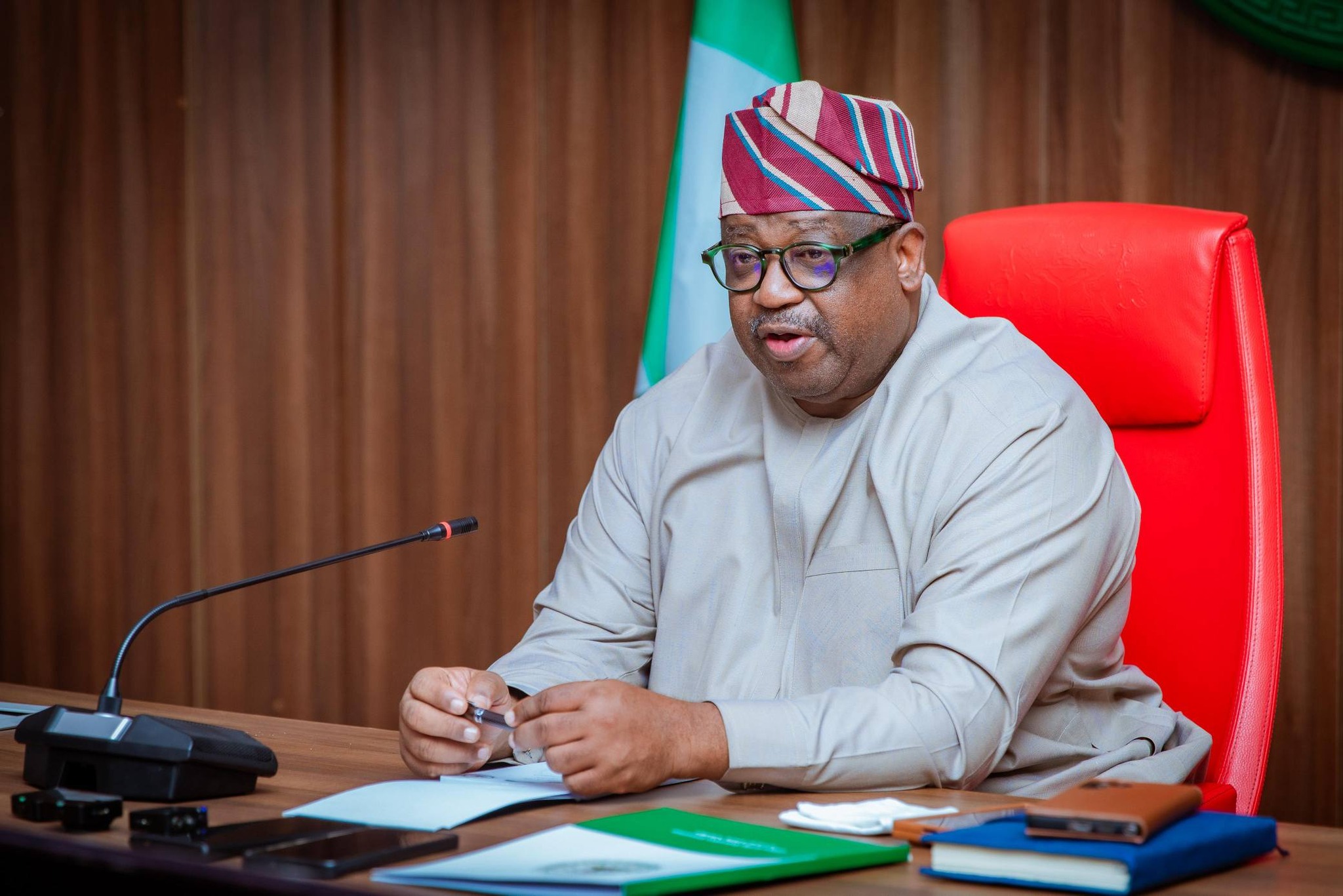

The warning follows concerns from the state’s environmental authorities about the safety and social effects of illegal mining.
In March, the former Commissioner for Environment, Climate Change and Mineral Development, Peter Gwom, took part in operations against illegal mining sites in parts of Jos.
Mr Gwom was later reassigned to Lands, Survey, and Town Planning, while Joshua Laven Ubandoma became the Commissioner for Environment after Governor Caleb Mutfwang’s cabinet reshuffle in August 2026.
The repeated warnings from education and environment officials highlight worries about more than just environmental damage. They point to how mining impacts children and young people’s education and futures.
A community leader in Plateau, Eric Davou, said local efforts to stop young people from leaving school for artisanal mining have had limited success.
Mr Davou, a former councillor, said communities have tried to respond to the growing involvement of youth in artisanal mining and attacks on mining sites by criminal groups by forming committees to raise awareness and create a task force to monitor mining activities.
"Unfortunately, some task force members took advantage of the situation by extorting money or demanding part of the products extracted by the miners. The enforcement did not work," he said.
"We took the awareness to places of worship, but it did not yield the desired results," he said.
A Century-Old Industry, A New Generation
Mining has influenced the history of Plateau for over a hundred years.
The discovery and exploitation of tin on the Jos Plateau changed the local economy and drew workers and businesses to the area.
But the industry also left behind many abandoned mining sites.
The Nigeria Extractive Industries Transparency Initiative (NEITI) has estimated that there are between 1,100 and 4,000 abandoned tin and columbite mines around Jos, along with more than 1,000 mine ponds scattered across the region.
These abandoned areas are still an environmental and safety concern.
Research on tin and columbite mining in the Jos Plateau has documented land degradation and issues from abandoned mining sites.
More recent studies have shown land sinking in old mining areas around Kuru and Guratopp, stressing the ongoing dangers linked to the region’s mining history.
Yet the old mining landscape continues to attract a new generation.
For young people struggling to make ends meet, the mineral deposits under Plateau’s soil offer opportunities that are hard to resist.
Danger Beneath the Soil
At the New Rayfield site, where Abdullahi and Sule work, there is little sign of the safety measures expected in regulated mining operations.
The boys work around deep holes with basic tools. They enter or work near unstable areas while digging. A collapse could bury them in seconds.
The danger is real.
In February, at least 37 miners died at an informal mining site in Kampani Zurak, Wase Local Government Area, after toxic gases built up underground, according to police reports.
In August, seven miners reportedly died when a mining pit collapsed at Kassa in Barkin Ladi Local Government Area.
After the Kassa tragedy, the Minister of Solid Minerals Development, Dele Alake, stated that Plateau has more than 4,000 abandoned mining pits and warned against entering those abandoned sites without proper authorization and safety measures.
These events show that the dangers facing artisanal miners go beyond illegal mining enforcement.
They include collapsing pits, toxic gases, unsafe shafts, and abandoned mine sites.
For Abdullahi and Sule, though, the immediate need to raise money for school is more pressing than those dangers.
"We know it is dangerous," Abdullahi said. "But we need to find a way to get money for school."
Philip Jakpor, founder and executive director of the Renevlyn Development Initiative (RDI), said calling young people involved in small-scale mining "illegal miners" misses the larger issues behind their actions.
The environmental expert and activist pointed out that poverty, unemployment, and weak regulations in mining communities must be discussed when looking at why young people are in this sector.
"First of all, we need to change the language used. What we hear is that these young kids are illegal miners. It is not true. They are artisanal miners," he said.
"There is a difference between illegal miners and artisanal miners. All the reports we see in the media call them illegal miners or suspected illegal miners. They are not. They are artisanal miners, young people trying to survive in difficult conditions."
Mr Jakpor said it is important to also focus on the owners of the mining sites where young people work.
"The illegal miners are the owners of those mines. That is why we ask: where were those kids mining? Who owns the place? We need to know the owner of the site," he said.
He added that children working in mining should be seen as vulnerable individuals, not criminals.
"Some of them are as young as 15, 12, 13. They are not illegal miners. They are artisanal miners, small-scale miners, trying to survive. That is what they are," he said.
When Poverty Competes with Education
The International Labour Organisation has often pointed out that poverty and economic pressure at home are reasons children get into work, including dangerous jobs.
Nigeria’s 2022 National Child Labour Survey showed millions of children involved in child labor, with many engaged in hazardous work.
The national data does not provide a current count of children working in mining sites in Plateau.
But the presence of Abdullahi and Sule at the New Rayfield site shows how hard times can push children into dangerous jobs even when they want to stay in school.
Mr Jakpor said the problem cannot be solved without addressing the poverty and unemployment that lead young people toward informal mining.
"You cannot stop it until you stop poverty. When you tackle poverty, that is when you can stop these things," he said.
"Tackling poverty, addressing unemployment, and improving development in mining communities will help resolve this issue."
Enforcement Alone Not Enough
Observers say that authorities need to enforce mining laws and protect communities from dangerous pits while providing real alternatives for young people who rely on informal work.
This means increasing access to education, skills training, apprenticeships, and safer job opportunities along with stronger regulation of artisanal mining.
Community leaders also believe enforcement must have more accountability.
Mr Jakpor said the government should identify and hold responsible those who own or control mining sites where children work.
"People are making huge profits from those communities. Why do those communities lack electricity, roads, schools, and healthcare?" he asked.
Back at the New Rayfield site, the two brothers keep working. They are not talking about becoming miners. They are hoping to return to school. But every day they spend in the pit puts them at risk of dangers that could make that return impossible.
Drop your comment
No comments yet — be the first to drop the gist 👇