
The Independent Corrupt Practices and Other Related Offences Commission (ICPC) has criticized the Budget Office of the Federation (BOF) for adding a fake agency called the Presidential Foreign Intervention Promotion Council (PFIPC) in the 2026 federal budget.
The finding comes from an investigation by the commission into the activities of the PFIPC, which the federal government claims does not exist.
The report states that the Budget Office processed and included the fake council in the budget without proper documentation and without checking if the legal basis for the agency was valid.
The investigation revealed that the BOF depended on an administrative code from the Office of the Accountant-General of the Federation (OAGF) and other documents linked to the Office of the Head of the Civil Service of the Federation (OHCSF), without confirming their authenticity or the existence of the council.
The findings shed light on how the fake agency, led by Adeniyi Adeyemi, managed to enter government systems and gain recognition from various federal institutions.
PREMIUM TIMES had reported earlier that Mr Adeyemi, who claimed to be the Director-General of the PFIPC, got an office at the Federal Secretariat in Abuja and received official communications related to the fake agency.
The presidency insists that the PFIPC was not established by the Bola Tinubu administration and that Mr Adeyemi was never appointed to lead it.
Mr Adeyemi is facing eight charges related to forgery and impersonation. He denies these allegations.
How PFIPC got into the budget
The Budget Office is in charge of preparing and coordinating the federal budget based on inputs from ministries, departments, and agencies.
The ICPC investigation found that to add a new agency to the national budget, an administrative or accounting code from the OAGF and an authorized establishment and recruitment waiver from the OHCSF are needed.
On 29 November 2024, the Budget Office received a letter from the OAGF with Administrative Code 0111062001 for the fake PFIPC.
But the investigation found that the Budget Office did not receive any official communication from the OHCSF about the authorized waiver for the fake council.
Instead, the document in its file was just a scanned copy.
On 20 August 2025, a budget proposal for the PFIPC included a suggested personnel cost of N3.85 billion, along with a flash drive of details about the proposed spending.
The Budget Office did not accept the proposed figure.
Since there was no approved salary structure from the National Salaries, Incomes and Wages Commission, the office recalculated the personnel costs using the Consolidated Public Service Salary Structure, according to the ICPC.
It came up with a total budget of N1.3 billion, which included N802 million for personnel, N200 million for overhead, and N300 million for capital expenditure.
The ICPC noted that the PFIPC did not provide figures for overhead and capital expenses. The Budget Office set those amounts based on the proposed personnel structure and comparisons with similar agencies.
The investigation found that the Budget Office moved forward with onboarding the fake council even with incomplete submissions.
According to the ICPC, the office relied on informal talks and unverified scanned documents, with no proof that the issues raised were communicated to or fixed by the original sources.
The commission said there was a budget provision for the fake agency, but no evidence showed that the money was released, paid, or spent.
This finding is important because PREMIUM TIMES reported in July that the 2026 Appropriation Act had a N1.3 billion allocation for the Presidential Economic Advisory Council/Presidential Foreign Intervention Promotion Council.
Mr Adeyemi later denied preparing or defending the budget, claiming he was in police custody while it was being processed.
No independent verification
The ICPC said the Budget Office did not do enough checks to confirm the legal basis of the fake PFIPC before considering it for the federal budget.
The investigation found no evidence that the office verified the council’s legal documents or approvals.
Instead, the BOF mainly relied on approvals linked to the OAGF and OHCSF.
The commission pointed out that the lack of proper verification was a key weakness that allowed the fake agency to slip through government processes.
The investigation also looked at the Budget Office’s Standard Operating Procedure for the Expenditure Department, which details how budget proposals are received, reviewed, and uploaded.


According to the procedure, staff should check submissions for completeness, flag issues, and escalate them to the Director of Expenditure.
The director is supposed to send the proposal back to the agency for clarification or corrections before continuing.
The ICPC found that these checks were not properly applied in the PFIPC case.
The budget proposal lacked overhead and capital estimates and other necessary documents, including an approved salary structure and recruitment waiver.
Even so, the Budget Office continued with the proposal and calculated the personnel budget using the Consolidated Public Service Salary Structure.
The investigation also found no proof that the Budget Office sent the proposal back to the fake council to get the missing documents.
Instead, officials relied on casual communication with representatives of the PFIPC and kept processing the proposal.
SOP weaknesses
The ICPC found broader weaknesses in the Budget Office’s internal controls.
The budget manager handling the PFIPC proposal told investigators that he had not seen or used the Expenditure Department’s SOP, which indicates that the procedures were not properly established.
The commission also found that the SOP was meant to be reviewed in November 2024 but had not been updated, leaving the department with outdated guidance.
Another weakness was the lack of a clear requirement for independent verification of key governance documents before a new agency could be included in the federal budget.
The ICPC noted that the current process did not specifically require verification of an agency’s legal documents, approved structure, supervising ministry, or salary structure.
The commission assessed the budget onboarding process as lacking sufficient verification and due diligence controls for new agencies.
It said that required documents and escalation steps were not consistently enforced, and the system did not demand independent checks of new institutions' legal documents.
"These weaknesses created a control gap that enabled the PFIPC to be included in the 2026 budget," the report said.
Systemic control failure
For the ICPC, the issues at the Budget Office go beyond just one budget proposal.
The investigation concluded that flaws in the budget onboarding process allowed a fake government agency to enter the federal budget without proper checks on its legal status.
The commission suggested that the Budget Office improve its onboarding rules for new ministries and agencies by requiring all necessary documents before including them in the federal budget.
These findings add to the controversy surrounding the PFIPC, highlighting problems in the verification systems of different government bodies.
The agency that the government claims does not exist managed to get official letters, secure office space, access public servants, open bank accounts, and find its way into the 2026 budget.
Mr Adeyemi insists he is innocent and says he will prove it in court. His criminal trial is still pending.
Another fake agency
The discovery of the PFIPC also led investigators to find another suspected fake agency called the National Brands Development and Made in Nigeria Special Project Office, which allegedly operated within the Office of the Secretary to the Government of the Federation.
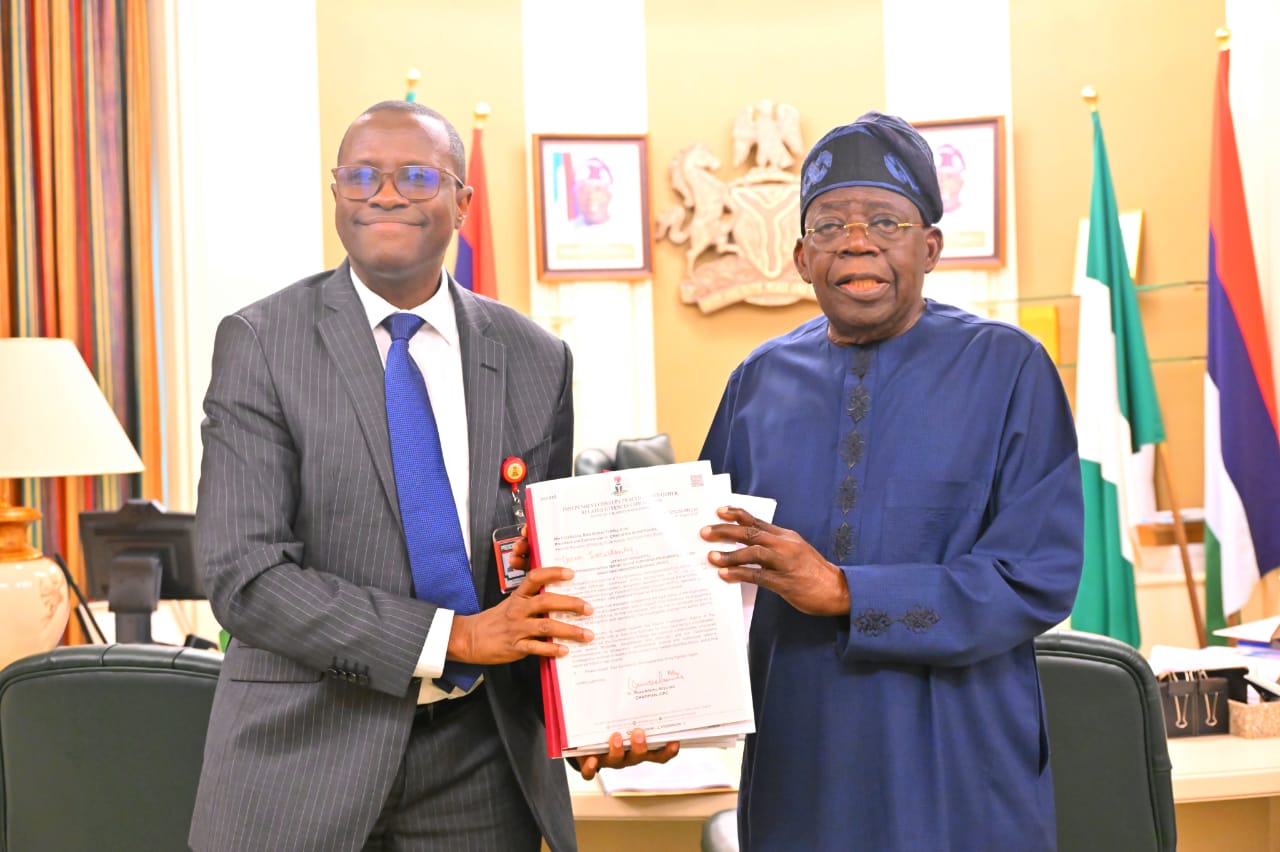
On Friday, President Bola Tinubu ordered the suspension of three permanent secretaries and the arrest of the agency’s alleged promoter, George Nwabueze.
ICPC Chairman Musa Aliyu said investigators also found that Mr Nwabueze used several variations of his name and that there were suspected collaborators within the OSGF.
The commission stated that forged documents were allegedly used to make the entities appear legitimate and help them open bank accounts.
The emergence of another fake agency in a federal office raises fresh concerns about the flaws in the systems that allow individuals and groups to present themselves as legitimate government bodies.



Drop your comment
No comments yet — be the first to drop the gist 👇