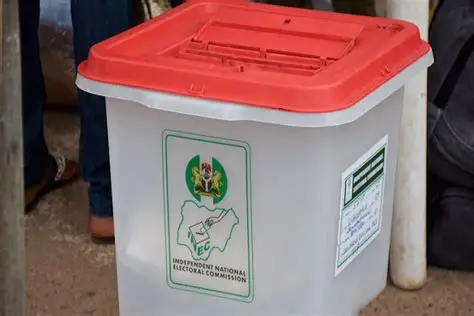
The Independent National Electoral Commission (INEC) and the Nigeria Police Force have promised to act against politicians who threaten their opponents as the 2027 general elections approach.
INEC and the police made these statements to Sunday PUNCH in response to growing concerns about aggressive language from political figures across Nigeria.
INEC pointed out that the Electoral Act allows it to take action against political parties and candidates found guilty of misconduct. The police added that incitement is a crime, and anyone found guilty will face arrest and prosecution.
Samson Itodo, the Executive Secretary of Yiaga Africa, and lawyer Jiti Ogunye also urged law enforcement to go beyond warnings and actually prosecute politicians whose remarks break the law.
Reports from Sunday PUNCH show that threats have become common in political campaigns. Many politicians are making statements that critics call threatening or likely to incite violence.
One notable remark came from Oyo State Governor Seyi Makinde on April 25. He warned opposition politicians not to be pressured into joining the ruling party.
Makinde spoke at an All Opposition Political Party Leaders meeting in Ibadan. He cautioned those urging politicians to defect to remember the violence seen during the First Republic.
He said, “Operation Wetie started from here. This is the same Wild Wild West.”
“Operation Wetie” refers to the political violence in Nigeria’s Western Region during the 1960s, with Ibadan being a key location for the unrest.
The phrase stems from the Yoruba language, meaning “wet him” or “soak it.” It became linked to attacks where political opponents had petrol thrown on them and their properties set on fire.
A week later, on May 2, Buba Galadima, a former Secretary of the New Nigeria Peoples Party Board of Trustees, made a controversial statement at a stakeholders' meeting in Abuja. He told Nigerians to go to polling units with “bottles and jerry cans of kerosene” during the elections.
Galadima said, “And during the elections, whether I am alive or dead, go to the polling centres with your bottles and jerry cans of kerosene. Either they do what is right, or we all die there. So, there will be no beneficiary.”
On August 3, Osun State Governor Ademola Adeleke declared that the people would not allow the August 15 governorship election to be rigged.
“Remember what happened in 1983. It started in Yorubaland when they cheated Bola Ige and Ajasin. Osun will not agree. We want a free and fair election,” he said.
Senator Francis Fadahunsi from Osun East was also seen in a viral video threatening members of the Accord Party in Ilesa.
In the Federal Capital Territory, Kuje Area Council Chairman Samuel Shekwolo reportedly threatened anyone not supporting the All Progressives Congress (APC) to leave the area.
Similarly, Borno State Youth and Sports Commissioner Sainna Buba threatened to flog those who did not support the APC in 2027.
In Ebonyi State, the new Chairman of Ohaukwu Local Government Area, Eze Ituma, warned opposition parties against political activities in his council ahead of the elections.
He stated that anyone whose activities conflicted with his interests could be declared persona non grata.
In Yobe State, APC Chairman Muhammad Gadaka made a shocking remark at a campaign rally in Nangere. He told married women whose husbands stop them from voting for APC to consider divorce.
“If your husband won’t allow you to vote for APC, stand up to him and seek a divorce. If you leave the marriage, I will pay your dowry and marry you,” he said.
These statements have raised fears about increasing political tension as parties rally support ahead of the elections.
The PUNCH previously reported that over 870 people have died in election-related violence since the National Peace Committee began its work in 2015.
The Electoral Act 2026 prohibits threats and violence during political campaigns. Section 97(1) states that no party, candidate, or group should threaten another with force to influence their election support.
Section 132 also makes it a crime to use threats or force to sway voting. Anyone found guilty could face a fine of N2 million or three years in prison.
Despite these laws, civil society groups and lawyers say politicians keep making dangerous statements because they face little punishment for such behavior.
INEC noted that political language becomes intimidation when it includes threats of force or violence against voters, candidates, or officials.
The commission warned that campaigns should not create fear that stops people from voting or targets certain groups.
Mr Adedayo Oketola, Media Adviser to the INEC Chairman, told Sunday PUNCH that the commission can monitor campaigns and sanction parties that break the rules.
He said campaigns should be “platforms of competing ideas, not theatres of war.”
Oketola explained, “Beyond inter-agency security coordination, INEC can issue queries and punish parties that fail to follow the Code of Conduct. Section 96(7) of the Electoral Act sets heavy penalties: Any candidate who breaks these rules faces up to N5 million in fines or 12 months in jail. Non-compliant parties could be fined N10 million initially and N2 million for each further offence.”
The police promised to crack down on politicians making inflammatory comments ahead of the elections.
Force Public Relations Officer Anietie Iniedu called incitement a criminal act and stated that the police will not tolerate statements that threaten public peace.
He mentioned plans for media campaigns to educate officers and the public before the elections.
“One of the things we will do is educate all commands about inciting comments. Incitement is a crime, and we will not spare anyone trying to heat up politics with such remarks,” Iniedu said.
He noted that the law will be enforced, and anyone arrested for inciting statements will be investigated and charged if necessary.
“The law is already there, and we will follow it. Once you are arrested, we will take your statement and move to court,” Iniedu said.
He also explained that investigations could take different forms, and some cases might need more time before prosecution.
Samson Itodo of Yiaga Africa condemned the spread of inflammatory comments. He called on the police to take stronger action against the politicians involved.
Itodo said law enforcement must act against politicians making statements that threaten public safety and the electoral process.
He criticized the way security agencies treat political figures and ordinary citizens differently.
“It seems there are two justice systems: one for the elite and another for the masses,” he said.
Itodo pointed out the case of Senator Fadahunsi, who received a police warning while others accused of inflammatory statements faced no clear actions.
He argued that security agencies should communicate better about their actions to build trust and prevent similar statements from others.
He warned that political threats could lead to violence, lower voter turnout, and hurt the credibility of elections.
“It’s highly likely that a tense political environment will lead to violence. When violence happens, people lose their chance to vote freely. This can cause low turnout,” he said.
Itodo added that threats against specific political figures might prevent citizens from participating in elections, making it hard to call them free and fair.
Dr Joe Odumakin, President of the Centre for Change, linked the rise in threats to the desperation for power and the politicization of ethnic and religious issues.
She urged politicians to stop seeing opponents as enemies and to focus on ideas, policies, and leadership in elections.
“Security agencies and political parties must act firmly against hate speech and incitement. Nigerians should insist on campaigns based on issues. The 2027 election must focus on ideas, not threats and violence,” Odumakin said.
She called on civil society, the media, religious leaders, and traditional institutions to encourage political tolerance and resist divisions based on ethnicity, religion, or politics.
Jiti Ogunye, a human rights lawyer, described the situation as political desperation. He said politicians should persuade voters, not threaten them.
He reminded everyone that threats are crimes under the Electoral Act and should lead to penalties.
“Threats are illegal under the Electoral Act and Criminal Laws, but politicians keep using them because violence and threats have become part of their strategy to gain or keep power,” Ogunye said.
He urged the police to do more to prevent crimes and prosecute offenders.
Ogunye also expressed doubts about the independence of law enforcement, saying they are part of the government.
Victor Opatola, a constitutional lawyer, suggested political parties should discipline members who make inflammatory comments.
He said the lack of decisive action from parties and law enforcement is allowing threatening rhetoric to spread.
“When individuals within a party make such inflammatory statements, the party should take action. But for political reasons, they often do not,” he said.
Opatola added that law enforcement must ensure that those who break the law face consequences.
He also raised concerns about law enforcement neutrality during elections, saying citizens may need to turn to the courts if authorities do not act.
The Coalition of United Political Parties called the situation a “state-capturing agenda.”
CUPP National Secretary Peter Ameh said inflammatory statements threaten democracy and could silence opposition voices.
He warned that continued intimidation could harm Nigeria’s democratic system.
Ameh urged the police to take strong action against politicians making such statements.
“Our police should protect all political parties as they represent Nigeria. But they have not acted to stop these political threats,” Ameh said.
He accused the police of not acting decisively due to their ties with those in power.
The ruling All Progressives Congress (APC) rejected claims that it promotes political violence or inflammatory campaigning.
APC National Secretary Ajibola Basiru stated that the party does not support violent campaigns or use threats.
“Our party does not engage in violent campaigns or use threats or inflammatory language. We believe in campaigning on our government’s achievements at all levels,” he said.
Basiru also condemned attempts to use religion or ethnicity for political gain.


Drop your comment
No comments yet — be the first to drop the gist 👇