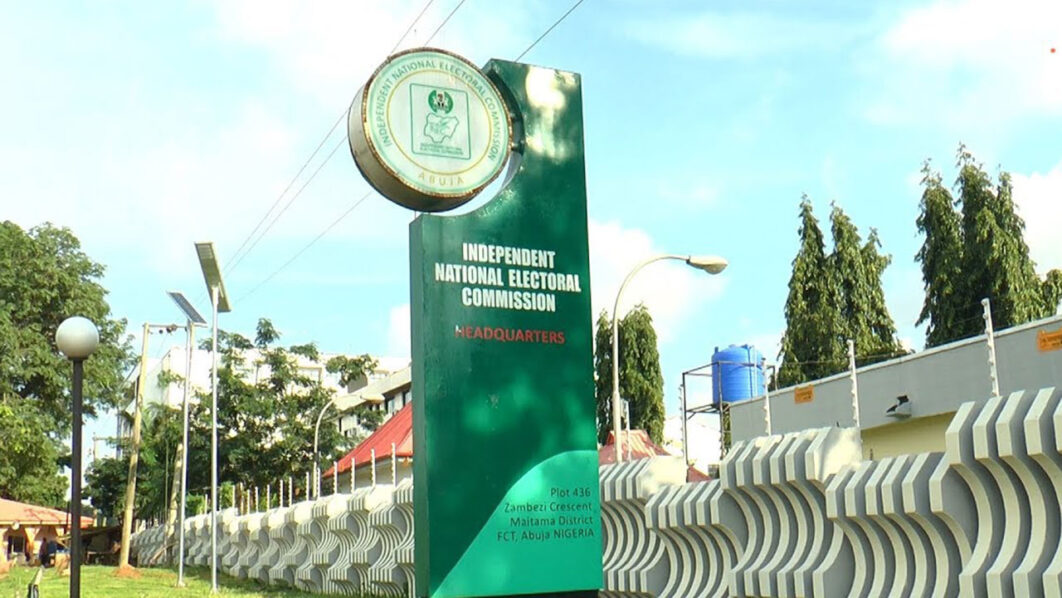
The Independent National Electoral Commission (INEC) has launched an electronic version of the polling unit result sheet. This new tool aims to stop differences between manual results and those uploaded to its result viewing portal before the 2027 general election.
INEC explained that this system works with the Bimodal Voter Accreditation System (BVAS). It will prevent results from being uploaded if the electronic figures do not match the details on the physical Form EC8A.
Victoria Eta-Messi, INEC’s Director of Voter Education and Publicity, shared this information on Thursday. She spoke during an X Space discussion hosted by Yiaga Africa. The talk was titled ‘Testing BVAS, Testing IReV, Testing Trust: What INEC Must Get Right’.
She said the electronic result sheet, called EEC8A, is a way to ensure accountability. This is to tackle worries about the honesty of results sent to the INEC Result Viewing Portal (IReV).
In this system, polling officials must enter the figures from the physical Form EC8A into the electronic version on the BVAS. The system checks these entries against accreditation figures and other details before allowing the results to be uploaded.
“We saw that there were also other mischievous attempts by poll officials, where at the backend you would see things that were far from being an election result. So the EEC8A has been input into the BVAS, which now allows you to input the data on the EEC8A physically, and it must match your accreditation figures as well. It helps you to correct yourself,” she said.
Ms Eta-Messi added that if there are any differences, the system will block the upload. This will give officials a chance to check and fix genuine mistakes before moving forward.
“So, it will block you if your entries are not correct. That is one of the major reasons why the EEC8A was introduced, to self-correct you and also to ensure that anyone who is trying to be mischievous will not get away with it,” she said.
INEC plans to conduct a nationwide mock accreditation and result management exercise on Saturday, 28 November. This will test the system's effectiveness before the 2027 elections.
This mock exercise comes after the issues seen with the electronic transmission of presidential election results during the 2023 general election. This made many people lose faith in INEC’s electoral technology.
In the 2023 elections, INEC's failure to upload presidential results to IReV in real-time led to heavy criticism and doubts about its transparency.
Ms Eta-Messi acknowledged the technical problems faced during the elections. She noted that the large amount of data from the presidential election played a role in the issues.
She explained that the mock exercise will check if INEC's infrastructure can handle election data nationwide. This is different from past off-cycle elections, which had smaller data volumes.
“The commission wants to conduct a mock exercise so that we will test the system to be sure that it has the capacity to take on the data that it receives at a national level ahead of the election,” she said.
She also mentioned that finding technical issues before the election would give the commission time to fix them.
“We should discover the gap now rather than being taken by surprise on election day,” she said. The aim is to identify problems during the mock exercise instead of on election day.
The mock exercise will cover 17,676 polling units across the 36 states and the Federal Capital Territory (FCT). It will include mock accreditation, voting, counting, and electronic result transmission.
Ms Eta-Messi explained that the mock exercise will use dummy ballots and fake political party names, not actual party names.
Polling is set to start at 8:30 a.m. and finish at 2:30 p.m. Voters in the selected areas will need to show their Permanent Voter Cards (PVCs) to take part in the mock voting.
Despite this, lawyer and social commentator Inibehe Effiong said the commission's explanation did not fully address public worries about its credibility after the 2023 IReV failure.
Mr Effiong believes INEC took too long to explain what went wrong in the 2023 elections. He said the way it handled the issue added to public distrust.
“I heard the explanation, the familiar one, yet not satisfactory to some of us,” he said.
He criticized INEC for not responding quickly to public concerns after the 2023 elections. He recalled the former INEC chairman's arrogance when the issue was brought up at the National Collation Centre.
Mr Effiong rejected the idea that the failure was due to not testing the system properly at a national level.
“I do not accept the explanation that the reason why INEC failed was that there was no mock test or accreditation at the level with the kind of spread that they want to experiment now. I do not have any scientific basis to support this explanation,” he said.
He insisted that IReV is key to electoral transparency because it lets citizens check polling unit results on their own.
“The reason why IReV is so fundamental is that it is what I call a self-censoring device. It is a self-censoring technology. It is a technology that allows the commission to fact-check itself,” he said.
He urged INEC to assure Nigerians that the technology would work in 2027. He also called for clear plans in case of another failure.
He questioned the Electoral Act’s provisions allowing the use of physical result forms if electronic transmission fails. He said INEC must show how it will ensure transparency if that happens.
A PREMIUM TIMES journalist, Qosim Suleiman, also pointed out that the results transmission process and the integrity of the voters’ register are big worries ahead of the 2027 elections.

He said even though BVAS had success in voter accreditation, public concerns after the 2023 elections focused on the lack of transparent results uploading.
“From my understanding and reporting, and talking to people, the BVAS is not exactly the major concern for people. It is in a way, but not exactly the major concern,” he said.
Mr Suleiman added that the planned exercise will mean more if it tests the entire results management and transmission process, instead of just focusing on accreditation.
He also raised concerns about INEC’s handling of irregular registrations found during the recent voter registration. He noted that some questionable profiles still showed up in the online register despite assurances of a clean-up.
He said having these questionable entries raised doubts about how well INEC was cleaning the register.
In response, INEC’s Resident Electoral Commissioner in Edo State, Obo Effanga, said the commission had removed many irregular registrations found during the display of the provisional voters’ register.
He explained that the register initially had over 103 million entries from the registration done between August 2025 and July 2026.
After Nigerians raised complaints during the claims and objections process, the commission cut the number to just over 100 million.
Mr Effanga mentioned that some irregularities involved fake names, duplicate photos, and multiple registrations. Some of these had been in the register for years due to past technology limits.
He said the commission also found suspicious registrations from the new online voter registration.
The REC emphasized that even if someone had a PVC from an irregular registration, they could not vote if their name was removed from the final register.
“If you have a PVC and your name is not on the voters’ register, you cannot vote,” he said.
He added that the final register will be published on 15 December.
Mr Effanga also said INEC had delayed its planned nationwide voter revalidation until after the 2027 general election due to its timing.
Beyond the technology, participants at the discussion stressed that the skills of election officials are also crucial for the 2027 elections.
Akindeji Aromaye, a senior media associate at Enough is Enough Nigeria, said INEC needs to show that its staff can operate BVAS, check voters, and complete result sheets during real elections.
He mentioned issues from the 2026 off-cycle governorship elections in Osun and Ekiti, where observers saw officials struggling with biometric checks and completing Form EC8A correctly.
He said talking about BVAS and IReV without considering the people using them misses a key part of the electoral process.
“Sometimes we discuss BVAS and IReV as though the technology operates independently, and it actually doesn’t,” he said.
Mr Aromaye said the mock exercise should check if election officials can do their jobs well under pressure. It should not only look at the number of personnel trained.
He added that the exercise should also test how well the support system works when officials face technical problems.
“It should not only test whether the devices work. It should also test whether the support system responds effectively when they encounter problems,” he said.
Meanwhile, Yiaga Africa’s Executive Director, Samson Itodo, said the group will send 300 observers to watch the mock exercise.
He said the observers will evaluate how BVAS and IReV work, and the organization will also use its election results analysis dashboard to monitor the process.
Mr Itodo said the exercise will help assess if INEC can find and fix weaknesses before the main election.
“Let us overwhelm the system and test whether this system that INEC has created will be functional,” he said.
He added that Yiaga Africa will share its findings and hold another X Space discussion to review the exercise, identify gaps, and learn lessons for the 2027 elections.
Mr Itodo encouraged Nigerians in the selected polling units to join the exercise and share their experiences with civil society groups.
He stressed that INEC must remain open to scrutiny. Nigerians and civil society should keep holding it accountable.
Drop your comment
No comments yet — be the first to drop the gist 👇