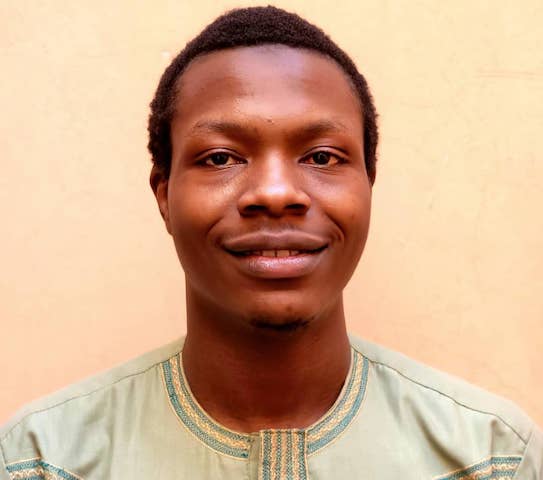
Some journeys end suddenly. Some dreams fall apart under heavy institutional pressure. Sometimes, a certificate is denied, but the idea behind it keeps going. This is the strong message in Yushau A Shuaib’s memoir, MNI versus MNIPR in NIPSS: Tackling Institutional Bullying. While the book tells the story of Shuaib’s experience at the National Institute for Policy and Strategic Studies (NIPSS), the most interesting part, Chapter Nine, “A Blessed Disappointment”, shares a tale that goes beyond conflict. It is about a research project that continued despite challenges and found a greater purpose beyond the institution that tried to suppress it.
The chapter kicks off with a simple but deep question: Who really owns an idea? For Shuaib, the idea was a research project called “Artificial Intelligence and Crisis Communication in Nigeria’s Public Sector: An Assessment.” This project, approved during Senior Executive Course 47, aimed to look at how AI could improve crisis communication in Nigeria’s public institutions. It was a bold and timely project, built on Shuaib’s many years in journalism, public relations, and crisis communication.
Then, things took a turn.
After Shuaib left NIPSS, an event he describes as a clear case of institutional bullying, the support for the research fell apart. The certificate he wanted was gone. Access to resources vanished. What started as a formal academic project quickly turned into a personal battle.
Many researchers would have given up. Nigerian institutions have many unfinished theses, abandoned dissertations, and promising studies stopped by red tape, lack of funding, or unfriendly administration. But Shuaib’s project kept going. As he writes, the research “outlived the controversy,” surviving not because of support from the institution but because of its importance to Nigeria’s crisis situation.
That importance is clear. Every big crisis in Nigeria happens on two levels: the crisis itself and the information war around it. Terror attacks, disease outbreaks, floods, and community clashes all come with a wave of false information, old videos, fake statements, and manipulated casualty figures. In today’s Nigeria, misinformation is not just a side effect of a crisis; it is part of the crisis.
Shuaib’s study, based on Situational Crisis Communication Theory, Networked Crisis Communication Theory, and Diffusion of Innovations Theory, looked at how AI could help institutions respond better in crisis situations. Using a mixed-methods approach, it surveyed communication professionals from security agencies, emergency management bodies, and public institutions, while interviews with key players offered a deeper understanding of how ready institutions are.
One of the study’s most surprising findings is what Shuaib calls Nigeria’s awareness, adoption gap. Communication professionals know more about AI. Many have gone to workshops, tried generative tools, and followed global trends. But institutional use of AI is still very low. AI is often used just for writing statements or watching social media, while more advanced uses, like predictive analytics, misinformation detection, and smart crisis response, are mostly ignored.
Nigeria is full of ideas. But it often lacks the courage to put them into action.



Ironically, the research that started inside NIPSS found real life outside of it. After Shuaib’s exit, the study continued to grow. Its findings were shared with the Centre for Crisis Communication (CCC) and the National Information Technology Development Agency (NITDA), starting discussions on bringing AI into Nigeria’s crisis communication system. These talks led to the National Symposium on Artificial Intelligence and Crisis Communication at the National Defence College, where government officials, security agencies, academics, and tech experts looked at the future of crisis communication in Nigeria.
The project eventually turned into a 200-page book, AI in Crisis Communication in Nigeria: Challenges and Prospects, supported by important figures in technology, strategic communications, and academia. More impressively, it gained international attention, being shortlisted for the Golden World Awards (GWA) of the International Public Relations Association (IPRA) in Athens, Greece.
This success matters not just for the author but for Nigeria too. It shows that research based on Nigerian issues can stand up on the world stage. A project that could have faded in the shadows of institutional conflict instead became a globally recognized addition to crisis communication knowledge.
This irony is clear for the reader: the institution that approved the research also disrupted it. But that disruption led to a broader journey, one that took the work beyond the classroom into policy talks, national discussions, and global recognition.
Chapter Nine is special because it turns disappointment into an opportunity. It reminds us that institutions meant to nurture leadership must not silence ideas that can help society. The true loss in such cases does not always fall on the individual; sometimes, it is on the country.
In the end, “A Blessed Disappointment” is not just a chapter title, it is a key message. It claims that some ideas are too important to stay locked in their beginning place. They find their own audience, their purpose, and sometimes, the recognition they always deserved.
Shuaib’s memoir shows the strength of the mind. It shows that while institutions may disrupt a career, they cannot stop an idea whose time has come.



Drop your comment
No comments yet — be the first to drop the gist 👇