
In June, PREMIUM TIMES shared a story about Bello Magaji, a former military officer convicted of sodomy. He avoided jail time, received a pardon, and got a job at the American University of Nigeria (AUN) in Yola, Adamawa State.
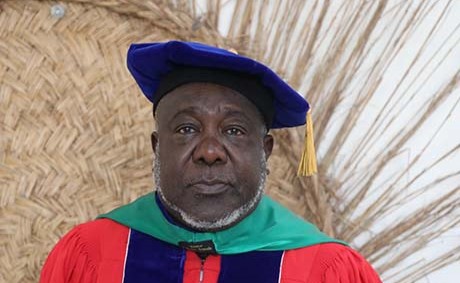
In this interview with our reporters, Qosim Suleiman, Ademola Popoola, and Fareedah Bakare, the President of AUN, Dwayne Frazier, talks about how the university is dealing with the situation.
PT: PREMIUM TIMES recently reported about one of your staff members, Dr. Bello Magaji. He was convicted but never served his time. What was the university's reaction when this story came out?
Dwayne: I want to say I didn’t know about this. When we found out, we acted quickly. We placed him on administrative leave and formed committees because Nigeria follows the rule of law, just like the United States, which is the third largest democracy.
We want to ensure that everyone has a fair chance to speak. That process is still ongoing. We made sure he could explain why his military background was not included in his resume. We aim to be fair in this situation.
PT: After our story, many asked how the university did not find this out. What did you discover during the background check, and how did this information slip through?
Dwayne: He was hired before my time. There were different birth dates on his documents, which can create confusion. I didn’t handle the background checks myself and didn’t realize people sometimes use different birthdates. This can make it hard to identify someone.
The main issue for many universities is that applicants must provide a full work history. You can’t later say, “That part wasn’t important.” We need to determine what is relevant.
If everyone had been honest from the start, we could have had a different discussion. Surprises like this make it look like the employer was caught off guard, and that is not good for anyone involved. It is not good for the candidate, the employee, or even the university leadership. I say this because everyone deserves a fair chance to explain themselves.
PT: What did the military tell you about this?
Dwayne: We have always had a good relationship with the military. But with the different birth dates and the picture showing he aged, they couldn’t confirm he was the same person in the rank. As you know, it’s tricky when you receive a letter saying he was honorably discharged.
I would never expect someone who got a presidential pardon to still be honored in that way. I’m not Nigerian, so I may not fully understand everything. But in the US, you wouldn’t see that happen. This caught me by surprise.
I should not be surprised. I’m learning quickly, and my team has been very supportive, including many Nigerians and Americans. We have great Governing Council members who understand the law. They have been very helpful. It is about doing the right thing.
PT: We asked Bello Magaji why he did not disclose his past. He said the university never asked. Is this true?
Dwayne: That is not true. The application clearly asks for a complete work history. You can’t just skip parts because you don't like them.

If I didn’t include every university I worked for, the firm that brought me here would not have hired me. They verified every detail and called every school I worked at. They wouldn’t hire someone who hides information.
I’m not saying he was trying to hide anything. But when you leave out something significant, it raises questions. I come from a military family, and the military teaches a lot about character and leadership. This is important in any university.
To say it’s not relevant and we didn’t ask is incorrect. We did ask. It’s in the application. It asks specific questions about any criminal convictions. A presidential pardon is significant, but it does not erase the conviction. It only lifts penalties.
If I ask, “Have you ever been found guilty in court?” You can say, “I was pardoned,” but you must still mention the conviction. Omitting it is misleading. During our time with him, he did well and was always helpful. But rules are rules, and we must be honest with each other.
PT: A day after our story was published, the university suspended Dr. Magaji indefinitely. Can you update us on the situation? Have there been inquiries, and what have the findings been?
Dwayne: I can’t share the findings yet because they will be released soon. The first group is focused on verifying what is in the application. He met with them to discuss his case. The committee included staff and faculty of the same rank, along with our legal counsel.
They listened to him and wrote a report on their findings. Another group will help advise me on what penalties to impose based on our employee handbook. This will happen soon.
PT: How did Dr. Bello Magaji react when all this came out and the university suspended him? Was he calm?
Dwayne: He was actually calm. I’ve never had any disagreements with him. He has always been kind and gentle. I mention this because I am not trying to destroy anyone’s character. Personally, he has been nice to me.
But laws are laws, and integrity matters. He was calm when I first mentioned that PREMIUM TIMES said he was the same person. He said, “Yes, I’m the same person, but I was pardoned.” He seemed a bit indifferent about a serious issue, but he was not rude.
He knew the process would continue, and he was ready to follow it. I was pleased he handled it well because discussing such matters is not easy. After that, he felt he couldn’t speak freely without legal counsel. We will wait for the findings in the next 30 to 60 days. Everyone has the right to be represented.
Drop your comment
No comments yet — be the first to drop the gist 👇