Investors can make between $4 and $6 for every $1 spent on rangeland restoration, according to experts from a new report. They are urging the private sector to view degraded rangelands as a chance for investment, not just a charity project.
The report is called "Rangelands Rising: Investing in Sustainable Management and Restoration". It is published by the International Livestock Research Institute (ILRI), GIZ, the Economics of Land Degradation Initiative, UNCCD, and the International Union for Conservation of Nature (IUCN). The report was launched during COP17 in Mongolia on Wednesday.
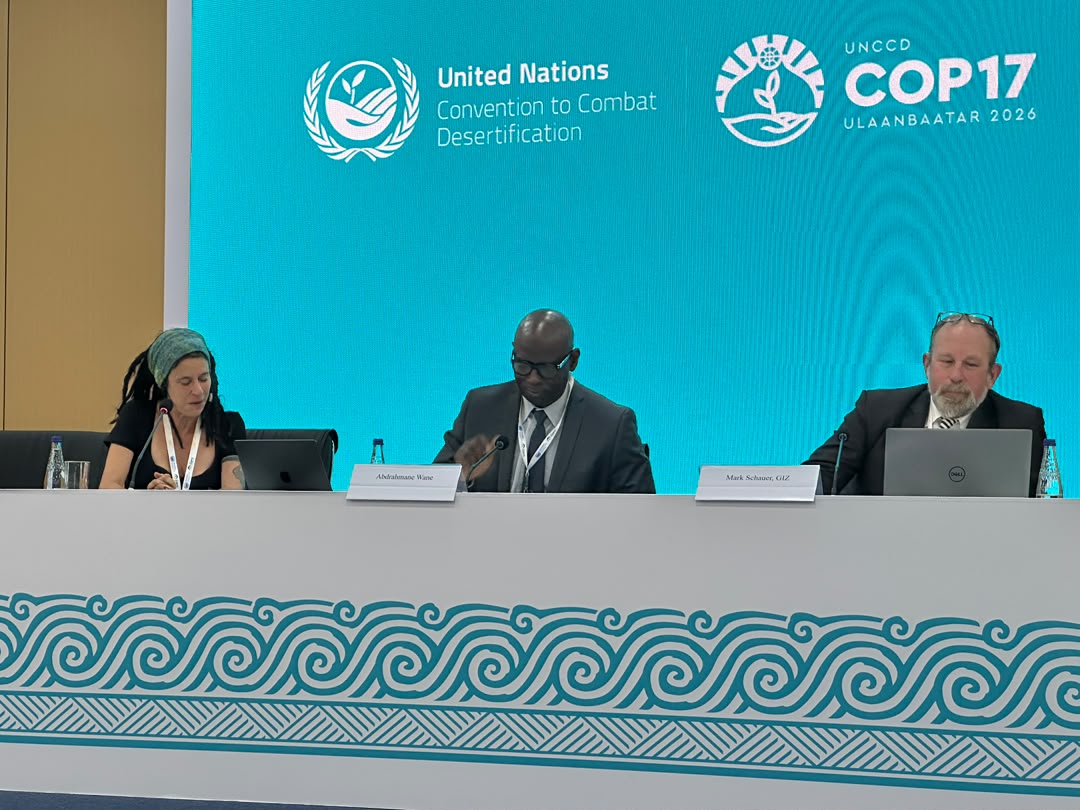
Experts Mark Schauer, a Senior Programme Officer at GIZ, and Abdrahmane Wane, Regional Director for West and Central Africa at ILRI, discussed the need for more investment in rangeland restoration during the presentation at the United Nations Convention to Combat Desertification (UNCCD COP17) in Ulaanbaatar, Mongolia.
They explained that the economic benefits from restoring rangelands provide a solid case for governments, development agencies, and private investors to allocate more resources for sustainable rangeland management.
The researchers also pointed out that successful restoration should not only focus on how many hectares are restored or how much vegetation grows back. It should also consider how it improves the lives and resilience of communities that depend on rangelands.
In response to PREMIUM TIMES’ questions about why investors should put money into rangeland restoration, one expert explained that the findings show a clear economic reason. "From $4 to $6 can be generated if we invest with one," Mr Wane said. He added that this shows investment in rangeland restoration is not just about charity, but it makes economic sense.
The report includes case studies from places like Brazil, West Africa, and Mongolia. These examples show how restoration can provide both environmental and economic benefits. The experts highlighted that investments should not only restore damaged areas but also contribute to healthier ecosystems, better incomes, and reduced vulnerability for people living in rangeland areas.
They emphasized that this approach is crucial because pastoralists and communities in rangelands have important knowledge about managing their ecosystems, which they have built over generations. "Recognise the front-line custodians as personalities, because they are living there. For generations, they have been paying to maintain," Mr Wane noted.
The report argues that investors and policymakers should see pastoralists not just as beneficiaries of restoration programs but as key players in keeping rangelands productive. Mr Schauer added that businesses dependent on rangelands also have a direct reason to invest in restoration. Healthier landscapes lower risks for their operations.
"If you have businesses who are depending on these rangelands, investments into improved rangelands is also decreasing the risks for their businesses," he said. "We want them to invest in sustainable rangeland management, in restoration, to maintain these value chains and their line of work."


During their presentations, the experts recognized that private investment alone cannot solve the big problems of rangeland degradation. Issues like insecure land rights, weak governance, and high costs can make financing rangeland projects tough.
They called for public investment to lower risks and create conditions that attract private capital, including through blended finance. "Public investments need to be done to decrease risks and provide an option for crowding capital," Mr Wane said.
The report looks at several innovative financing methods that could help attract money for rangeland restoration. This includes blended finance and debt-for-nature swaps. The experts believe that putting an economic value on rangelands could help convince policymakers to raise both public and private funds.
"Economics can be some kind of language" to communicate the value of rangelands to decision-makers and investors, one presenter said. These findings are especially important for Africa, particularly Nigeria and West Africa, where many people rely directly on pastoralism and other rangeland livelihoods. Degradation, climate change, and land pressures threaten these ecosystems.
At COP17, the theme is "Restoring Land, Restoring Hope". Many discussions are centered on rangeland restoration and finance. This event also marks the International Year of Rangelands and Pastoralists, stressing the need to restore degraded drylands and protect pastoral communities worldwide.
The experts added that investment should cover more than just restoration activities. It should include access to water, healthcare, climate information, finance, insurance, better livestock genetics, and secure land rights. "There is no successful investment without also taking into account an improvement of pastoral livelihoods," one expert said.
They also highlighted the importance of protecting pastoral mobility as a key strategy to adapt to changing climate conditions. The experts believe that while indigenous knowledge is important, it should be paired with scientific research, as climate change affects environmental conditions.
Changing temperatures, water availability, and extreme weather can make traditional practices less effective. Pastoralists need access to the latest climate and scientific information. With the report estimating returns of up to $6 for every $1 invested, the message for investors is clear: restoring rangelands can be both necessary for the environment and a good economic opportunity.



Drop your comment
No comments yet — be the first to drop the gist 👇