
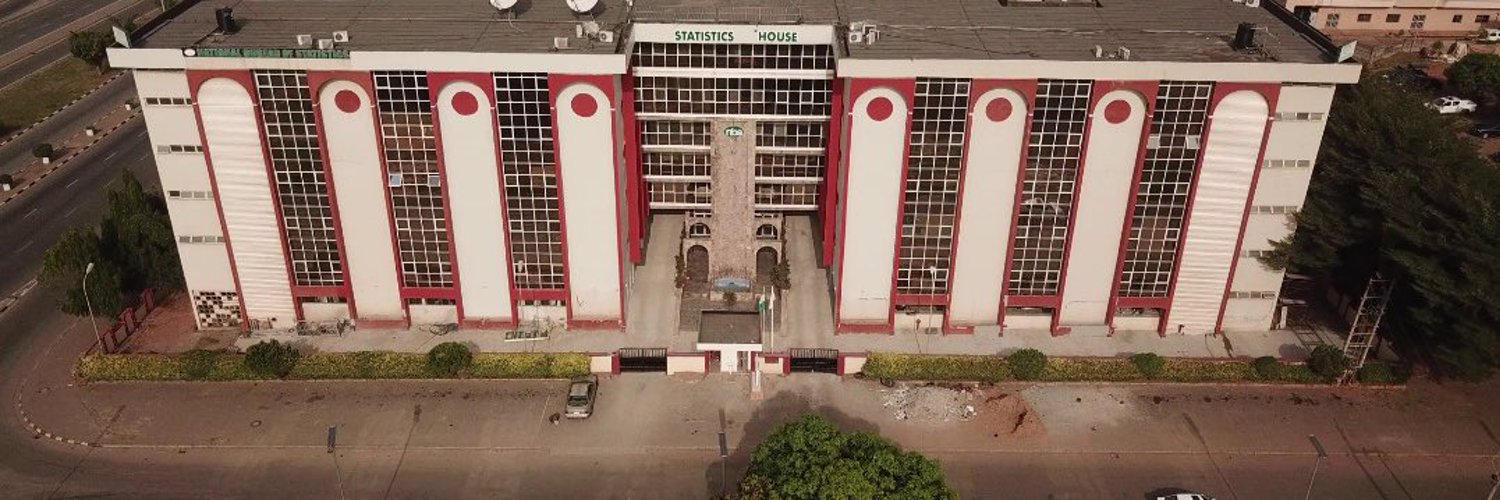
The National Bureau of Statistics (NBS) has reported that total capital coming into Nigeria was $10.37 billion in the first quarter of 2026.
The bureau's report shows this amount is higher than the $5.64 billion recorded in the same quarter of 2025, marking an increase of 83.83 percent.
When compared to the previous quarter of Q4 2025, capital importation rose by 60.97 percent from $6.44 billion.
The report states that Portfolio Investment led the way with $9.86 billion, making up 95.09 percent of the total. Other Investment followed with $374.48 million, which is 3.61 percent.
Foreign Direct Investment (FDI) had the smallest share with $135.08 million, just 1.30 percent of total capital importation in Q1 2026.
According to the NBS, FDI inflows fell to $135.08 million in Q1 2026 from $357.80 million in Q4 2025. This is a decline of 62.25 percent.
"The banking sector saw the highest inflow with $7.55 billion, which is 72.79 percent of total capital imported in Q1 2026. This was followed by the financing sector at $2.42 billion (23.42 percent) and the production/manufacturing sector with $152.27 million (1.47 percent)."
"Most of the capital during this period came from the United Kingdom with $5.08 billion, which is 49.01 percent of total capital imported. The United States followed with $3.18 billion (30.69 percent) and the Republic of South Africa with $983.83 million (9.49 percent)."
"Standard Chartered Bank Nigeria Limited received the highest amount of capital importation in Q1 2026, totaling $4.41 billion (42.56 percent). Stanbic IBTC Bank Plc followed with $2.77 billion (26.79 percent), and Rand Merchant Bank had $930.82 million (8.97 percent)."

Daily Trust notes that while overall capital inflows rose significantly, the drop in FDI shows that long-term investment interest is still weak compared to short-term capital flows.
Daily Trust also explains that while FDI is seen as a solid form of foreign capital importation, involving direct investments in businesses, Foreign Portfolio Investment (FPI) is about buying financial assets in another country without being involved in managing those businesses.
Investors buy stocks, bonds, or mutual funds on foreign exchanges. These investments are risky as investors can pull out their funds quickly if they think the economy might face problems.
Economist Dr. Marcel Okeke stated that the drop in FDI reflects Nigeria's economic situation and the tight monetary policy in place.
"It shows the bad investment climate in the country and the tight monetary policy we have. Because of that, we have high interest rates which lead to high returns on financial assets, attracting foreign portfolio investors.
"Instead of making real investments, they prefer to trade these financial papers and gain huge returns due to the high yields from the government. This has been the trend for years. They won’t come here when they can make money from abroad.
"If they try to come, the conditions here are tough. Poor infrastructure is a problem. Setting up a business means you need to provide your own power. You also need your own security, water supply, and the transport costs are too high. With high inflation, even potential customers can’t afford what you produce."




Drop your comment
No comments yet — be the first to drop the gist 👇