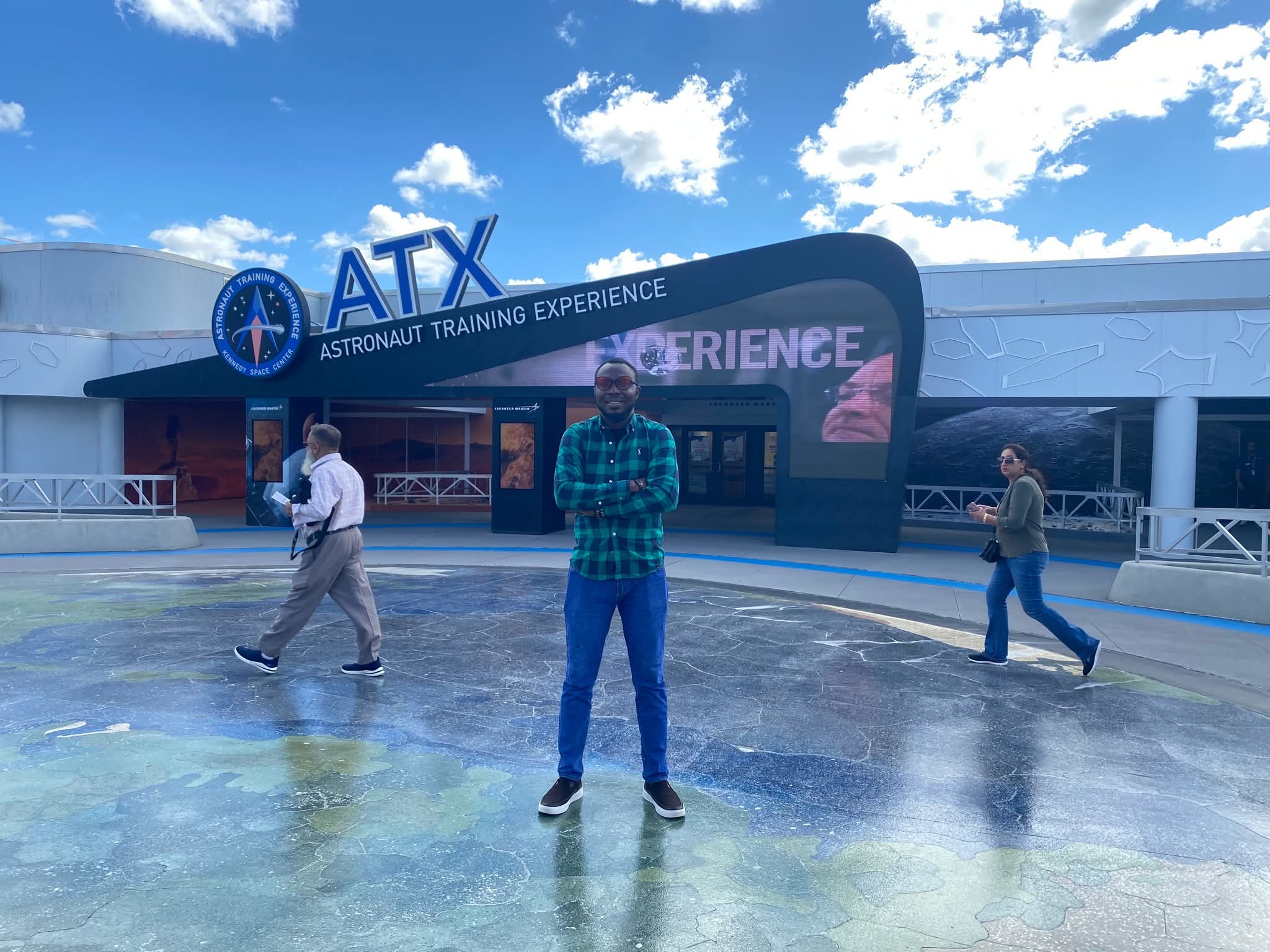
When I got selected for the 2025 International Visitor Leadership Programme (IVLP), sponsored by the United States Department of State and the U.S government, I knew it would be more than just a professional exchange. I did not expect how deeply it would change my views on trade, finance, development, culture, America, and Africa's role in a connected world.
From the first moment I landed in the United States, I felt this would be a special journey. The programme gathered a diverse group of economists, financial analysts, policy researchers, government officials, trade specialists, and investment analysts from Africa, Europe, Asia, the Caribbean, and the Americas.
As a business and financial journalist, my role in the group was unique. While many people focused on policymaking, regulations, or investments, I often looked at these topics through the wider lens of society and Africa. This position pushed me to ask many questions and led to some valuable insights.
Our travels took us to various American cities, each teaching us different lessons about economics, governance, culture, trade, technology, arts, and development.
In Washington, D.C., Philadelphia, and nearby areas, we discussed global trade, tariffs, economic competitiveness, and development financing. One thought stayed with me throughout: Africa's role in the global economy. The end of the African Growth and Opportunity Act (AGOA), which had given duty-free access to U.S. markets for qualifying sub-Saharan African countries for twenty-five years, highlighted a bigger issue. Often, Africa is mentioned in global trade talks as a minor player rather than a key participant.
The facts show part of the situation. Africa’s share of U.S. trade is still quite small even though the continent has great potential. What struck me was the contradiction in many policy discussions. Africa is often called the future, a place of population growth, expanding markets, and many opportunities. Yet, it remains on the sidelines in practical trade matters today. This contradiction brought out my Pan-African instincts in discussions, earning me the nickname “Papa Africa” from a colleague.
Philadelphia added a historical layer to my thoughts. Unlike the seriousness of Washington D.C, this city had a welcoming vibe that resonated with me. At the National Constitution Centre, I learned about America’s democratic journey through engaging performances and historical exhibits. Standing under the symbols of American nationhood and spotting the Nigerian flag on Benjamin Franklin Parkway was a touching moment. It reminded me that no matter how far we go, our identity stays with us.
From Philadelphia, we traveled to Albuquerque, New Mexico, a city that felt oddly familiar. Its mountains, open fields, and rural feel reminded me of parts of northern Nigeria. Albuquerque gave a fresh view on migration, trade, and economic chances. Close to the U.S.-Mexico border, it is central to discussions about migration and trade that shape American politics today.
The city also revealed a surprising truth that echoed what we see in Nigeria. Even though New Mexico is one of America’s top oil and gas states, it is still one of its poorer regions. This contrast reminded me of Nigeria’s own resource struggles. While the situations differ, it reinforced a lesson common in many developing nations: having natural resources does not guarantee wealth.
Albuquerque was also a place of excitement. The Sandia Peak Tramway took us above the mountains, and we connected with indigenous Americans as volunteers (I love volunteering and enjoyed this part!). The deserts offered thrilling experiences. Driving through Los Alamos and Santa Fe made me feel like I was in an episode of Breaking Bad, the famous show based in New Mexico.
More importantly, Albuquerque got me thinking about how communities turn culture and storytelling into economic opportunities, especially by hosting the largest balloon festival in the world. I wondered why Nigeria has not preserved sites linked to our own famous films and cultural stories. Do we have any plans to create memories for iconic film spots in movies like Saworo-Ide, Isakaba, Arelu, Oleku, and Ogbori-Elemoso? Do we even see the importance of these seemingly small things for memory, culture, tourism, and business?
Dallas, Texas, gave me perhaps the biggest lesson of my IVLP journey. During a meeting with a senior executive at FedEx, I asked about what seemed to be a big gap in African logistics networks. His answer was both simple and deep: a gap in a market does not mean there is a market there. This familiar line took on a new meaning in that moment.
This observation questioned many beliefs. Moving goods between African cities can sometimes be easier through Europe or the Middle East than within the continent itself. While the logistics gap is clear, sustainable demand relies on infrastructure, connectivity, regulations, and economic feasibility. The message was clear: finding opportunities is just the start; creating working markets takes much more across the continent.
Dallas also opened our eyes to talks on trade policy, presidential history, and economic governance at places like the George W. Bush Presidential Center. Beyond policy discussions, the city showed another side of economic growth. Deep Ellum’s lively nightlife, cultural scene, and entertainment economy showed how creativity and culture can create jobs, attract investments, and boost urban growth. It was a friend’s birthday, and Deep Ellum provided the perfect fun atmosphere for us to celebrate him.
Meanwhile, the State Fair of Texas showed the size of a regional economy strong enough to rival many countries.

If Dallas focused on the vastness of its economy, Orlando was all about imagination.
Long before I got to Florida, Orlando was part of my mind through Fuji legend Sikiru Ayinde Barrister’s music. His songs years ago took listeners across America, mentioning cities that sounded faraway and magical. Orlando was one of those places.
Leaving Dallas and arriving in Orlando felt like stepping into a memory.
The city showed how storytelling, creativity, and entertainment can drive economic growth. At the Kennedy Space Center, we played the role of astronauts, learning about humanity’s journey beyond Earth. At Universal Studios and Disney World, fiction became real in amazing ways. But beneath the fun lies an important economic truth: Orlando’s wealth is not just from tourism. The city has built a varied economy that includes aerospace, education, healthcare, technology, and logistics.
What impressed me most during the IVLP trip was America’s skill in turning every opportunity into economic value, be it history, culture, sports, technology, entertainment, or even myths. Whether at the Rocky Steps in Philadelphia, the deserts of New Mexico, the trade institutions in Texas, or the theme parks in Florida, there was a constant drive to turn stories into industries and experiences into economic systems that create value.
As the programme went on, I found myself thinking less about the differences between Nigeria and the United States and more about the lessons that could cross borders. The most lasting insights were not just about trade balances, investments, or economic numbers. They were about institutions, infrastructure, innovation, and how societies can turn potential into reality.
The IVLP journey was more than just a tour of American cities. It was a deep dive into the forces shaping today’s global economy. It showed the chances and challenges facing Africa, the need for regional cooperation, the importance of private capital, and how ideas drive development.
Most importantly, it strengthened my belief that Africa’s future will not be decided by forecasts or the size of its youth population alone. It will depend on how well the continent turns its vast possibilities into real results.
As I traveled from Washington to Philadelphia, from Albuquerque to Dallas, and finally to Orlando, I had one main goal: to understand the world better and connect those lessons to Nigeria and Africa.
The IVLP experience didn’t just sharpen my views on trade, finance, and development. It also brought me a new group of friends who felt like family in less than a month, from the fantastic coordinators (Meghan, James, Teresita, and the amazing Ruth), to Sasa, the ever-friendly humorist; the articulate Haleem Anila; Bondarenko; Alvaro; Chavez; Domini; Viorel; Fabio; Narine; Abdul; Jelena; Antoine; the cool Bruno; and Haleemah, a great companion.
My wonderful Albuquerque teammates, Fryad, Damir, GHOUBONTNI Soufiene, the graceful Daniele, and the cheerful duo of Liisa and Aditi Sharma, made my time in New Mexico unforgettable.
I returned to Lagos with many answers, even more questions, and a stronger understanding of the complex links between trade, development, culture, and human dreams.
For God and Country.
Drop your comment
No comments yet — be the first to drop the gist 👇