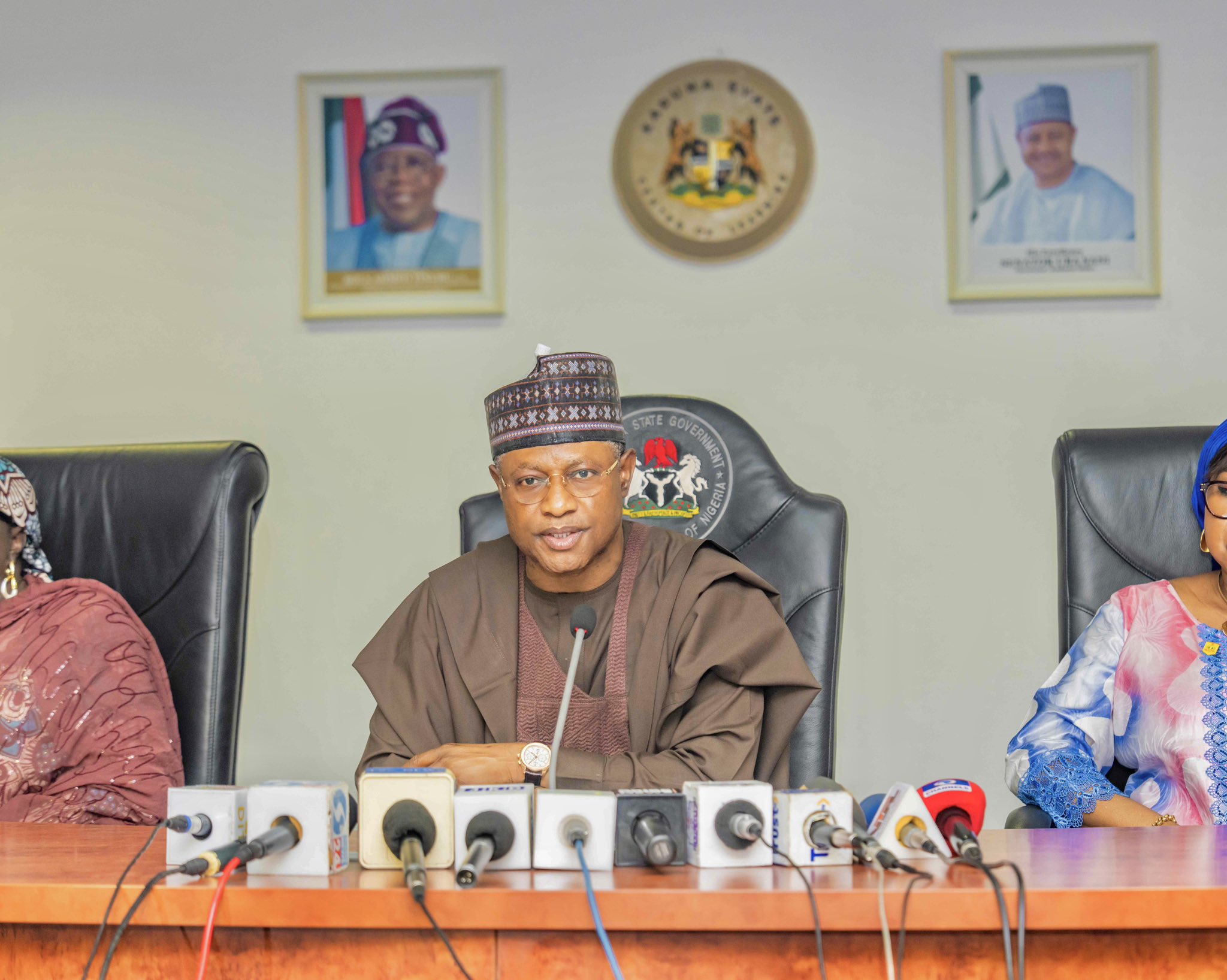
Women farmers in Kaduna State are among those benefiting from the state government's new free fertiliser distribution. Governor Uba Sani's administration wants to lower production costs and empower smallholder farmers.
The programme started with 500 truckloads of fertiliser and tractors. It aims to reach 150,000 smallholder farmers across the 23 local government areas in Kaduna.
Nuhu Dogara-Malami, the Supervisory Councillor for Agriculture and Forestry, spoke to PREMIUM TIMES Hausa at the Babban Dodo fertiliser redemption centre in Zaria Local Government Area. He said this is the third year of the administration's fertiliser intervention.
He mentioned that the government is focusing on women and young farmers. Rising costs for farm inputs have made it hard for smallholder farmers to keep or grow their production.
Dogara-Malami said the intervention aims to shield farmers from rising costs, prevent a drop in cultivated land, and contribute to food security.
How the Farmers are Chosen
Dogara-Malami explained that the fertiliser will be distributed across all 23 local government areas. They plan to reach farmers in both urban and rural communities.
The process involves selecting 10 farmers from each polling unit. Each chosen farmer will get two bags of fertiliser.
He added that the government has a new distribution method to ensure women and young farmers are well represented among the recipients.
In Zaria Local Government, three distribution centres have been set up: Babban Dodo, Galma, and Tukur-Tukur. This is to make sure farmers in both villages and cities can take part in the programme.
This new effort builds on past programmes by the administration. In 2025, the government gave out 400 truckloads of free fertiliser to 100,000 smallholder farmers, where each got two bags. In 2024, over 500 truckloads of fertiliser and other farming inputs were also distributed.
Why Women Farmers are Important
Focusing on women is key in a state where agriculture provides many jobs. The Kaduna Agricultural Development Agency says there are around 1.3 million farming households in the state. Agriculture also makes up about 38 percent of Kaduna's GDP.
Women play a big part in farming, including crop production, livestock, processing, and marketing. But they often struggle to access land, loans, training, and farm inputs.
According to Kaduna State's Women’s Economic Empowerment Policy, only 4.7 percent of women own agricultural land independently, while 92.7 percent do not own land at all. The policy also says limited access to resources makes it hard for women to take part in agriculture.
Reports on women farmers in Kaduna show that high input costs, lack of capital, poor extension services, and gender issues affect their productivity.
For women who run small farms or grow food at home, getting fertiliser can greatly improve their crop yields and household income.
'This is the First Time I am Benefiting'
At the Babban Dodo centre, some beneficiaries said this help comes at a time when smallholder farmers are struggling to afford inputs. Amina Suleiman, who grows maize, rice, and beans, thanked the government for including women in the programme.
She said it was her first time receiving help from a government agricultural programme. Masa’uda Aliyu felt that getting this support meant her work as a farmer was being recognized.
She hopes similar support will continue, believing it could help smallholder farmers rise above poverty. Hadiza Ibrahim, who grows tomatoes in her backyard while her husband, Ibrahim Sani, farms maize, said the fertiliser would help both of them.
"I use the fertiliser for my tomatoes, while my husband will also use it on his maize farm," she said. Bashir Baban-Kwanbo, who farms maize on a small plot near his house, also thanked the government and asked for the programme to keep going.
Farmers in Sabon Gari Welcome the Help
In Sabon Gari Local Government Area, vice chairman Abdulkareem Kamilu expressed gratitude to the government for helping smallholder farmers. He urged those who received text messages about the intervention to go to the designated centres and pick up their free fertiliser.
Husaina Musa, a beneficiary from Dogarawa, showed appreciation for the support, hoping the government will continue to assist poor farmers. For Ashiru Mohammed, a cabbage farmer from Muchia, this fertiliser could boost his output for the current and future farming seasons.
He noted that high costs for seeds, fertiliser, and other farm inputs have become a serious challenge for small farmers. The Kaduna government says this latest effort is part of its plan to boost agricultural productivity, strengthen food security, and improve the lives of smallholder farmers.
Its agricultural agency also sees access to quality inputs, loans, market connections, and modern farming methods as key to enhancing smallholder farmers' productivity and resilience.
For the women receiving the fertiliser, this help means more than just getting bags of fertiliser. For many, it is a chance to grow their production, earn more money, and better support their families.
Drop your comment
No comments yet — be the first to drop the gist 👇