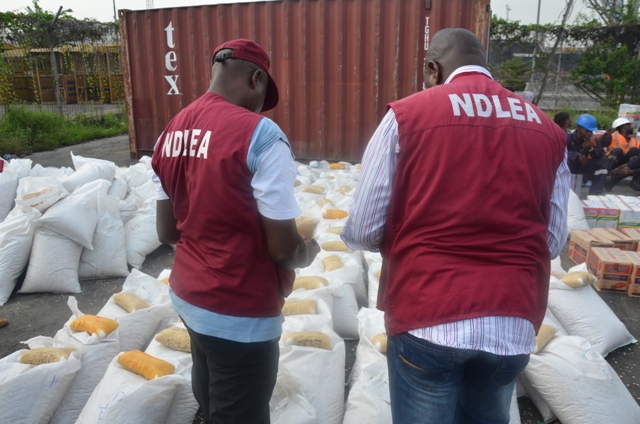
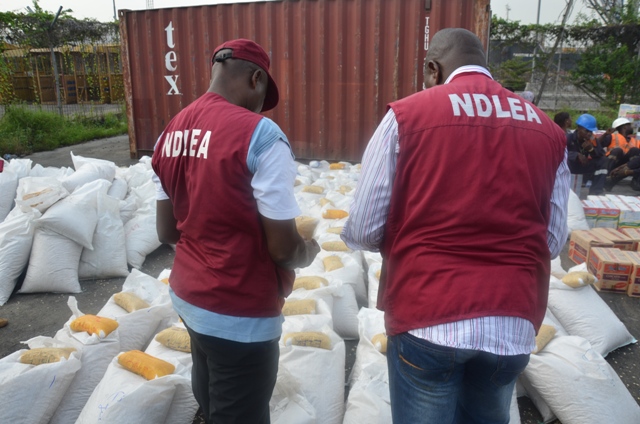
Nigeria’s National Drug Law Enforcement Agency (NDLEA) recently found a large methamphetamine production site in Abidagba Forest, located in the southwest. The drugs and chemicals seized are worth around $363 million. Ten people were arrested, including three Mexicans.
This discovery is unprecedented, but Nigeria has a long history with drug trafficking. For many years, it has served as a transit point for illegal drugs coming from Latin America to Europe and other places.
Now, Nigeria is shifting from being mainly a transit and consumer market to becoming a significant producer and exporter of synthetic drugs. Big drug busts over the years support this change.
The NDLEA found at least 11 meth labs in three states from 2011 to 2016. They shut down one in Asaba, Delta State, run by Mexican nationals. The agency described it as a ‘super’ lab that could produce between 3,000kg and 4,000kg of meth in one cycle.
Changes in Drug Production
The latest discovery marks a big change in Nigeria’s drug scene. Earlier labs were mostly in cities and towns, but last month’s discovery was the first in a remote forest area. Analysts say this indicates that criminal groups are adapting to government efforts to fight drug trafficking.
Several reasons might explain this move. First, hiding production in forests helps criminals avoid detection as surveillance has improved in cities. Second, working in isolated places makes it easier to move illegal drugs through less monitored routes and borders.
Third, hiding labs far from state oversight reduces the risk of being caught. This makes it harder for authorities to know how much is being produced and how fast. It also increases the risks linked to the drug trade, including links to terrorism.
Drug production in southwestern Nigeria is happening in areas where terrorism is also on the rise. Last month, when the meth lab was found, armed men kidnapped 39 students and seven teachers in nearby Oyo State. Just because they are close does not mean they work together. But the rise of both threats in the region may show that organized crime and terrorism are coming together in a part of Nigeria that is new to this kind of insecurity.
Links Between Drugs and Insecurity
There is clear evidence that drug trafficking is linked to insecurity in West Africa. Since Boko Haram violence started in 2009, connections between drug trafficking and terrorism have increased in Nigeria. Studies around the world show that criminal groups often help each other. Drug trafficking groups make a lot of money, while militant groups need funding and support.
In some conflict zones, both terror and organized crime groups have worked together and benefited from cooperation in areas with little government control. If this happens in southwestern Nigeria, the country’s security situation could get worse.
Another key issue is the international aspect of these recent discoveries. The involvement of foreigners indicates that technical skills for making synthetic drugs are being shared. Links to areas with established drug production, like Latin America, raise concerns that international criminal groups, such as the Mexican Sinaloa Cartel, might be expanding their operations in West Africa.
The recent findings in Nigeria suggest that a transatlantic criminal network is forming. If international cartels start seeing Nigeria as a suitable site for drug production and logistics, this would significantly change Nigeria’s role in global drug supply chains.
Questions for Authorities
This situation raises important questions for Nigeria’s leaders. What chemicals are being used in drug production? Are they sourced locally or imported? What routes are being used to move finished drugs to markets? And how much expertise have local partners gained from foreign operatives?
There are also serious concerns about immigration and border security. How did the drug cartel enter Nigeria? Did they use real travel documents, or did they take advantage of weak immigration controls? How long have they been in the country, and who are their partners? These issues need thorough investigation from a national security perspective.
The NDLEA’s operation is commendable, but it highlights serious gaps in Nigeria’s security system. The existence of such large-scale secret production sites shows that criminal organizations are using areas that the government does not monitor well.
To close these gaps, better cooperation is needed among the NDLEA, the Office of the National Security Adviser, the Immigration Service, intelligence agencies, and other security bodies. More investment in technology, like drones and monitoring systems, could help spot unusual activities in remote places.
Combining technology with strong human intelligence networks is also important. Local communities, farmers, hunters, and traditional leaders often know what is happening around them and can help authorities detect suspicious activities early.
With Nigeria’s security situation worsening, leaders must act quickly to stop the country from becoming a key player in the global drug trade. This would seriously harm national, regional, and international security.
Drop your comment
No comments yet — be the first to drop the gist 👇