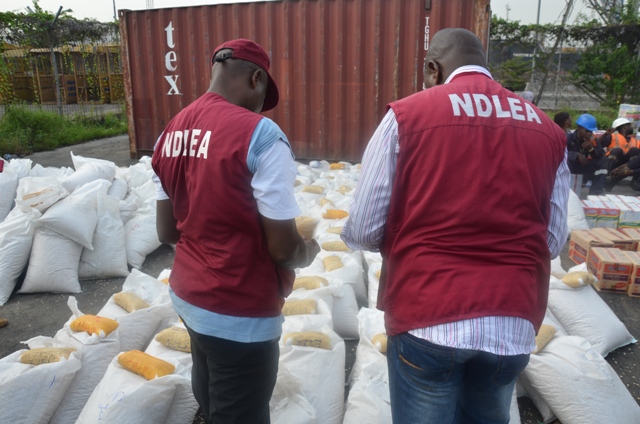
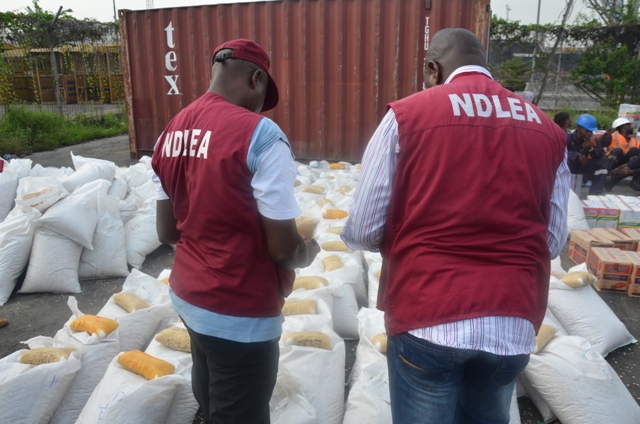
Nigeria’s National Drug Law Enforcement Agency (NDLEA) has found a large methamphetamine production facility in the Abidagba Forest in the southwest. The drugs and chemicals seized are worth about $363 million. Ten people were arrested, including three Mexicans.
This discovery is significant, but Nigeria is already known for drug trafficking. For many years, it has been a transit point for illegal drugs moving from Latin America to Europe and other places.
Now, Nigeria is moving from just being a transit and consumer country to becoming a producer and exporter of synthetic drugs. Past drug seizures back this change.
Between 2011 and 2016, the NDLEA found at least 11 meth labs in three states. One was in Asaba, Delta State, run by Mexican nationals. The agency called it a ‘super’ laboratory, similar to those in Mexico, with the ability to produce between 3,000kg and 4,000kg of meth in one production cycle.
The recent discovery marks a change in Nigeria’s drug scene. Earlier labs were in cities, but last month’s find was in a remote area that analysts say is poorly governed. This shift could mean that criminal groups are changing their methods to avoid government counter-narcotics efforts.
Several reasons might explain this change. Moving production to forests helps criminals avoid being watched, as urban surveillance has improved. Also, operating in secluded areas allows for easier movement of illegal drugs through less monitored routes and borders.
Keeping production hidden from areas with regular government checks lowers the chances of being caught and limits what authorities know about production speed and amount. This makes it harder for officials to stop the drug trade, which is also linked to terrorism.
The rise of drug production in southwestern Nigeria overlaps with increasing terrorism in the area. Recently, armed men kidnapped 39 students and seven teachers in nearby Oyo State. Being close does not mean they are working together. But the rise of both crime and terrorism in the region suggests a worrying trend.
There is clear evidence of a link between drug trafficking and insecurity in West Africa. Since Boko Haram violence began in 2009, ties between drug trade and terrorism in Nigeria have grown. Studies worldwide show that criminal groups often support each other. Drug trafficking groups make a lot of money, while militant groups need funding and support.
In some conflict areas, terrorist and criminal groups have worked together, benefiting from ungoverned spaces. If this happens in southwestern Nigeria, security could get worse.
Importantly, the recent discoveries also show a growing international angle. The involvement of foreigners points to the sharing of skills in making synthetic drugs. Connections to places like Latin America raise fears that international criminal networks, such as the Mexican Sinaloa Cartel, could be expanding their reach in West Africa.
The recent finds in Nigeria hint at the strengthening of a transatlantic crime network. If international cartels see Nigeria as a key place for drug production and logistics, it marks a serious change in Nigeria’s role in global drug trade.
This raises critical questions for Nigeria’s leaders. What chemicals are being used to make these drugs? Are they sourced locally or imported? What routes are used to move these drugs in and out of the country? How much expertise have local partners gained from foreign drug makers?
There are also big concerns about immigration and border security. How did these drug cartels enter Nigeria? Did they use legal documents or take advantage of weak immigration controls? How long have they been operating, and who are their partners? These questions need thorough investigation for national security.
The NDLEA’s success is commendable, but it shows serious gaps in Nigeria’s security system. The existence of such large secret production sites indicates that criminal groups are using areas that the government does not monitor well.
To close this gap, there needs to be better teamwork among the NDLEA, the National Security Adviser’s Office, Immigration Service, intelligence agencies, and other security bodies. More investment in surveillance technology, like drones and monitoring systems, could help spot unusual activities in remote areas.
Technology alone is not enough. Strong human intelligence networks are also necessary. Local communities, farmers, hunters, and traditional leaders often know what is happening in their areas and can help spot trouble before it becomes a large-scale crime.
With Nigeria’s security situation getting worse, authorities must act fast to stop the country from becoming a key player in the global illegal drug trade. This would seriously threaten security at national, regional, and international levels.
Drop your comment
No comments yet — be the first to drop the gist 👇