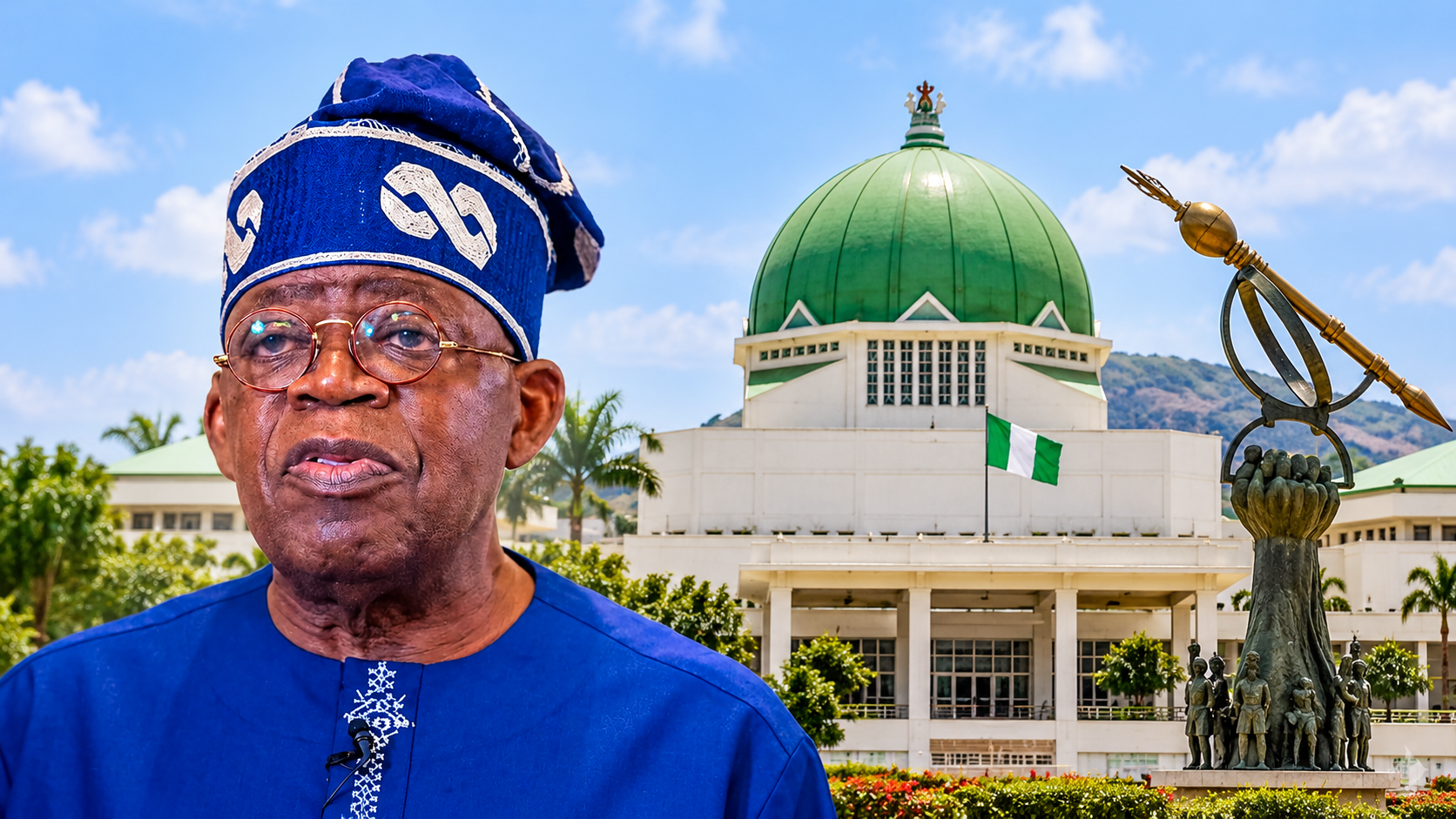
Some members of the House of Representatives, part of the Save Democracy Group (SDG), have asked the National Assembly to come back to work. They want to decide if Vice President Kashim Shettima should take over the president's duties while President Bola Tinubu is away.
The group made this request in a statement on Wednesday. It was signed by Awaji-Inombek Abiante (NDC, Rivers) and Abubakar Kusada (APC, Katsina).
This call comes after the 21-day leave period mentioned in Section 145 of the 1999 Constitution has expired.
Tinubu’s Extended Leave
President Tinubu left Abuja on 30 August for Europe. The Presidency said it was a three-week working vacation for his annual leave. His first stop was London, United Kingdom.
But on 21 September, the Presidency said he had extended the vacation by a few more days. He was set to return to Nigeria over the weekend.
According to his Special Adviser on Information and Strategy, Bayo Onanuga, Mr Tinubu spent about a week in London. He then went to Paris, France, where he met French President Emmanuel Macron and businessman Vincent Bolloré.
The Presidency said the president kept in touch with officials back home and continued to manage government affairs from abroad. He also ordered an independent investigation into the deaths of 37 illegal miners in Minna after they were detained by the Nigeria Security and Civil Defence Corps.
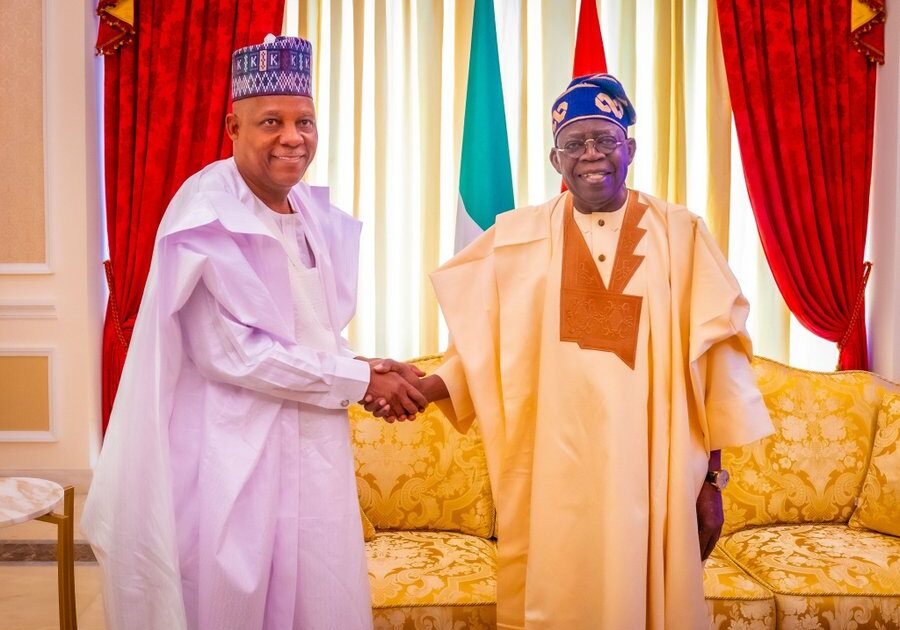
While he was away, Mr Tinubu also asked Vice President Shettima to stand in for him at some official events. But Mr Shettima traveled to New York on 20 September to represent Nigeria at the 81st United Nations General Assembly. He was with other world leaders for the opening of the General Debate on Tuesday and is set to deliver Nigeria’s national statement on Thursday, 24 September.
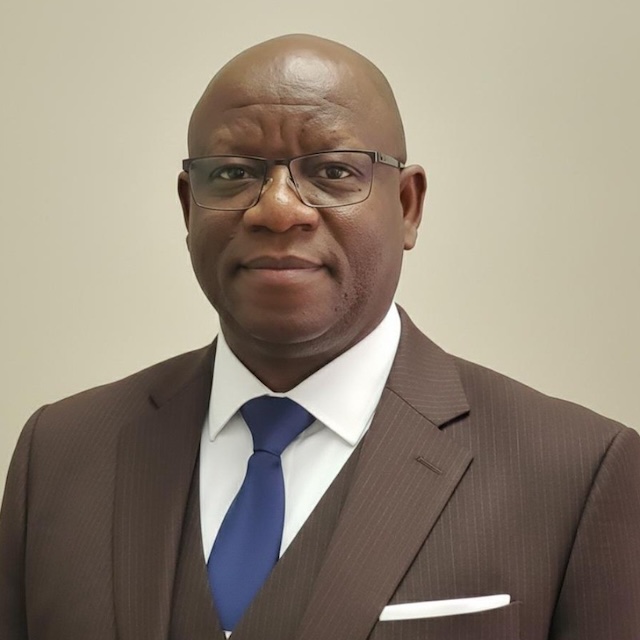
The Secretary to the Government of the Federation, George Akume, has also represented the president at some official events during this time.
Questions on Presidential Powers
These events have raised new questions about the transfer of presidential powers while Mr Tinubu is away. After the announcement on 30 August, PREMIUM TIMES looked into the constitutional rules and reported on what it means for his absence. They highlighted whether power should go to Vice President Kashim Shettima.
The report also mentioned that at that time, the Presidency had not said if Mr Tinubu had sent a written notice to the National Assembly about his absence and whether he transferred his duties to the vice president.
Did Tinubu Send a Written Notice?
SDG said the main issue is whether Mr Tinubu sent the required written notice to the President of the Senate, Godswill Akpabio, and the Speaker of the House of Representatives, Abbas Tajudeen, before or during his vacation.
They argued that if the notice was not sent, the National Assembly must use Section 145(2). This section allows both chambers to give the vice president the power to act as president.
“If it was sent, the President of the Senate and the Speaker of the House of Representatives should inform Nigerians immediately,” the group said.
But if no notice was sent, SDG stated that the 21-day period is over. The National Assembly should act according to Section 145(2).
They said the issue should not depend on whether Mr Tinubu can still communicate with officials or give orders while away.
“The Constitution cannot be replaced by claims that the president is still in touch with officials or directing from abroad.
“The question is not whether modern technology lets the President work from another country. The question is whether the Constitution has been followed,” the lawmakers said.
Botswana as an Example
In their statement, the SDG pointed to Botswana as an example of how to handle such situations. They noted that when Botswana’s President Duma Boko travels outside the country, the vice president takes over as acting president.
They added that if both the president and vice president are out of the country, a minister can be chosen to act as president.
The lawmakers recognized that Botswana’s rules are different from Nigeria’s. But they said this shows how important it is to clearly and formally transfer presidential authority.
“Continuity in the Constitution should be clear, formal, and transparent, not left to guesswork,” the group said.

National Assembly Should Meet
The SDG urged Akpabio and Tajudeen to quickly reconvene both chambers of the National Assembly. They want to clear up the constitutional confusion caused by Mr Tinubu’s long absence.
The group asked the leaders to publicly confirm whether the president sent the required written notice under Section 145(1).
They also called for both chambers to pass resolutions allowing Mr Shettima to act as president if it turns out no notice was sent within the 21-day limit.
This request comes as the National Assembly is set to return from its break. The recent break has been extended, though some committees continued to work while plenary was on hold.
The SDG argued that the National Assembly should not treat its constitutional duties as optional.
“The National Assembly cannot ask citizens to follow the Constitution while ignoring its own clear responsibilities,” they said.
They stressed that no one should be above the Constitution and political issues should not override constitutional rules.
“If the President followed Section 145, Nigerians should know,” they said. “If he did not, the Constitution shows what should happen next.”
The SDG’s position comes as similar concerns have been raised by opposition politicians about the president’s absence.
Previous Concerns
The African Democratic Congress, through its National Publicity Secretary, Bolaji Abdullahi, questioned the legal basis for Mr Tinubu being represented by the SGF, Mr Akume, since both the president and vice president are away.
Former Vice President Atiku Abubakar has also asked the Presidency to clarify if Mr Tinubu sent the necessary letter to the National Assembly. He questioned why Section 145 has not been activated if no notice was sent in 21 days.
The Presidency has insisted that Mr Tinubu is still in charge and continues to run the government from abroad.
The Doctrine of Necessity
The current discussion around Section 145 recalls the issues that arose during former President Umaru Yar’Adua’s long absence in 2009 and 2010.
Mr Yar’Adua went to Saudi Arabia for medical treatment in November 2009. He did not send the required written notice to give his deputy, Goodluck Jonathan, the presidential powers.
As his absence dragged on, Mr Jonathan, who was still vice president, could not fully exercise the president's powers because he lacked the necessary written notice.
After about 78 days of Mr Yar’Adua’s absence, the National Assembly stepped in on 9 February 2010, adopting what became known as the Doctrine of Necessity. This allowed Mr Jonathan to act as President.
This was important because the Constitution at the time did not clearly let the National Assembly pass a resolution to transfer powers to the vice president without the president’s notice.
Legal experts later viewed the doctrine as a way to handle a gap in the law when strict rules left the country without clear leadership. The National Assembly justified this on the need to avoid a government vacuum.
Mr Jonathan was sworn in as acting president on 9 February 2010. Mr Yar’Adua returned to Nigeria later that month but died on 5 May 2010. Mr Jonathan then succeeded him as president according to the constitutional order.
This situation highlighted what lawmakers and legal experts saw as a gap in the Constitution. There was no clear way to handle a president who would not send the required written notice.
That gap was later fixed through constitutional changes.
The updated Section 145 now states that if a president does not send the required notice within 21 days, the National Assembly must pass a resolution allowing the vice president to act as president until the president is ready to return.

Drop your comment
No comments yet — be the first to drop the gist 👇