
The right question is not whether mass weddings are good or bad. It is whether public support really helps the families involved, and if it does so better than other social programs.
If marriage is important enough for public funds, the success of that investment should be measured by how well it helps families.
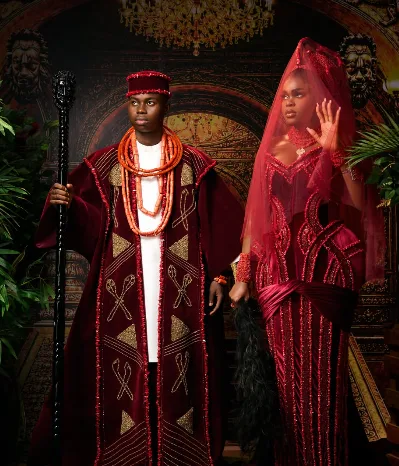
In August, the Kano State Government in northwestern Nigeria helped 1,500 couples through its Auren Gata mass-wedding program. Most of the couples came from low-income groups, including widows and divorcees. The help did not stop after the marriages. Besides the required counselling and medical checks, couples received a mix of dowry, business help, and household items like beds and mattresses. The state called this program a social intervention aimed at lowering the costs of marriage, restoring dignity, and strengthening families.
The number of couples married at such events is just one measure. The real question is whether these families are safe, economically strong, healthy, and able to educate their children years later. Counting couples is easy; understanding the long-term effects is what we should focus on. Concerns about these outcomes lead to a lot of criticism of programs like this one.
Moving Past the Debate
The discussion about mass weddings often swings between praise and criticism. Supporters see these events as a fitting way to help those who cannot afford marriage costs. Critics argue that public money is being wasted on ceremonies while states struggle with insecurity, unemployment, poor health, malnutrition, and many out-of-school children. In Kano, except for common issues like phone theft, the state has been relatively safe from serious crimes like kidnapping and banditry that affect other northern states. Still, it has some of the worst health statistics in Nigeria. For instance, maternal mortality rates exceed 1,000 per 100,000 live births in some local areas. The state also has one of the highest numbers of out-of-school children in Nigeria.
People are debating whether the Kano State government is setting its priorities correctly.
A more constructive discussion would avoid the wrong claim that mass weddings create poverty. Many chosen for these programs are already facing economic hardships. If some remain poor after marriage, it does not mean the program made them poor. That confuses the selection criteria with the program's impact.
Kano is not the only state doing this. Kebbi held a mass wedding for over 300 couples in 2024, offering dowry support, health checks, and skills training. In April, Zamfara sponsored 100 couples from vulnerable groups, providing dowries, household items, and small business support.
But assuming that a successful ceremony, distribution of furniture, or even a lasting marriage proves the program improved family welfare is also weak.

The right question remains whether mass weddings are good or bad. It is whether public support changes the lives of families and does it better than other social programs.
This does not call for ending mass weddings. It calls for reviewing and improving the policy.
More Than Ten Years of Weddings Should Yield Results
Kano's current program started in 2012 when 100 widows and divorced women took part in a government-backed mass wedding. More couples were supported later. Major events included 1,500 couples in 2019, around 1,800 in 2023, and another 1,500 in 2026. Whether Kano was the first Nigerian state to start such a program matters less than the fact that it has been running for over a decade. Enough time has passed to go beyond just stories.
Kano is not alone. Kebbi held a mass wedding for over 300 couples in 2024, offering dowry support, health checks, and skills training. In April, Zamfara sponsored 100 couples from vulnerable groups, providing dowry payments, household items, and small business support. State-backed marriage help has become a common social intervention across parts of northern Nigeria, supporting the need for a shared evaluation framework.
The next set of evidence must answer tougher questions: How many marriages from 2012, 2019, and 2023 are still strong after one, three, and five years? How many families are safe and supportive? Did the businesses funded by the program last? Did women keep control of the funds given to them? Did family income, savings, and food security improve?
One of the few published studies of Kano's early program provides a good starting point. A 2015 study by Rohana Yusof and Amina Lawal Mashi looked at 200 women randomly chosen from the first 350 who participated in the program in July 2012. They also interviewed six officials from the Hisbah Board, a state authority that oversees the mass weddings. The authors found broad support for the program and perceived economic benefits.
Notably, 43 percent of the women said their husbands' failure to meet marital duties, like feeding the family and educating the children, was a key reason for marriage breakdowns. The Hisbah officials said “crippling poverty among couples” was a significant reason for husbands’ inability to fulfill these responsibilities. The study suggested more investment in women's education and skills. But this was an early assessment, not a long-term evaluation. Now, more than ten years later, the key question is not whether beneficiaries liked the program, but what happened to the families it helped.
The next evidence must answer tougher questions: How many marriages from 2012, 2019, and 2023 are still together after one, three, and five years? Are they safe and supportive? Did the businesses funded survive? Did women keep control over their funds? Did family income, savings, and food security improve? Were children born to these couples registered, immunized, and enrolled in school? If this data has been collected, it should be shared anonymously. If not, the 2026 group is a chance to start fresh.



Drop your comment
No comments yet — be the first to drop the gist 👇