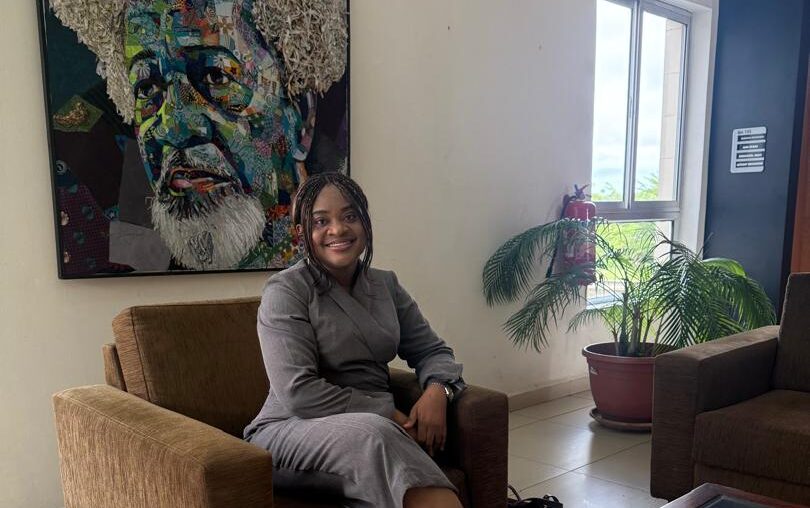
In about two weeks, I will start my fourth month in the MTN Media Innovation Programme (MIP) at Pan-Atlantic University’s School of Media and Communication. This program lasts six weeks, spread over six months, for media practitioners in Nigeria.
In this short time, my mind has expanded. I have been pushed to think differently and to question how journalism is done in Nigeria.
My journey back to the classroom began on 18 May. It had been 13 years since I last left a university after finishing my Master’s degree in Media and Communication. I never thought I would return ‘so soon’. During those years, I welcomed a set of triplets who are now teenagers. If you have raised multiples while managing a full-time job, you know how hard it can be. Going back to school felt almost impossible, even more than a decade later.
On my first day back, I expected lectures, assignments, and familiar media concepts that I would easily understand. But I was in for a surprise. I did not expect my views on journalism, innovation, and even myself to be challenged.
At that moment, I realized I was about to unlearn, relearn, and learn everything I thought I knew about media, journalism, and innovation. I was also rediscovering what it means to stay relevant in a fast-changing media world.
My favorite classes so far include Innovation and the Future of Legacy Media (using The New York Times as a case study), Media Entrepreneurship, Product Thinking, Creativity and Design Thinking (SCAMPER and the Six Thinking Hats), and Corporate Communication and Strategic Planning. I will always remember the shift in my mindset that has happened in such a short time.
It has been eye-opening, showing me that we are not just journalists but also storytellers, innovators, problem-solvers, and product thinkers.
The Humility of Being a Student Again
One of the biggest changes isn’t the long hours of study; it’s the mindset. Balancing motherhood, school, my editorial job, and reporting at PREMIUM TIMES has been tough and humbling.
Let me explain.
After over 16 years in journalism, making news decisions and mentoring younger reporters, I found myself in a classroom taking notes. I was learning alongside young media practitioners, content creators, and experienced newsroom leaders. I was asking questions and sometimes admitting, “I don’t know,” while also saying “Wow!” from time to time. This experience is unforgettable.
When I joined the programme, I thought, “What can they teach me that I don’t already know?” But I left each class feeling humbled and realizing how much I actually knew.
Some concepts were new, but I could relate to many topics and share from my own newsroom experience. There is something very humbling about being a student again. It shows that experience matters, but it should not replace humility, open-mindedness, adaptability, and curiosity. Oh, and I almost forgot how it feels to be one of the oldest in my group. (I’m not that old!).
We were divided into groups for assignments. In my group, there is a tech expert, a tech content creator, a music journalist, and me. You can see the difference. Staying up late with my teammates, brainstorming ideas, preparing presentations, and racing to meet deadlines has felt just like being back in university. I have to remind myself that experience does not automatically make me the smartest person in the room. Sometimes I’m there to learn and at other times I can share from my experience. This mix of ideas is one of my biggest takeaways from the programme.
More Than Just Lectures
One thing that stands out at Pan-Atlantic University is the focus on intentional learning. I say this carefully, without sounding too patronizing. This is the best way to describe the learning experience.
Every lecture, discussion, and presentation is meant to promote critical thinking rather than just listening.
If you, like me, don’t really enjoy taking notes, you won’t need reminders. The lecturers rarely stick to theory.
Almost every session ends with questions like: “How will you apply this in your organization?” and “What comes next after this programme?” These questions make sure you are not just another student sitting in class. They push you to think beyond the classroom and to imagine how lessons can change your career and organization.


Learning from Industry Leaders
The range of facilitators has also been refreshing. We have been taught by top MTN executives, telecom experts, media entrepreneurs, policymakers, newsroom leaders, and creative industry stars.
Their willingness to share both their successes and failures helps connect theory to practice in ways few programs do.
I appreciate how they stripped away the big egos often linked to their positions. They made themselves relatable and just human.
Learning alongside journalists, broadcasters, YouTubers, editors, and media entrepreneurs from all over Nigeria has also been enriching. The classroom has become a mix of ideas, perspectives, and experiences. After almost every class, I am reminded that innovation often occurs when people with different backgrounds come together to solve problems.
Thinking Beyond Journalism
The biggest change for me has been thinking beyond just being a journalist. Before MIP, I saw my role mainly through reporting and editing. Now, I ask different questions. Who is the customer? What problem are we solving? How can this story add more value? How do we create sustainable media businesses in this fast-changing digital economy?
These are questions I never thought would take up so much of my thoughts.
Our teachers constantly clarify that innovation isn’t just about creating something new. Sometimes, it means improving an old idea or solving an old problem better.
One lecture showed this through MTN’s value-added service, Who Dey Call Me. This service helps users identify missed calls without needing internet access or another app. That simple example changed how I think about innovation.
Bringing Lessons to the Newsroom
One of the benefits of being in the programme while still working is that I can test lessons right away.
Each evening, I leave Pan-Atlantic University’s calm campus and go back to my accommodation. I often reflect on the day’s lessons and how they could change my work at PREMIUM TIMES.
I won’t pretend I have transformed the newsroom in a few weeks. That’s far from the truth. But I have noticed small changes in myself. I now ask more questions and look for context. Recently, one of my reporters, Friday, said, “I’ve noticed you now ask for more context and you’re changing how you edit my stories.” I smiled because he was already seeing the impact of the MTN MIP.
The Greatest Lesson
The programme has reminded me that no matter how experienced we become, the desire to keep learning will always decide how relevant we stay, especially in a field changing as fast as journalism. For the last 16 years, I have been asking others questions, which is what journalists do. But MIP has challenged me to ask those questions of myself.
Am I learning enough? Am I adapting quickly enough? Am I preparing for the newsroom of tomorrow instead of holding on to the past?
I may not have all the answers yet, but after returning to the classroom after more than a decade, I am sure of one thing. The best gift this programme offers isn’t just another certificate. It’s the confidence to keep growing and innovating at my own pace, to remain employable, to adapt to changes without losing the core values of journalism, and to inspire younger journalists, one article at a time. In today’s media world, that may be the most valuable qualification of all.



Drop your comment
No comments yet — be the first to drop the gist 👇