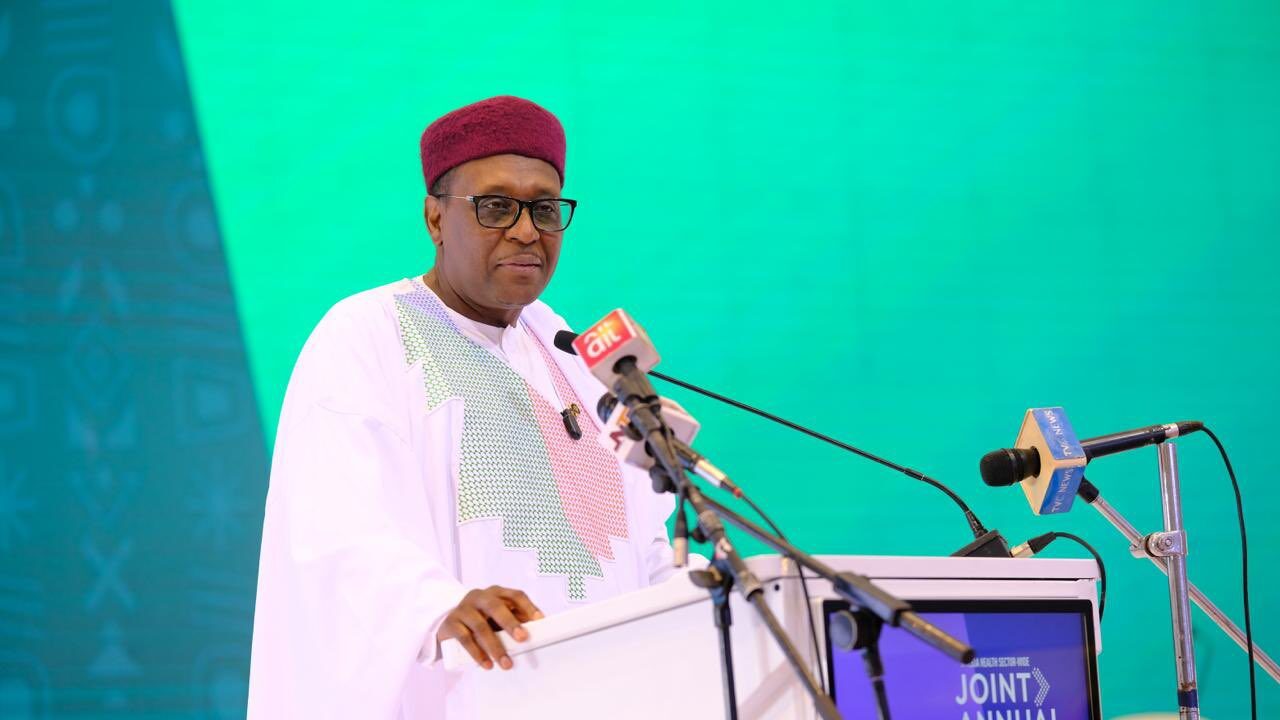
The federal government is worried about the increase in neonatal deaths in Nigeria, even as deaths among children under five have dropped.
The Coordinating Minister of Health and Social Welfare, Muhammad Pate, shared this information while discussing the 2024 Nigeria Demographic and Health Survey during the 2026 National Health Promotion Day in Abuja on Thursday.
The survey shows that the under-five mortality rate decreased from 132 deaths per 1,000 live births in 2018 to 110 in 2024, marking a decline of about 17 percent.
However, neonatal mortality, which refers to deaths within the first 28 days of life, went up from 39 to 41 deaths per 1,000 live births in the same timeframe.
Mr Pate, who was represented by the ministry’s Permanent Secretary, Daju Kachollom, said these numbers stress the need to speed up preventive healthcare, early detection, and timely access to quality medical services.
The event, themed "Health Promotion: Owning My Health," with the slogan "Take Charge, Live Well," was the third edition of the National Health Promotion Day.
The minister reiterated the federal government’s commitment to the Health Sector Renewal Investment Initiative. This initiative aims to improve maternal and child health, strengthen primary healthcare, expand immunisation, tackle non-communicable diseases, and reduce the burden of HIV, tuberculosis, and malaria.
He described health promotion as a smart investment in the country’s health system. He noted that improving health outcomes requires more than just having hospital services available.
According to him, preventive actions, informed personal choices, healthier environments, and systems that support citizens’ wellbeing are just as important.
Mr Pate highlighted ongoing preventive health actions like hypertension detection, hepatitis elimination through efforts like Project 365, cervical cancer prevention and screening, improved nutrition, immunisation, and efforts to control communicable diseases.
He said the success of these actions should be seen in increased screenings, completed referrals, access to treatment, and the prevention of avoidable illnesses.
He also pointed out that public awareness needs to go hand in hand with accessible, affordable, and effective healthcare services.
The minister warned that awareness campaigns alone won’t yield good results if people cannot access screenings, get the right treatment, or receive safe and respectful care.
He called for stronger teamwork among families, schools, workplaces, traditional and religious groups, the media, civil society organisations, development partners, and the private sector to promote healthy eating, physical activity, good hygiene, mental health, vaccinations, and proper screenings.
He also urged everyone to tackle misinformation and harmful health practices.
The minister further asked all levels of government to include health promotion in routine primary healthcare, community engagement, and development planning. This way, vulnerable and underserved populations will not be left out.
He encouraged Nigerians to embrace the campaign slogan, "Take Charge, Live Well," by looking for reliable health information, understanding their health risks, participating in recommended screenings and immunisation programs, and seeking medical care promptly when needed.
In their goodwill messages, development partners and civil society organisations reaffirmed their support for the Federal Ministry of Health and Social Welfare in promoting health.
The United Nations Population Fund (UNDP) representative, Olukunle Omotoso, stressed the importance of community engagement, health literacy, gender equality, and access to sexual and reproductive health services, especially for women and young people.
CARE International, represented by Oluloto Ebenezer, also promised to continue supporting initiatives that promote positive health-related behaviours at the community level.
Similarly, the Africa Health Budget Network emphasised the need for family planning, healthy eating, and regular screenings for hypertension and diabetes.
The Permanent Secretary, Ms Kachollom, encouraged participants to take advantage of the screening services available at the event to promote early disease detection and encourage more responsibility for their health.
These figures come amid Nigeria’s significant challenge with maternal and newborn deaths.
According to the World Health Organisation (WHO), Nigeria had a maternal mortality rate of 1,047 deaths per 100,000 live births in 2020.
In its 2023 report titled "Improving Maternal and Newborn Health and Survival and Reducing Stillbirths: Progress Report 2023," WHO estimated that Nigeria had 82,000 maternal deaths, 181,000 stillbirths, and 277,000 neonatal deaths in 2020.
These combined 540,000 deaths accounted for 12 percent of global maternal, stillbirth, and neonatal deaths, even though Nigeria contributes only six percent of the world’s live births.
The report ranked Nigeria second after India for the highest combined burden of maternal deaths, stillbirths, and neonatal deaths.


Drop your comment
No comments yet — be the first to drop the gist 👇