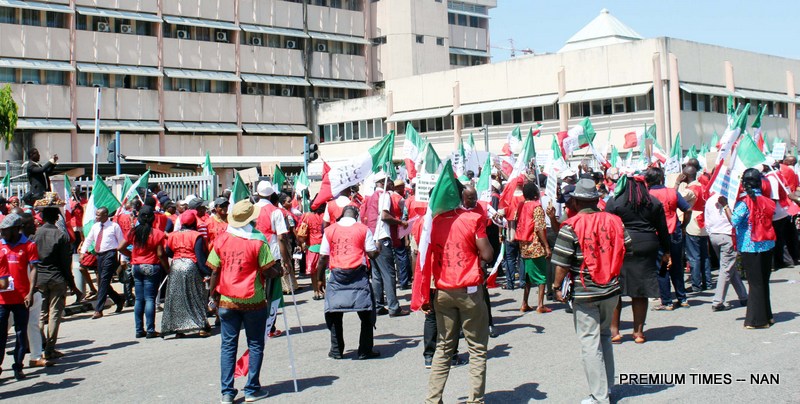
Nigerian workers have announced a three-day warning strike starting from Friday. This comes as a response to the high cost of petrol and the government's failure to increase the national minimum wage.
The workers, represented by the Joint National Public Service Negotiating Council (JNPSNC), want petrol prices to be cut to at least ₦500 per litre. They also demand an increase in the minimum wage to help ease the burden of the rising cost of living.
The National Secretary of the council, Gbenga Olowoyo, made this known in a statement on Tuesday.
Mr. Olowoyo stated that the strike would kick off on Friday, 2 October, if the government does not respond to their demands by 30 September.
He mentioned that the decision to strike came after the government did not meet their demands after a previous ultimatum expired on 30 September.
The current minimum wage is ₦70,000. Mr. Olowoyo said this should be increased to help public workers, their families, and other vulnerable Nigerians cope with economic hardship.
“The three critical issues requiring urgent attention are as follows: reduction of fuel price to ₦500 per litre. The federal government should take urgent steps to bring down the price of Premium Motor Spirit (PMS) to ₦500 per litre,” he said.
He added, “The federal government should urgently approve a wage award for Nigerian workers to cushion the effects of the prevailing harsh economic conditions being experienced by workers, their dependants, and vulnerable Nigerians.”
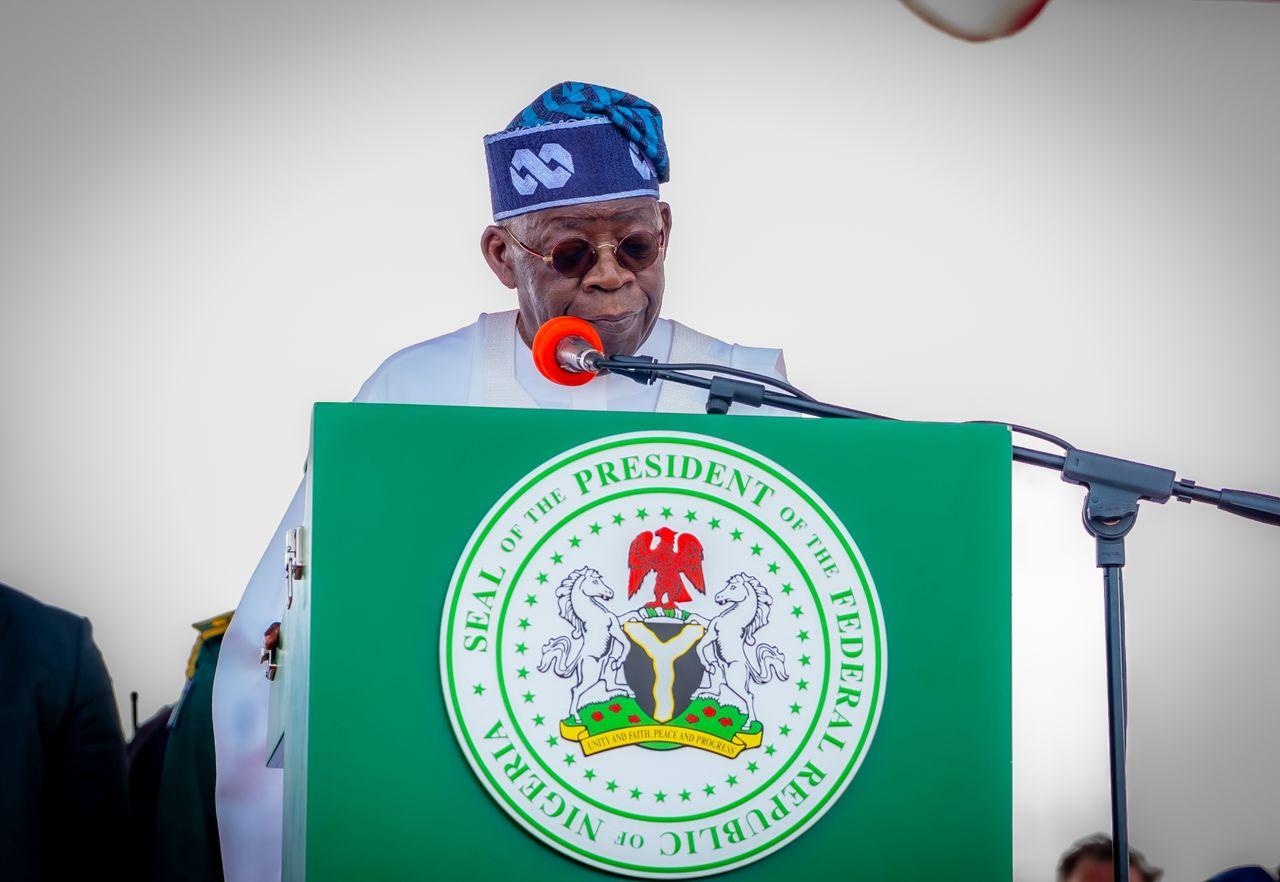
Mr. Olowoyo urged President Bola Tinubu to address these demands in his national broadcast on Thursday, which coincides with Nigeria’s 66th Independence Day.
He said if the government does not act by 30 September, the workers will have no choice but to begin the warning strike.
“It is imperative to state clearly that the Independence Day address of the President of the Federal Republic of Nigeria should adequately address these critical issues,” he said.
“If the federal government fails to take the necessary steps to address these issues on or before 30th September 2026, Nigerian workers will have no option but to commence a three-day warning strike, effective from Friday, 2 October 2026, to press home their demands.”
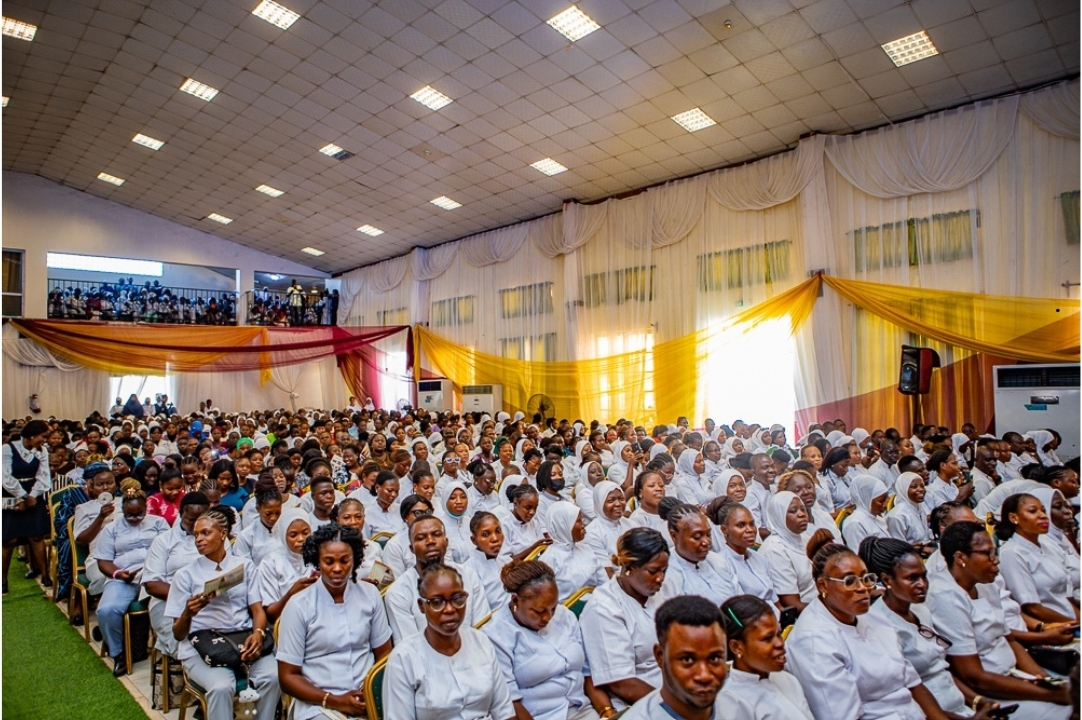
The JNPSNC includes eight public-sector unions, such as the Nigeria Civil Service Union (NCSU), the Medical and Health Workers Union of Nigeria, and the National Association of Nigerian Nurses and Midwives.
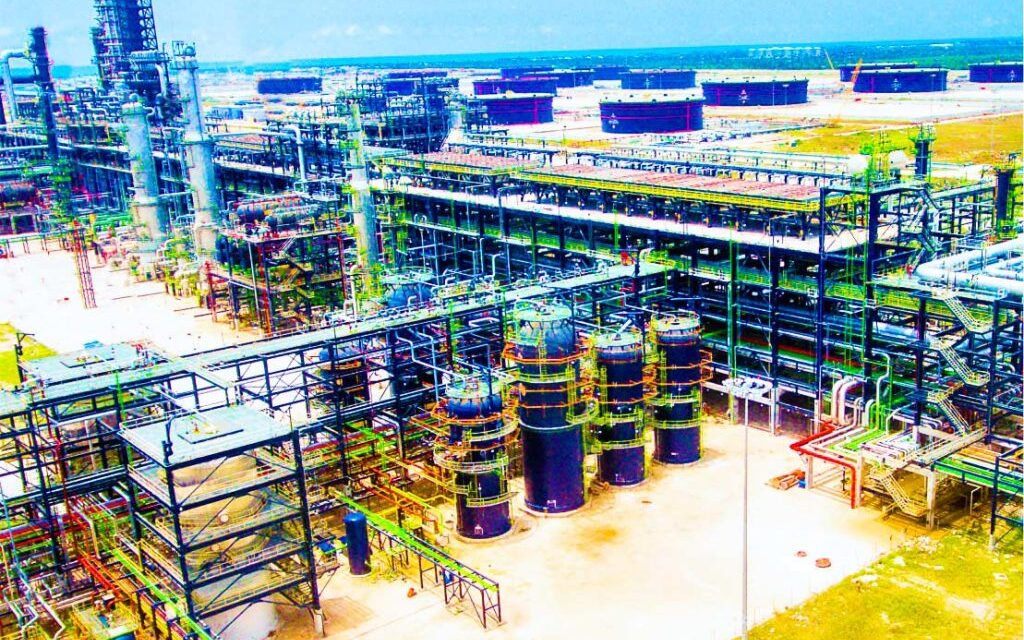
Mr. Olowoyo explained that the government could lower petrol prices by allowing the Dangote Refinery and other modular refineries to buy crude oil under better terms.
“It is equally important for the federal government to ensure the sale of crude oil to the Dangote Refinery and operators of modular refineries on appropriate terms to facilitate increased domestic refining and help bring down the price of petroleum products,” he said.

The council pointed out that the rising petrol prices have added to the economic struggles of many families.
“The council maintains that the economic hardship caused by the high cost of fuel is placing the survival of Nigerian workers, their dependants, and the general populace under severe pressure, making it increasingly difficult for Nigerians to live normal and dignified lives,” it said.
This latest demand from the workers comes after another round of petrol price increases. Prices have risen sharply since President Tinubu took office in May 2023 and removed the petrol subsidy.
Before the subsidy was removed, petrol was about ₦195 per litre. After the announcement, the Nigerian National Petroleum Company Limited (NNPCL) raised prices to around ₦488 to ₦557 per litre in various areas, later going over ₦600 per litre.
Prices kept rising as the government moved to a market-based pricing system. By September 2024, NNPCL raised petrol prices from about ₦617 to between ₦855 and ₦897 per litre, depending on the location. In October, petrol was around ₦998 per litre in Lagos and ₦1,030 in Abuja.
Prices continued to rise into 2025, although there were times when they dropped. For instance, in June 2025, NNPCL increased prices in Abuja from ₦885 to ₦945 per litre and in Lagos from ₦870 to ₦915.
By 2026, petrol prices had gone up even more due to changes in global crude oil prices and market pressures. Recent checks in Abuja showed prices ranging from ₦1,395 to ₦1,450 at some filling stations, while others charged even more.
In Lagos and Abuja, some reports indicated prices at around ₦1,400 per litre and as high as ₦1,500 in parts of northern Nigeria.
The rise in petrol prices affects more than just filling vehicles. Petrol is crucial for transport and electricity generation, and businesses rely on it for generators and moving goods.
As fuel prices increase, transport operators deal with higher costs and pass some of these costs onto passengers through higher fares. This also affects the price of moving food and goods from farms, factories, and markets to consumers.
The World Bank has linked the rise in fuel prices after the subsidy removal to increased living costs. They said this, along with the naira's depreciation, led to inflation rising to 33.7 percent in April 2024.
The World Bank estimated that without measures to help, higher petrol prices might push about eight million more Nigerians into poverty soon. Their analysis showed that the fuel price increase directly and indirectly reduces household purchasing power through higher transport and other costs.
Recently, the World Bank noted that while Nigeria’s economic indicators have improved, high inflation and weak income growth still hurt households. They pointed out that low-income families are especially vulnerable since they spend a large part of their income on food.
For workers whose salaries have not matched the rising costs of transport, food, electricity, and other essentials, increasing petrol prices have become a major factor in the cost-of-living crisis.

Drop your comment
No comments yet — be the first to drop the gist 👇