

We must learn from our own mistakes and those of other countries. We need to focus on what works: prioritise good management over ownership arguments, and balance private efforts with the public grid’s survival. The belief in 1990 was that markets would handle everything by themselves. The lesson from thirty years of failed attempts is that markets only work when institutions are ready for them.
This article looks at Nigeria's power sector reforms, what history shows us, and how we can create a market that can pay its bills.
The 1990s Belief and the False Promise of Instant Markets
After the Berlin Wall fell, a strong belief took hold in the offices of the World Bank in Washington, the Asian Development Bank in Manila, and consulting firms in London. They had seen the Soviet Union collapse and concluded that the state could not be trusted to manage anything; markets could do it better. Electricity, which had been a public service for most of the century, was high on their agenda.
In what now seems like overconfidence, they wrote down the same solutions for Lagos as they did for Lima, Nairobi, and Manila. Break up the state electric utility. Create an independent regulator. Sell power plants and distribution networks to private investors. Allow a competitive market to set prices. This was not seen as just one idea among many, but as a proven fact, like a doctor prescribing a treatment for malaria. Private investment would bring discipline, which would lead to financial health, and that would provide electricity. Hurray, Up NEPA!
But reality told a different story. When the World Bank looked back at 25 years of this experiment in Rethinking Power Sector Reform in the Developing World (Foster and Rana, 2020), the results were disappointing. Of the 88 developing countries that tried this path, only about a dozen completed the full model. The rest got stuck due to political pushback and unfinished reforms, with utilities still losing money.
Lessons from India: Odisha and Andhra Pradesh
Many developing countries, including Nigeria, bought into this idea; China did not. In India, some states followed the script while others did not, creating a natural comparison. Two Indian states in the early 2000s demonstrate how differently the same approach can work out.
Odisha followed all the recommendations. It split up its state electricity board and in 1999 became the first state in India to privatise distribution companies. Foreign consultants created detailed tariff models, and private firms took charge.
But things fell apart quickly. The sale was based on overly optimistic data. The new owners found that losses were much higher than expected. When they tried to cut off non-paying customers or raise prices to match actual costs, they faced strong political backlash. Short on capital and unable to charge realistic prices, the first operator left within two years, and the state had to take back all four networks after a long legal battle.
Odisha teaches a lesson familiar to Nigerians: if you privatise without fixing data and building political support, you just transfer financial trouble from public hands to private ones.
Next door, Andhra Pradesh took a different path. Under Chief Minister N Chandrababu Naidu, the state kept its distribution system public but managed it like a business. They unbundled the sector and set up an independent regulator, but they began with the basics: hiring competitively, tracking staff performance, investing heavily in feeder metering to know where electricity was going, and from January 2000, they launched a campaign against power theft, backed by tough laws.
Andhra Pradesh showed what global data later supported. Good management is key: strict billing and collection, disciplined staff, and tight budgets. Who owns the shares is less important than making sure the money is counted.
I witnessed this while working in India on the 100 GW solar reverse auction programme. The auctions were a great success. Clear, competitive bidding removed shady deals, reduced risks for investors, and drove solar prices down to some of the lowest globally. But it also revealed a truth Nigeria knows well. You might buy electricity at low prices, but if the company on the other end cannot pay its bills, the whole system is in trouble.
With NBET in the way, there was no direct link between those who produced power and those who sold it to households. DisCos only collected a fraction of what they billed, tariffs were kept low for political reasons, and NBET had to cover the difference. For years, DisCos paid only 30 to 50 percent of their monthly bills, forcing NBET to turn to the Federal Treasury and Central Bank for multi-trillion naira assistance, starting with the ₦701 billion Payment Assurance Facility in 2017 and a ₦600 billion follow-up just to keep gas suppliers and GenCos from cutting off supply.
Nigeria’s Privatisation Journey and the Single-Buyer Challenge
Nigeria closely followed this textbook model. When the Goodluck Jonathan administration completed the major 2013 privatisation, with Professor Bart Nnaji leading the effort, the goal was ambitious: break up the Power Holding Company of Nigeria (PHCN) into six generation companies (GenCos) and eleven distribution companies (DisCos) and give them to private investors.
Then Nigeria fell into the single-buyer trap that has ensnared many countries. Everyone knew the new DisCos lacked the financial strength to sign long-term contracts, so the Federal Government set up the Nigerian Bulk Electricity Trading Plc (NBET) as a temporary solution. NBET would act as a middleman between generators and distributors, signing long-term agreements with GenCos and reselling that power to the DisCos. This was supposed to be a short-term fix.
But NBET became a permanent middleman. With NBET in place, there was no direct relationship between those generating power and the households buying it. DisCos collected only a fraction of their bills, tariffs were kept low for political reasons, and NBET was left to cover the losses. For years, DisCos sent only 30 to 50 percent of their monthly invoices, and NBET had to rely on the Federal Treasury and Central Bank for huge financial bailouts, beginning with the ₦701 billion Payment Assurance Facility in 2017 and a ₦600 billion successor, just to keep gas suppliers and GenCos from shutting down.
Nigeria had technically unbundled the sector, but in practice, it placed all the financial risk on the government. This resulted in a debt crisis that mirrors what happened in Pakistan.
The Shift: New Contracts and Ending NBET’s Monopoly
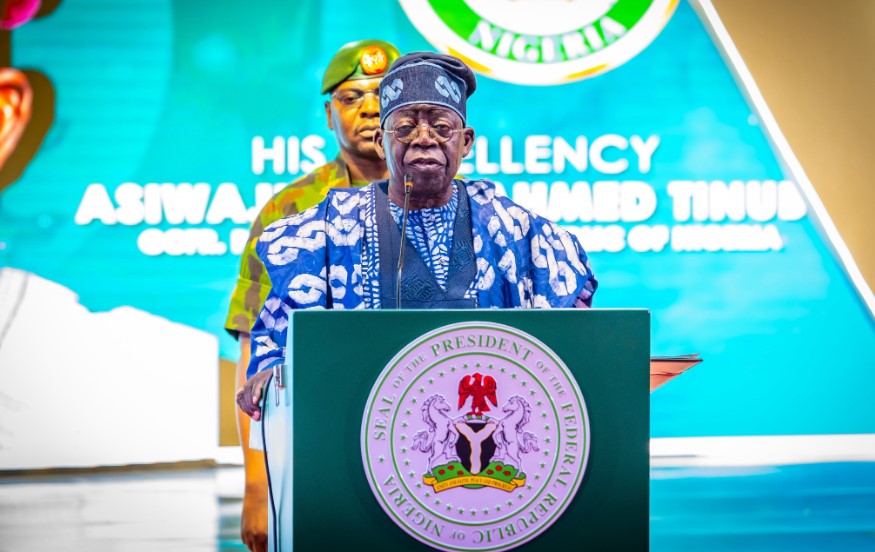
With the recent Electricity Act of 2023, and with Minister of Power, Joseph Tegbe, and the Nigerian Electricity Regulatory Commission (NERC) pushing for change, Nigeria is now trying to correct its course. The plan is to end NBET’s role as the main buyer and move to a bilateral trading market where generators and buyers can negotiate directly.
In this new model, financially stable DisCos and eligible customers can make contracts directly with GenCos. NERC has also taken the hard step of the Band A tariff realignment in April 2024, which sharply cut subsidies by moving customers on premium feeders to prices closer to actual costs. This is the first time in a generation that many Nigerians were asked to pay something close to what their electricity actually costs, and the debate it has sparked is still ongoing.
The Federal Government is also addressing legacy debts by securitising them, while states like Lagos, Edo, and Kaduna are creating their own electricity markets under constitutional amendments. At the same time, the Rural Electrification Agency (REA) is expanding productive-use renewable mini-grids, bringing solar power directly to farms, rice mills, cold storage, and market areas, avoiding the struggling national grid altogether.
Avoiding New Problems: Grid Challenges and Lessons from Susquehanna
Bilateral contracts and decentralised power are positive changes. But there are two challenges Nigeria must avoid to ensure a stable, financially healthy market.
Challenge 1: The Industrial Grid Defection Issue
For years, Nigeria's biggest businesses have operated off the grid. Dangote Industries, with its refinery in Lekki and cement plants in Obajana and Ibese, relies on its own gas and heavy fuel generation. Industrial areas in Ikeja, Bompai, and Trans-Amadi run their own generator systems because the grid cannot provide reliable power. The small generator outside your tailor’s shop works on the same principle, but at a smaller scale.
As Nigeria allows bilateral contracts and third-party access, DisCos face a situation called the utility death spiral. Large industrial customers pay higher tariffs, which help subsidise households in Mushin or Sabon Gari. If these big users leave for direct contracts or self-generation without contributing to the shared system, DisCos will be left with the customers who are the most expensive to serve and least able to pay. Without solid, targeted government subsidies, this could lead to bankruptcy.
No market has ever succeeded on a damaged grid. For competition to work, power needs to flow freely, without transmission issues turning each area into a monopoly. Fixing the Transmission Company of Nigeria (TCN) is essential for reform. But you cannot fix what you don’t measure, which is why Mr Tegbe’s audit of transmission is key before significant investments are made in lines that do not lead anywhere.
Challenge 2: Private Off-take versus the Public Grid, the Susquehanna Example
The United States recently provided a useful lesson with the Susquehanna Nuclear Power Plant in Pennsylvania. Talen Energy (Genco) wanted to sell power directly to an Amazon Web Services (AWS) data centre nearby, but the Federal Energy Regulatory Commission (FERC) rejected this plan. Neighbouring utilities, including Exelon and American Electric Power, argued that allowing a large private user to connect behind the plant’s meter could shift significant costs onto regular customers. FERC established a clear principle: a large user cannot take its main power privately while treating the public grid as a backup.
Talen disagreed but had to change its approach to supply Amazon with roughly 1.9 GW through the DisCos until 2042, setting a standard for how large users connect, even with their own generation.
For Nigerian regulators, this ruling offers a clear policy guide:
- Fair Wheeling and Ancillary Charges. Big users like industrial parks and data centres that contract directly with GenCos must pay fair wheeling tariffs to the Transmission Company of Nigeria (TCN) to maintain the infrastructure.
- Standby Capacity Contributions. Users who rely on the grid when their generators fail must pay standby fees so that their expenses are not passed on to everyday consumers.
Nigeria’s reforms must not stop at a mix of bilateral contracts and regional systems. The end goal should be a functional wholesale electricity spot market: a transparent system where every licensed generator, from Kainji hydro to the gas plants of the Niger Delta and the solar farms in the north, can bid into the national grid, is dispatched by cost, and where prices are set in real-time.
But no spot market has ever functioned on a broken grid. Competition needs power to flow freely, without transmission blockages causing monopolies in different regions. This makes fixing the Transmission Company of Nigeria (TCN) essential for reform. You cannot fix what you don’t measure, so Mr Tegbe’s audit of transmission is crucial before making big investments in lines that lead nowhere. Beyond that, TCN needs to be fully divided into a Transmission Service Provider and an Independent System Operator (NISO). These new organisations, like Andhra Pradesh, must focus on good management: competitive hiring, tracking staff performance, investing in infrastructure, and attracting long-term investment to clear bottlenecks. This is the price of entry to a competitive market.
Policy Suggestions for Moving Forward
Reform Area
Key Goal
Risks to Avoid
Market structure
Phase out NBET’s role as the sole buyer smoothly, moving to bilateral PPAs between GenCos and financially stable buyers.
Ending take-or-pay agreements before contract enforcement and dispute resolution are ready to replace them.
Distribution improvement
First, fix the internal issues in DisCos: proper accounts, prosecution of power thieves, and smart metering.
Relying on just ownership changes while ignoring unmetered customers and inaccurate loss figures (the Odisha mistake).
Industrial load and self-generation
Encourage heavy users (like Dangote and industrial zones) to return to the grid through competitive wheeling options.
Allowing large users to treat the grid as a backup without paying appropriate transmission and standby fees (the Susquehanna lesson).
Decentralised systems
Expand productive-use renewable mini-grids for rural farming areas, guided by clear plans.
Building isolated mini-grids that cannot connect and become stranded when the national grid arrives.
Transmission and spot market
Separate TCN into an independent ISO and TSP with strict financial discipline; run transparent economic dispatch.
Starting complex trading systems before fixing bottlenecks and ensuring market liquidity.
Nigeria's power reform isn’t about ideology. It’s about practical solutions.
We must learn from our mistakes and others’ failures. We need to focus on what works: good management over ownership debates, and balance private efforts with the public grid’s survival.
The confidence of 1990 was that markets would succeed without help. The lesson from thirty years of failure is clear: markets succeed only when institutions are prepared to support them.
Nigeria has taken long enough to learn this lesson the hard way. It is time to apply what we have learned.


Drop your comment
No comments yet — be the first to drop the gist 👇