
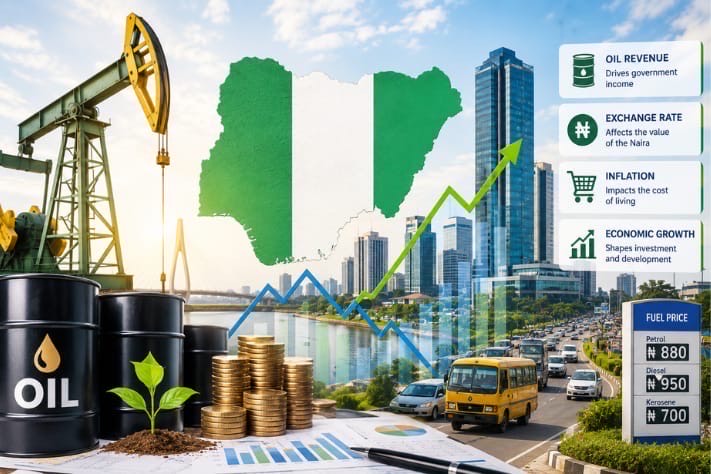
Blue finance should be the go-to option for raising money as Nigeria tries to reduce its reliance on oil. The rich mangroves and coastal areas in the Niger Delta provide chances to get into the blue carbon market. These environmentally friendly solutions can create income while also protecting the environment.
Nigeria's budget deficits are very high, partly due to heavy debt payments. Like many sectors, the blue economy is struggling with a big shortfall in funding. It needs about $10 billion in investment over the next ten years to reach its full potential. The current federal budget of 10.5 billion naira is not enough to make a real impact. The funding gap is large, and public money alone cannot meet the needs. This lack of investment has left many opportunities in the sector untapped for years.
The opportunities in the blue economy cover shipping, fishing, aquaculture, marine tourism, coastal infrastructure, renewable energy, and ocean research. The sector needs urgent patient capital to build large infrastructure. The problem is made worse by annual fish imports of $1.2 billion to cover a local supply gap of about 2.2 million metric tonnes. This reliance on imports takes away from Nigeria's foreign exchange earnings and threatens stability.
Over 90 percent of trade in Africa happens by sea. Nigeria's location along the Atlantic Ocean can help it become a key maritime transportation and logistics center in Africa. This chance for better coastal trade opens doors to West and Central Africa. Nigeria can grab a bigger slice of the continent’s logistics by supporting projects like the regional Sealink Initiative, backed by Nigeria’s Export-Import Bank (NEXIM). These projects could help move major industrial goods and reduce congestion at ports. Also, there is room for growth in aquaculture, which can help meet local fish supply needs. In May 2025, the Federal Government approved a policy framework to make better use of Nigeria’s coastal and inland water resources. But getting the money needed for implementation is still a challenge.
Nigeria has a lot of potential and increasing interest in blue bonds. The country has the financial resources and economic need for such bonds. But it lacks a ready environment to support market activity. Experts say that governments should include blue finance in national development plans, train relevant stakeholders, and improve performance metrics and transparency standards.
Innovative financing is key to diversifying the economy without adding to public debt. Other financing options, like blue bonds, blended finance, and thematic instruments, can bring in billions for infrastructure development in Nigeria. These funds could upgrade ports and logistics, expand aquaculture and cold-chain facilities for fishing, restore mangroves and wetlands, and improve wastewater treatment and pollution control.
Blue finance is a growing area in climate finance that focuses on projects supporting a sustainable blue economy. It channels money toward the responsible use of oceans, seas, and freshwater. This includes special financial tools like blue bonds, blue loans, and debt-for-nature swaps. The interest in blue finance is rising among investors, financial institutions, and issuers worldwide.

Blue bonds are specific debt tools aimed at marine protection, sustainable fishing, and coastal infrastructure. Seychelles issued the first sovereign blue bonds in 2018, raising $15 million for marine conservation and fisheries management. In 2023, Gabon issued a $500 million blue bond as a debt-for-nature swap to refinance national debt and fund marine conservation. Recently, Kenya announced a blue bond program to support aquaculture, maritime infrastructure, coastal resilience, and fisheries. In 2023, the International Capital Market Association (ICMA) set voluntary standards for projects eligible for blue bond issuance.
Nigeria has great potential and growing demand for blue bonds. The country has the financial resources and economic need for such bonds. But it currently lacks an operational environment to support market readiness. Experts suggest that governments should embed blue finance in national development plans, provide training for stakeholders, and improve performance metrics and transparency. Development banks and international institutions should think about giving tailored technical help and concessional capital to reduce risks in these investments.
To bring sustainability into Nigeria’s reforms, more focus should be on sustainable finance options, especially blue finance and blue bonds. Coastal state governments looking to fund large ocean projects and wastewater systems can think about using blue bonds as a way to raise money.
Co-created investment platforms and blended finance methods should be encouraged to share risks and offer incentives. Professionals are pushing for the use of sovereign and corporate blue bonds in Nigeria. But a proper domestic blue bond market is still missing. After the launch of green bonds in 2025, the regulatory environment seems to be stuck. Still, some commercial banks are paying attention to projects that aim for sustainability, even though many lack specialized marine lending frameworks.
Blue finance should be the top choice for raising money as Nigeria aims to lessen its oil dependence. The rich mangroves and coastal areas in the Niger Delta provide chances to enter the blue carbon market. These sustainable solutions can create income while also supporting environmental preservation. For example, as part of clean-up efforts at oil-polluted sites in the Niger Delta, thousands of mangrove seedlings have been replanted.
Boosting these initiatives can give coastal communities access to the carbon market. To embed sustainability into Nigeria’s ongoing reforms, more attention should focus on sustainable finance options, especially blue finance and blue bonds. Coastal state governments looking to fund large ocean projects and wastewater systems can think about using blue bonds as a way to raise money.




Drop your comment
No comments yet — be the first to drop the gist 👇