The Group Chief Executive Officer of NNPC Limited, Bayo Ojulari, has shared why they picked two Chinese companies, Sanjiang Chemical Company Limited and Xinganchen (Fuzhou) Industrial Park Operation and Management Co. Ltd, to help revive Nigeria’s Port Harcourt and Warri refineries.
Mr Ojulari said they chose these companies after a nine-month search. NNPC looked at over 50 potential partners before they got down to about 20.
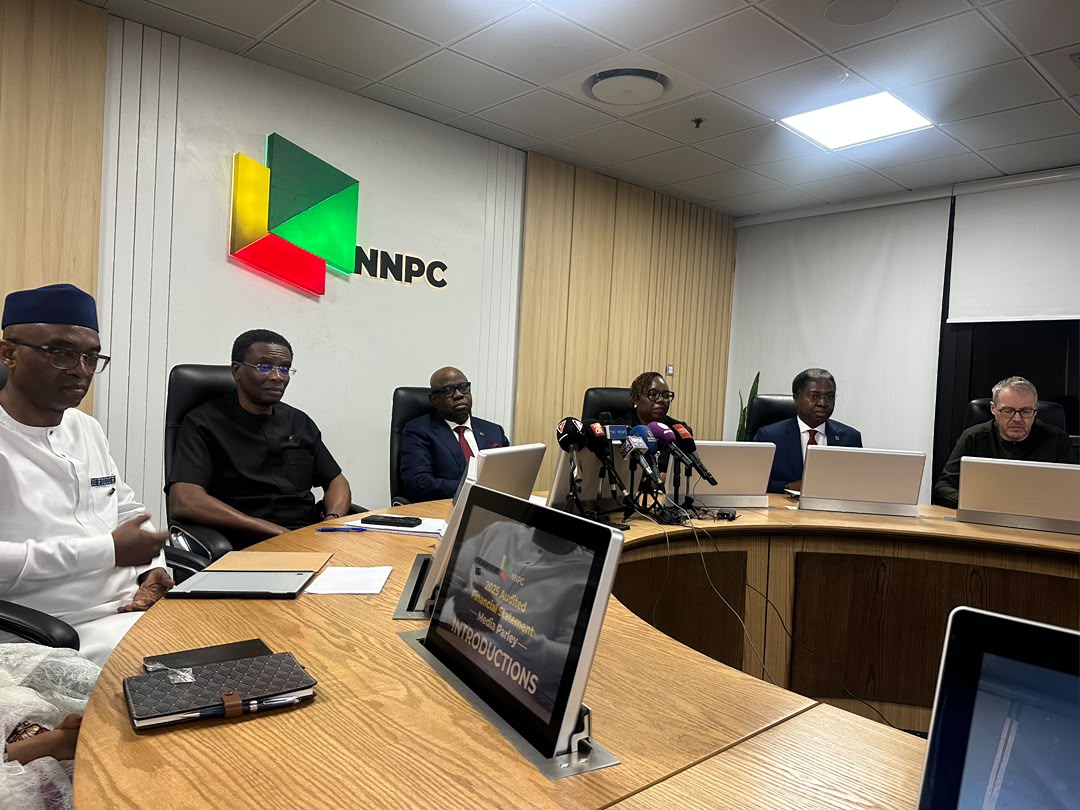
He spoke on Tuesday while talking to journalists after NNPC Limited released its 2025 financial results at the NNPC Towers in Abuja.
His comments came after a question from a PREMIUM TIMES reporter about why NNPC decided to work with the Chinese companies, given concerns about their abilities and past performance.
In May, NNPC announced that it had signed a Memorandum of Understanding (MoU) with the two Chinese firms. This MoU was for a possible technical equity partnership to help complete and operate the Port Harcourt and Warri refineries.
"The NNPC Ltd has signed a Memorandum of Understanding (MoU) with two Chinese companies, Sanjiang Chemical Company Limited and Xinganchen (Fuzhou) Industrial Park Operation and Management Co. Ltd, for collaboration through a potential Technical Equity Partnership in support of the completion and operation of the Port Harcourt and Warri Refineries," the company stated at that time.
NNPC said this partnership would focus on finishing the remaining work at the refineries and ensuring they run efficiently. They aim for “best-in-class, sustainable performance.”
Mr Ojulari explained that they did not choose the companies randomly. "Before we settled on these companies, we considered more than 50 potential partners and eventually narrowed the list to about 20," he said. "It took us approximately nine months to reach this stage of the process."
He noted that the selected companies stood out because of their credibility and how well they matched NNPC’s goals. He added that many other companies wanted equity participation or major control over the refineries.
"Most of the other companies we approached wanted us to provide them with equity or allow them to take over the refinery. Some wanted us to sign agreements that would give them significant control over the project," he explained.
Mr Ojulari said the Chinese firms were chosen because their approach matched NNPC’s aim of creating a sustainable refinery operation. "Although we have not yet signed a final agreement with them, they are the only ones that have demonstrated the level of alignment we are looking for," he said.
"Our vision is to build something sustainable, with a partner that is prepared to invest its own resources and expertise in the project, rather than simply secure a contract for which we would pay it."
The NNPC boss defended the companies against doubts about their technical skills. He said NNPC had done thorough checks on them. He visited their facilities in China with NNPC team members and board members.
"We have conducted independent due diligence on the company. We know its specific address and location, and I personally visited its facilities. I saw its operations with my own eyes," he said.
According to him, the companies operate a big petrochemical plant in China and have access to important technical know-how. "These are people who operate one of the largest petrochemical plants in China, with significant production capacity," he said.
"Petrochemical plants are even more complex than refineries, as those of us with engineering knowledge understand." He added that the company also has a stake in one of China’s major refineries, giving it access to technical expertise and skilled workers.


Mr Ojulari emphasized that NNPC wants a partner who is invested in the success of the refineries. He wants to avoid a situation where a contractor only cares about getting paid.
"As I often say, it is like hiring a taxi driver to transport your luggage from your home to the market. Whether or not you eventually sell your goods at the market is not the driver’s concern. The driver’s responsibility is simply to get you there," he said.
"That is the kind of arrangement we want to avoid. We need a partner that has a genuine stake in the success and sustainability of the refinery, rather than one whose involvement ends once it has been paid for its services."
Mr Ojulari also responded to worries about misleading stories and comments about NNPC’s refinery plans. "Let me first say this, as I have said before: when you embark on a strategy of this nature, there will always be people who are unhappy with your decisions," he said.
He explained that moves to stop certain leakages and protect Nigeria’s interests could upset some stakeholders. "When you take steps to stop certain leakages in the system and protect Nigeria’s interests, some people will inevitably be disadvantaged," he said.
He mentioned that some may try to disrupt the refinery rehabilitation because they feel threatened by the strategy. "When you come up with a formidable and credible solution, you are inevitably going against the interests of certain people who may resort to different tactics to frustrate your efforts," he said.
Mr Ojulari urged Nigerians to think critically about such claims instead of believing them blindly. "So, please, let us not take all these comments and reports at face value," he said.
He pointed to his 35 years of experience in the oil industry as part of why he trusts the companies and the refinery repair plan. "You cannot have someone like me, who has spent 35 years in the industry, travel to China, return to Nigeria and tell Nigerians that the companies building refineries should be asked to leave," he said.
The NNPC boss said the company is committed to checking claims about the project and verifying the credibility of those making them. "We have conducted independent due diligence on the company," he said. "When people begin to circulate misleading information, we must make an effort to identify the sources and establish the facts."
Nigeria has four state-owned refineries, including two in Port Harcourt. Together, they have a capacity of 210,000 barrels per day (bpd). The Kaduna Refining and Petrochemical Company Limited has a capacity of 110,000 bpd, while the Warri Refining and Petrochemical Company Limited has a capacity of 125,000 bpd. In total, all four refineries can process 445,000 bpd.
Despite many efforts to improve the refineries, they still face many operational problems. Visits to the sites show that most are far from running at full capacity. The Warri Refinery reopened in December 2024 but shut down in January due to safety issues. In May last year, NNPC announced an outage at the Port Harcourt Refinery for maintenance.
In October last year, NNPC said it had started a full technical and commercial review of its three refineries to ensure they perform well and sustainably. The overhaul aims to prepare the corporation to be a key supplier of petroleum products, as required by the Petroleum Industry Act, while making sure the refineries operate efficiently and profitably.
During his speech on Tuesday, Mr Ojulari said over 30 officials from the Chinese companies have come to check the current state of the refineries. They spent months in Nigeria working on the project. However, he repeated that a final agreement has not been signed.
Nigeria continues to look for strategic investors and technical partners for its state-owned refineries. This is part of efforts to cut down on imported petroleum products and boost local refining capacity.




Drop your comment
No comments yet — be the first to drop the gist 👇