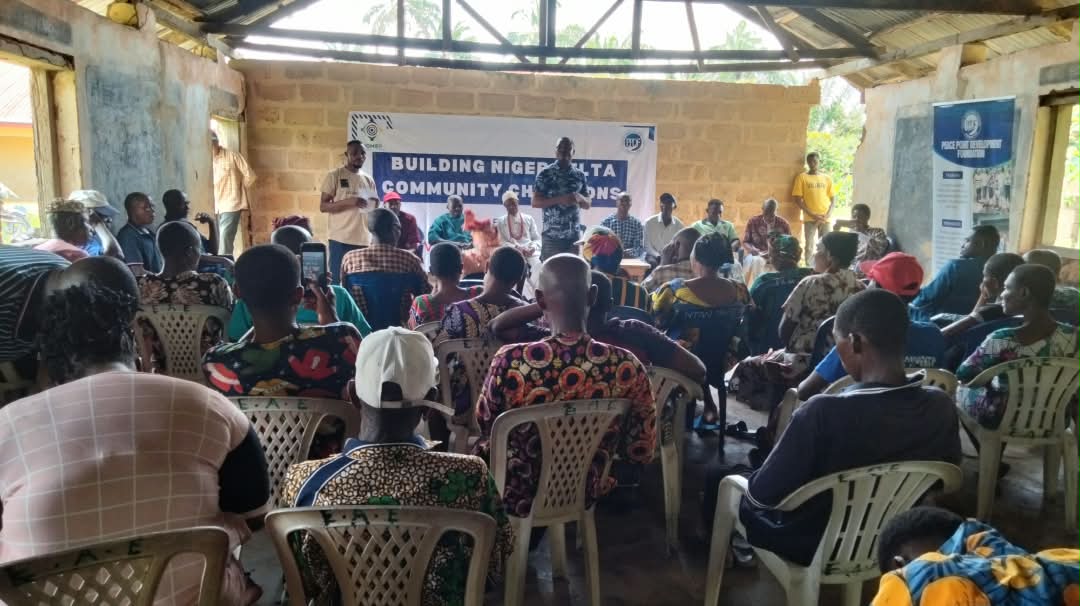
Residents of Ntan Mbat, a fishing community in Ibiono Ibom Local Government Area of Akwa Ibom State, have decided to petition oil regulators and the National Assembly. They say ongoing oil pollution is ruining their fishing livelihoods.
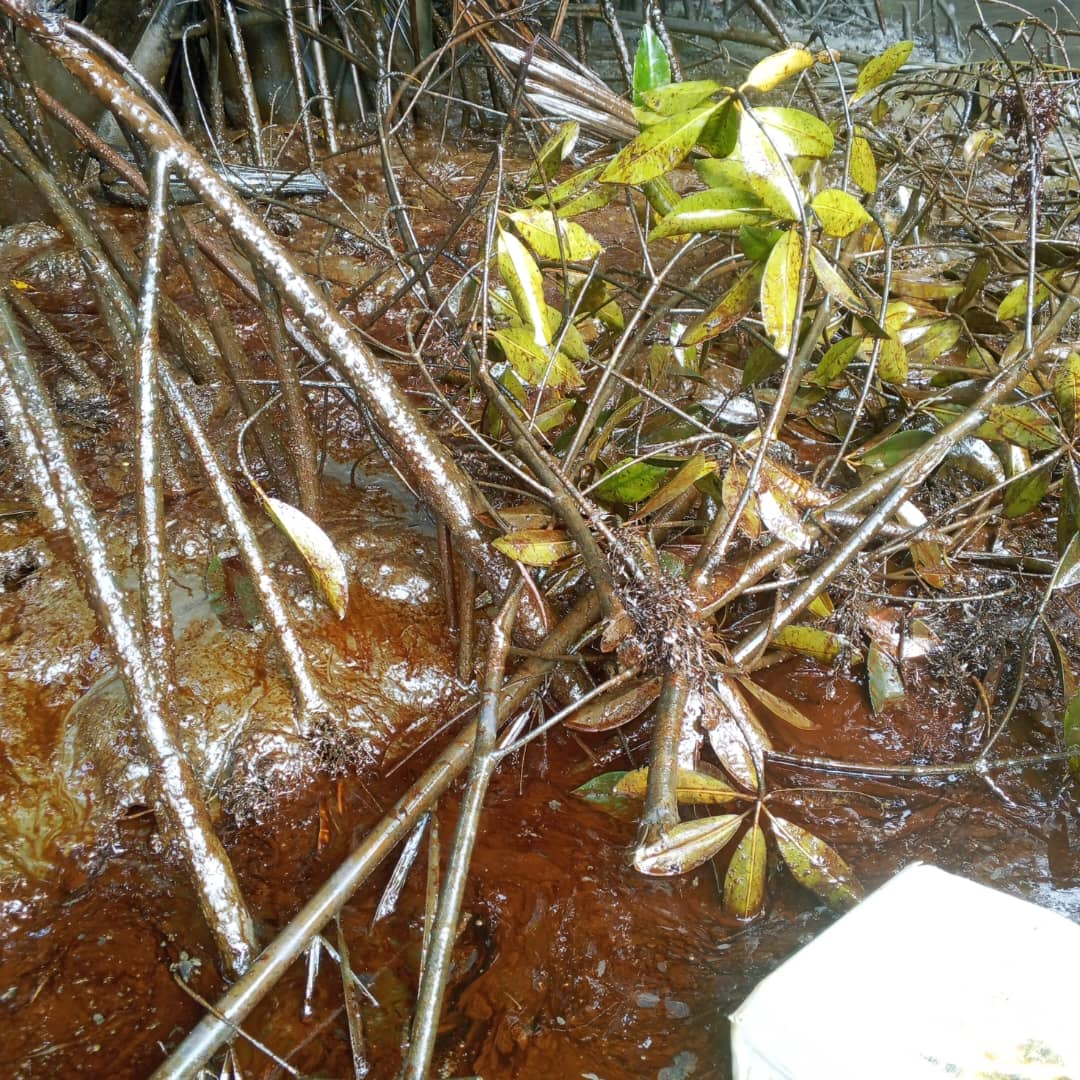
The residents reported that oil sheen often appears on their fishing waters, especially during the rainy season. This has happened despite years of complaints to government officials and their political leaders.
They made this announcement on Monday during a community training on environmental rights, grassroots organizing, and advocacy. The training was organized by Peace Point Development Foundation (PPDF) and the Health of Mother Earth Foundation (HOMEF) at Ntan Mbat Community Hall.
The planned petitions will go to the Nigerian Upstream Petroleum Regulatory Commission (NUPRC), the National Oil Spill Detection and Response Agency (NOSDRA), and the National Assembly. The community is asking for an investigation into the suspected source of the pollution and its effects on their environment.
Ntan Mbat consists of four villages: Edem Ntan Mbat, Obot Ukim Ntan Mbat, Obot Enang Ntan Mbat, and Usuk Ntan Mbat.
Residents believe the pollution comes from Esuk Ntan Mbat, an area in their community that is not recognized as a separate village. They identified three oil wells, drilled and capped in the 1950s, that need investigation.
While they cannot pinpoint the exact source of the oil sheen, they noted that the affected water bodies connect to the Calabar-Itu River. This raises worries about pollution spreading beyond their immediate area.
Friday Akpan, the village council chairman of Ntan Mbat, stated that the community has talked to government officials and political representatives at the state level about the pollution, but they have not received any meaningful response.
"Every rainy season, oil will spill all over the community. We, as a community, will call on the government to come to our plight, especially at the state level, through our representatives in the past, but nothing is forthcoming," he said.
Mr. Akpan explained that the training helped residents learn about the regulatory bodies and public authorities responsible for handling environmental pollution.
"We are delighted over the training of today. It has opened our eyes to the regulators and duty bearers we will now approach: NOSDRA, NUPRC, and the National Assembly. We will petition them to come and look into the matter," he said.
Enefiok Bassey, the village head of Obot Ukim, praised the organizers. He said he would rally the heads of the other three villages to write to the relevant authorities together. He noted that the ongoing oil sheen has badly affected residents who rely on fishing for their livelihoods.
"When we see the oil sheen on the water, which usually happens during the rainy season, we don’t see fish to catch at all," he said.
Residents also mentioned that the effects of pollution go beyond just those who fish. Fish dryers and sellers depend on the catch brought home by fishermen. A drop in fish catch affects the entire fishing value chain, lowering income for families that rely on the trade.
The training aimed to help residents shift from individual complaints to organized community advocacy. It emphasized documenting environmental incidents, gathering evidence, and identifying the institutions responsible for taking action.
Umo Isuaikoh, coordinator of PPDF, spoke about the Nigeria Socio-Ecological Alternatives Charter and the Niger Delta Alternatives Convergence. He stressed the need for development that protects communities, ecosystems, and livelihoods.


He explained that the frameworks advocate for the protection of rivers, creeks, and mangroves. They also call for community participation in decisions about extractive activities, environmental restoration, and a move away from reliance on oil.
For fishing communities, the principles include ensuring that fishers are consulted about decisions affecting their fishing grounds and that environmental damage is prevented. Compensation, where applicable, should restore lost livelihoods instead of just providing temporary financial help.
Mr. Isuaikoh also highlighted that environmental protection should connect with economic survival.
He explained that for communities relying on fishing, the destruction of waterways leads to fewer fish, lower household income, and threats to food security.
In another presentation, environmentalist Peace Udoh talked about grassroots organizing and advocacy for environmental justice.
She urged residents to document changes in their environment. This includes declining fish catches, unusual water color, dead fish, disappearing mangroves, and other signs of ecological decline.
She noted that community members know a lot about their environment from their long interaction with rivers and creeks.
She encouraged fishers to keep records of where they fish, the quantity and species caught, unusual changes in water conditions, and dates and locations of suspected pollution incidents.
According to her, well-documented and verified records could provide evidence that supports community demands for government action.
She also highlighted the need for collective action. She urged residents to work together, engage regulators, attend public hearings, connect with media, and build alliances with other fishers through the fishnet alliance.
"Your experience is data," she told participants. Individual observations can become stronger evidence when documented and verified.
Ms. Udoh asked Ntan Mbat residents to share their experiences through local radio, community meetings, WhatsApp voice notes, and partnerships with media organizations.
"We are not against development, but development should not destroy our water and our future," she said. She called on residents to demand accountability peacefully and together.
The training comes at a time when there are growing worries about the environmental impact of old and abandoned oil facilities in Akwa Ibom and other Niger Delta communities.
The community’s decision to reach out to regulators and lawmakers marks a shift from just raising complaints through local political channels to seeking formal action from regulators and lawmakers.




Drop your comment
No comments yet — be the first to drop the gist 👇