
Onion farmers in Nigeria are facing losses even though there is plenty of food and market prices are stable. This is according to Aliyu Maitasamu Isa, the National President of the National Onion Producers, Processors and Marketers Association of Nigeria (NOPPMAN). Isa shared these insights on Trust TV’s Business Daily programme on Wednesday while discussing the latest food price report from the National Bureau of Statistics (NBS). The report showed that onion prices increased by 0.98 percent despite a surplus in the market.
Isa said the rising costs of production are making it hard for farmers to get back their investments. He pointed out that many farmers are continuing to grow onions more out of habit than for profit. "The economic cost of production of onion per hectare is almost N2.5 million to N3 million. But at the end of the day, if we harvest this produce, the value of the produce cannot even pay for the cost of production," he explained.
He noted that the increasing costs of fertiliser, improved seeds, agrochemicals, petrol, and irrigation are putting a strain on farmers' earnings. "For Nigerian farmers, I think they are just doing it as a culture, not because they want to treat farming as a business. If they do so, I tell you nobody is making profits as it is now," he added.
While consumers may be happy about lower food prices, Isa pointed out that farmers are suffering from the downturn in the market. "Everybody will be celebrating that food has crashed, but at the expense of the farmer. It can’t continue to work like this," he said.
Storage Issues
The NOPPMAN president also mentioned that poor storage facilities are making losses worse for farmers. He said a large portion of harvested onions ends up going to waste. Nigeria produces about 2.1 million metric tonnes of onions each year but lacks modern storage facilities to keep these onions fresh. "We don’t have any sophisticated storage facility that can take 20,000 metric tonnes. We only use the traditional system of storage and after some months, 50 percent of what we store goes to waste," he said.


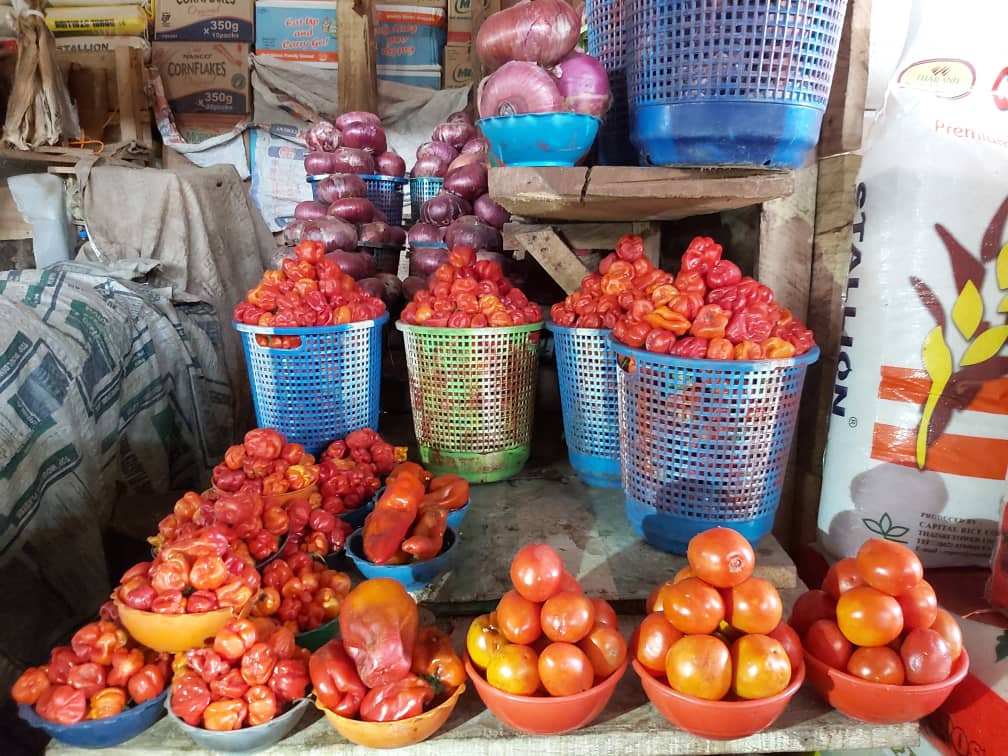
Isa called for the creation of strategic food reserves and government-supported storage facilities to manage excess produce during harvest season. "If the country can have a strategic reserve, when farmers produce in excess, the government or a private arrangement can take the excess produce and store it. At the end of the day, farmers will have value for their output and be able to meet the cost of production," he explained.
Export Challenges
Regarding the recent halt of onion exports to Ghana, Isa said that informal trade arrangements and actions by some groups in Ghana played a role. He mentioned that the problem was solved after Ghanaian authorities got involved and discussions took place among stakeholders.
Isa defended agricultural exports, saying they create markets for extra produce that would otherwise spoil due to limited storage. "We are business people, we are not doing charity. The essence of business is to make profit," he said. "If you don’t quickly dispose of the excess produce, it will go to waste. We need alternative markets for these products," he added.
He also pointed out that Nigeria's onion demand is about 2.5 million metric tonnes each year, which is more than the country’s reported production of around 2.1 million metric tonnes. Isa called for better agricultural data collection to help with planning and investment in the sector. "Without data and statistics, people cannot plan. And when people are not planning, they are planning to fail," he said.



Drop your comment
No comments yet — be the first to drop the gist 👇