For a long time in Nigeria, the toughest part of an election happens after voters cast their votes. While ballots are counted and result sheets are signed in front of voters and party agents, the way results are moved through wards, local governments, and state collation centers has often led to changes, substitutions, and even fakes. Court records and many national efforts to reform elections, like the Babalakin Commission of Inquiry into the Federal Electoral Commission in 1986, the Uwais Electoral Reform Committee in 2008, and the Nnamani Committee on Constitution and Electoral Reform in 2017, show a clear problem: election results manipulation has been a big part of Nigeria's electoral politics. The ongoing issue has been finding ways to keep polling-unit results safe until final declaration.
The INEC Result Viewing Portal, IReV, was created to solve the ongoing problem of election results manipulation. This new technology had a simple but powerful promise: make polling-unit results visible to the public to stop changes, substitutions, and fake results during collation at ward, local government, and state levels. With this system, polling officials use the Bimodal Voter Accreditation System (BVAS) to take pictures of the completed polling-unit result sheets and send them to IReV. This creates a record that everyone can access to check the results during collation.
From 2022 to the 2023 general election, IReV earned its reputation as a game changer. It did more than just make polling-unit results public; it added a level of transparency and accountability to the results-management process. This made it harder for corrupt election officials to change results during collation. IReV also helped INEC stand strong against political pressure aimed at changing or hiding results. However, the 2023 general election was a major setback. The failure to upload presidential polling-unit results as expected became a huge controversy, damaging public trust in a system that was supposed to symbolize transparency and integrity in results management.
The 2026 Osun governorship election tells a different story. Although IReV had some operational issues, important questions remain around the transmission protocols, BVAS operating system, data synchronization, and system resilience. Still, the Osun experience showed the importance of electronic transmission and real-time public access to polling-unit results as tools against manipulation. This incident also highlighted the need for more transparency, accountability, and citizen oversight. After the trust issues that came after the 2023 general election, IReV seems to be regaining its role as a significant player in Nigeria's electoral system.
IReV: From Experiment to Electoral Integrity Tool
IReV did not just appear out of nowhere. It was INEC's effort to use technology to reduce human interference in results management. After the 2011 general election, INEC tried to send results by SMS but stopped when the number of political parties made it unworkable, and the mistakes were too many. They also tried e-Track, which used handheld scanners to convert polling unit results into PDFs, but many results were never scanned, and many scans were unreadable. What remained was a more focused idea: transmit state-level presidential results to Abuja through a secure channel ahead of the physical forms so the numbers could be checked publicly. This practice, started in 2011, became the Collation Support and Result Verification System (CSRVS) and eventually IReV.
The IReV portal was officially launched during the Nasarawa Central State Constituency by-election on 8 August 2020, along with Z-Pad tablets. Even though the Z-Pad was later dropped due to technical issues, this election marked a key moment: for the first time, citizens could access polling-unit results online. INEC says uploaded result sheets are time-stamped and tamper-proof, creating a digital audit trail that political parties, observers, journalists, and citizens can see.
The Nasarawa trial also showed the need for a better device that could handle both biometric voter accreditation and electronic results management. This development led to the Bimodal Voter Accreditation System (BVAS), which combines fingerprint and facial recognition with the ability to capture and send polling-unit results to IReV. So, IReV's growth was gradual: from an experimental tool for transparency to a key part of Nigeria's electoral integrity system.
This innovation expanded quickly. By 2021, INEC reported that polling-unit result images had been sent from elections in 20 states and the FCT, covering 83 LGAs, 920 wards, and 14,212 polling units. IReV became an essential part of INEC's results management plan. INEC knew exactly why this was important. Its 2021 paper on electronic transmission pointed out that the result management process was vulnerable because it relied heavily on manual systems where officials completed result sheets and moved them physically through different collation layers. This created chances for the records to be changed, stolen, damaged, or destroyed. The Commission itself described one of these vulnerabilities as “result jacking.” IReV was not just a tech upgrade; it was meant to be an integrity safeguard against a long-standing weakness in Nigeria's results-management process.

The Long Rebuild
Since 2023, there has been a slow process of legal and operational reform. The most important change is the amendment to Section 60(3) of the Electoral Act 2026, which gives IReV legal backing and makes electronic transmission of results mandatory. The operational reform includes INEC's introduction of the electronic EC8A (e-EC8A) on the BVAS through its Regulations and Guidelines. In this process, polling officials first use the BVAS to take a picture of the physical Form EC8A before entering the results into its electronic version. The polling official must then confirm that the numbers entered electronically match those on the physical result sheet. If they do not match, the BVAS will reject the entry and stop the transmission. According to INEC, this validation method is meant to prevent the sending of result sheets with mistakes or discrepancies.
Independent Verification Boosted Election Result Credibility
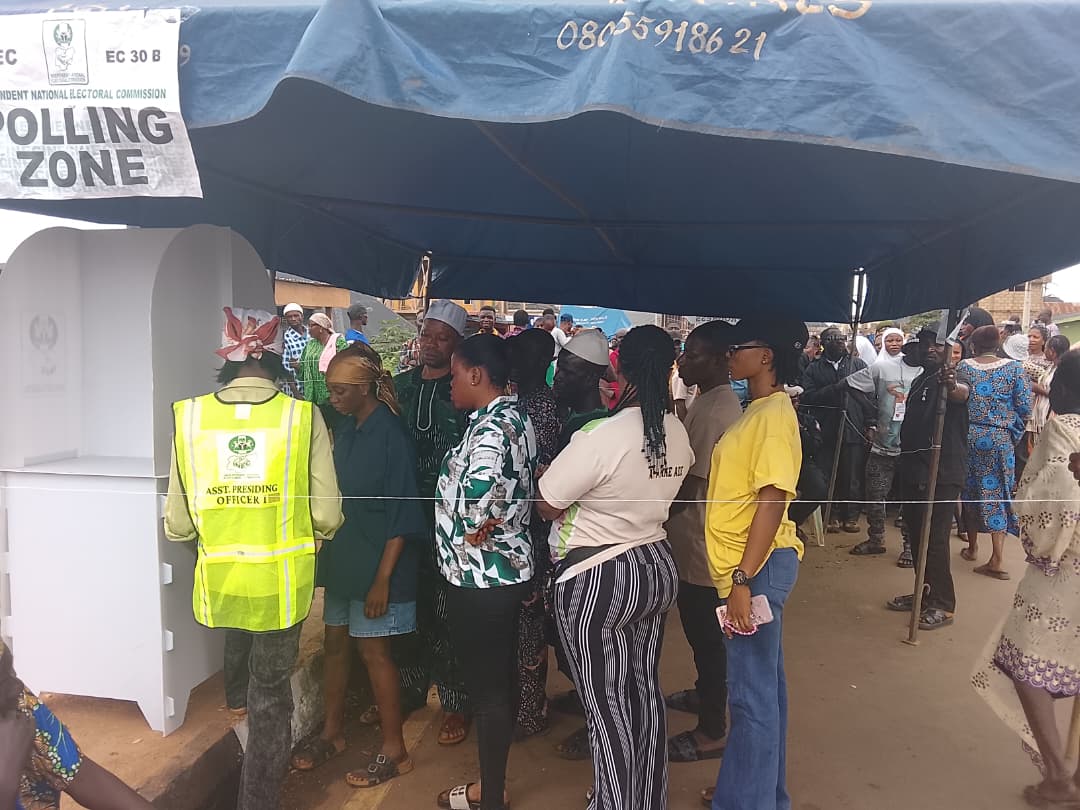
The Osun election showed how important it is to combine electronic transmission with independent verification. Citizens and different monitoring groups could track, gather, and analyze polling-unit results almost in real-time. Yiaga Africa's Election Results Analysis Dashboard (ERAD) 2.0 was deployed with Channels Television and supported by the European Union. This dashboard provided careful checking of results published on IReV, strengthening the transparency and accountability of the results management process. ERAD 2.0 found that while IReV stayed accessible, there were delays in publishing results. The first 41 results showed up around 3:40, 3:48pm, nearly 1 hour 40 minutes after voting was supposed to end. ERAD's findings also showed that some upload attempts failed because the electronic EC8A validation mechanism found discrepancies.
There was also a noticeable pause when uploads stuck at 3,292 results between 8:48pm and 11:50pm, leaving 471 remaining, before transmission started again around 11:50pm. By 8:36am the next day, 3,701 results had been published, meaning 98.35% completion. This experience highlights the value of independent verification and the need for better resilience, speed, and transparency in IReV operations. Yet, a silence during the crucial times of results management could lead to a repeat of the trust issues seen after the 2023 general election. That uploads resumed without signs of major changes does not make the silence okay. If IReV is to be a trusted system, delays or interruptions need to come with quick public updates.
The Bigger Lesson: Transparency Changes Behavior
IReV's biggest contribution might be its effect on behavior, not just technology: transparency changes how people act. When election officials know that the polling-unit results will be made public, the cost of changing them during collation goes up. When political players understand that independent verification platforms like ERAD 2.0, backed by real-time TV analysis, can independently look at and check results, there is less room for pressure and manipulation. When citizens can follow their votes from polling units to collation, results management becomes less open to manipulation. The real test will come in 2027 when IReV must work nationwide under much more political, technological, and operational stress. Clearly, IReV has reclaimed its status as a game changer in Osun because law, technology, and citizen oversight came together: the Electoral Act 2026 strengthened its legal base, citizens used it to check results, and independent verification boosted its credibility. Remove any of these parts, and IReV risks just being a website. In 2027, it must show that the game has really changed.
Drop your comment
No comments yet — be the first to drop the gist 👇