
About 7,825 people were kidnapped in Nigeria from July 2025 to June 2026. SBM Intelligence reported that at least N7.78 billion was paid in ransom during this time. The report states that Boko Haram received over 90 percent of the ransom paid in that period.
The report, titled ‘The Capture of Nigeria’s Kidnap Economy’, was released on 27 August. It covers events from July 2025 to June 2026. The report noted that there were 1,411 kidnapping incidents recorded. In total, about 963 people were killed, including 68 security agents.
The ransom demanded dropped from N48 billion in the previous year to N22.9 billion. But the amount paid more than tripled from N2.56 billion to N7.78 billion. The increase happened largely due to one group, the Jama’atu Ahlis Sunna Lidda’awati Wal-Jihad (JAS), also known as Boko Haram, which collected 90 percent (N7 billion) of the total ransom in just eight incidents.
“This is not because kidnappers are getting better at negotiating,” the report said. “One group, the Jama’atu Ahlis Sunna Lidda’awati Wal-Jihad (JAS) faction of Boko Haram, collected 90% of all ransom paid from just eight incidents.”
The report also mentioned that other terror groups, labeled as “unaffiliated kidnappers”, received the remaining 10 percent of the ransom (N719 million) in 146 incidents. Two cases that brought in N53 million were linked to Islamic State West Africa Province (ISWAP), which is a breakaway faction of Boko Haram. The report also connected armed Fulani herdsmen to three cases, which resulted in a N5 million ransom.
Some of the incidents that led to Boko Haram's large ransom amounts included the mass abduction of over 300 students from St Mary’s Catholic School in Papiri, Niger State, and the capture of 416 people, including children, from Ngoshe community in Borno State. The group received N5 billion for the release of the Ngoshe captives and N2 billion for the Papiri students, according to the report.
The report confirmed an earlier investigation by PREMIUM TIMES and The New Humanitarian. It found that the Boko Haram faction led by Sadiku was behind the Papiri abduction. Observers noted that the group collected more than a billion naira in ransom before releasing the captives in two batches.
Kidnapping has spread across Nigeria, but the North accounted for 85 percent of the cases recorded. During the period, 96 percent of civilian deaths happened in the North. “The North, South disparity does not change when the numbers are placed in the context of geopolitical zones,” the report explained. The North-west had the highest incidents with 680 cases, followed by the North-central with 309 and the North-east with 211.
In the South-south, there were 89 kidnapping incidents, followed closely by the South-west with 79 cases and the South-east with 43. Each region has its own security threats. In the North, ethnoreligious tensions mix with banditry and insurgency. Meanwhile, the South faces piracy, anti-separatist attacks, cultism, and rising jihadi attacks.
The SBM Intelligence report shows a detailed breakdown of the kidnapping crisis across states. In the North-west, Zamfara had the highest number of incidents, recording 236 cases involving 1,921 victims and 211 deaths. Katsina followed with 187 incidents, resulting in 559 abductions and 101 deaths.
Sokoto had 179 incidents with 1,157 kidnapped victims and 166 deaths. Kaduna recorded 134 incidents, involving 814 people and 130 deaths. Kebbi had 52 incidents involving 216 people and 33 deaths. In Kano, 109 people were kidnapped, and five were killed in 22 incidents. Jigawa had one incident involving three kidnapped people.

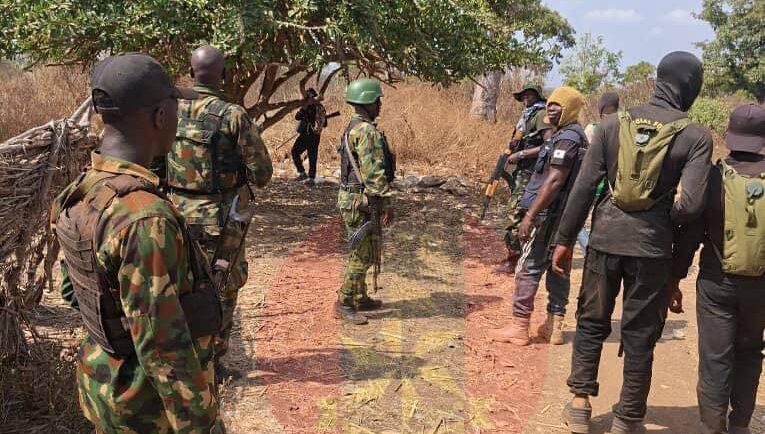

In the North-east, Borno led with 55 incidents involving 892 captives and 24 deaths. Adamawa came next with 21 incidents involving 77 abductions and 13 deaths. Yobe recorded five incidents, which led to the abduction of 18 people.
The North-east also faces banditry and communal clashes. Eighteen incidents happened in Bauchi, involving 34 abductees and 11 deaths. Gombe had nine incidents, leading to the abduction of 22 people and 14 deaths. In Taraba, 14 people were kidnapped, and one was killed in four incidents.
In the North-central, Kwara recorded the most incidents, with 265 people kidnapped and 50 killed. Kogi had 412 kidnappings and 20 deaths in 85 incidents. Niger recorded 68 incidents involving 496 victims and 54 deaths. Nasarawa had 12 incidents with 31 people kidnapped and two killed. Plateau saw 26 incidents involving 104 kidnapped individuals and 12 deaths. The Federal Capital Territory had 18 incidents with 45 abductees and one death. Benue recorded 32 incidents with 10 kidnappings and three deaths.
In the South-east, Abia had one incident involving two abducted people. Anambra recorded five incidents involving seven abductees and three deaths. Ebonyi had six incidents involving 14 kidnapped individuals and one death. Enugu reported seven incidents involving 14 abducted people and two deaths. Imo had nine incidents with 26 abductions and two deaths.
In the South-west, Oyo recorded 21 incidents involving 85 kidnapped people and five deaths. Lagos had one incident with one abduction. Osun recorded four incidents with five abductees and one death. Ondo reported 31 incidents involving 81 abducted people and six deaths. Ekiti had 10 incidents involving 39 kidnapped individuals and three deaths, while Ogun recorded nine incidents with 26 abductions.
The report also highlighted the state's efforts to tackle the threat. It shows that there were 1,411 kidnapping incidents but only 302 anti-kidnapping operations.
“The operational tempo shows regional variations, with the highest concentration of activity occurring in Benue (26), Katsina (25), Edo (25), Kaduna (24), Delta (23), and Plateau (23),” the report states.
The South-South region had the most anti-kidnapping operations. The report suggests that police and local security forces in this region were “more willing and able to go on the offensive than their counterparts in the North.”
“By contrast, Zamfara, which leads in incidents, victims, and civilian deaths, recorded only four anti-kidnap operations all year,” it noted. This shows how much the crisis has overwhelmed local security responses.
The report concluded that 179 terrorists were killed, while 68 security agents lost their lives in gunfights during the period.



Drop your comment
No comments yet — be the first to drop the gist 👇