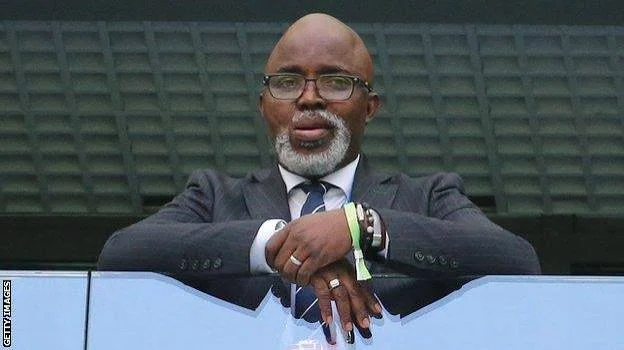
Former Nigeria Football Federation president, Amaju Pinnick, has shared why sportswear giants Adidas and Puma cut ties with Nigerian football. He claimed that an incident involving three Nigerians led Puma to blacklist the country.
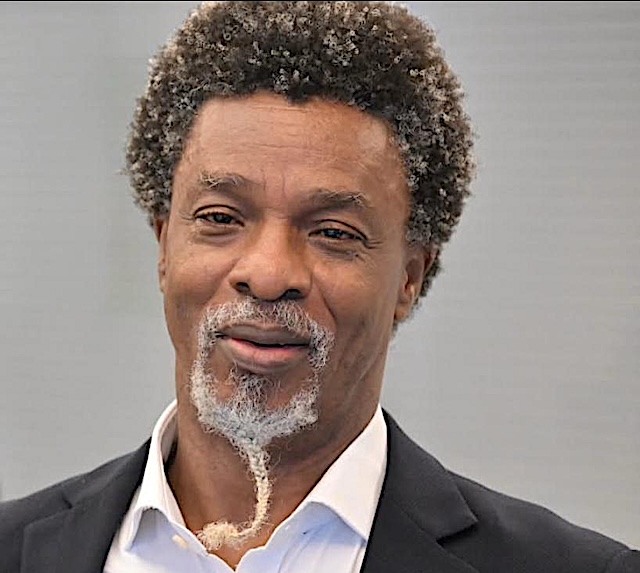
Pinnick revealed this in the latest episode of "The Pinnick Tapes" (Remastered): NFF Scandals Exposed, which aired on Sunday Oliseh's YouTube channel, Global Football Insights With Oliseh, on Friday.
He talked about the difficulties he faced in attracting sponsors after becoming NFF president. Pinnick said Adidas signaled it wanted to leave soon after he took over.
He expressed surprise at the decision and even traveled to Zurich to meet with the company’s president to convince them to stay. "I was utterly flabbergasted when I got the letter from Adidas. A few weeks or a few months into my being NFF president, they were leaving."
Pinnick said his attempts to persuade Adidas were unsuccessful. He later learned that various issues influenced the company's decision. However, he did not want to reveal specific details, saying he did not want to blame anyone publicly.
"It was later I found out so many things that were...that I cannot come out in the media to say. I don’t like indicting people. I don’t like speaking. But I went deep. But I knew you were not coming," he said.
The sponsorship crisis grew clearer when other big companies also started leaving or planned to leave Nigerian football. "When we came on, Globacom was leaving, Adidas had left, General Insurance had left, Guinness, they wrote us that they were leaving," Pinnick said.
Pinnick then tried to build a relationship with Puma but faced initial resistance from the company's top executive. He was introduced to the Puma boss during the 2015 Africa Cup of Nations in Equatorial Guinea, but the executive was hesitant to speak with him after knowing he was Nigerian.
"I was introduced to the head of Puma. The head of Puma meant he understood that I was a Nigerian, not even as president of anything at that point. He didn’t want to talk to me," Pinnick recalled.
According to him, the executive eventually agreed to meet him. He recounted an alleged incident involving three Nigerians who visited the Puma executive's home on Christmas Day.
Pinnick stated that the men supposedly told the executive they could break an existing Adidas contract but had their own demands. "He told me a story about how three Nigerians came to his house on a Christmas Day to tell him, ‘We can jettison the contract we have with Adidas, but this is what we wanted.’
"And from there on, he made up his mind never ever to have anything to do with Nigeria. He blacklisted Nigeria," Pinnick said.
He did not name the three Nigerians or share the nature of their demands. Still, he mentioned that the experience made him more determined to find another major international kit sponsor for the Super Eagles.
"But that was when I made up my mind that Adidas gone, Puma gone, we will definitely get the best," he said.
Pinnick noted he traveled to the United States and the Netherlands to secure a new kit deal and eventually succeeded in attracting Nike. "And that’s where I went to my room and I prayed and I said, ‘God, give us Nike.’
"It was a tough call, but eventually we got Nike," he said.
The former NFF president also rejected claims that his administration lost sponsors continuously. He argued that he increased the federation’s commercial revenue. "When I was president of NFF, no sponsors left me. I brought in sponsors. I went from zero to almost 80% of self-funding," Pinnick said.
He added that these figures could be confirmed in the NFF’s audited accounts prepared by PricewaterhouseCoopers.
Pinnick's remarks came during a detailed interview with former Super Eagles coach, Sunday Oliseh. They also discussed Nigeria’s failure to qualify for the 2022 and 2026 World Cups, unpaid coaches and players, political interference, and the challenges facing Nigerian football.
The former NFF president insisted that the federation's sponsorship issues existed before his time, claiming he inherited a system where major partners were already pulling out of Nigerian football. He stressed that his administration reacted by actively seeking new sponsors and pushing for more private-sector funding.
Drop your comment
No comments yet — be the first to drop the gist 👇