
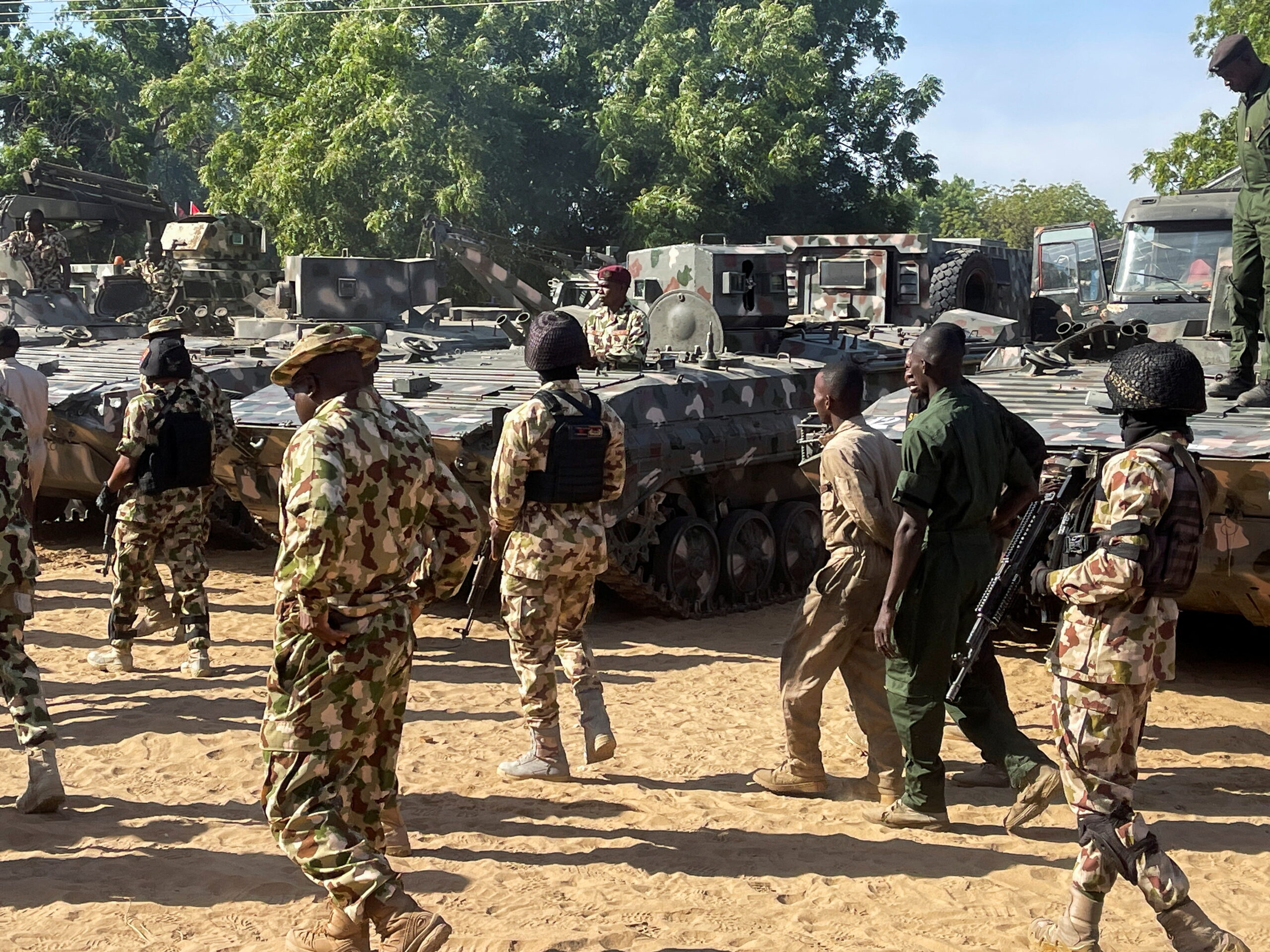
Niger Republic faced an attempted coup from 29 to 30 August. The plotters invaded Diori Hamani International Airport, home to Air Base 101. They also attacked the state broadcaster and the presidential palace.
The coup was defeated, and people took to the streets to protest against the idea of France returning to power in their country. France had invaded and colonized what is now Niger Republic in 1898. They controlled the country for 125 years until the 2023 coup led by General Abdourahamane Tiani.
Interestingly, Niger Republic was one of the places where France faced strong resistance during its colonization of Africa. This resistance was led by Queen Sarraounia Mangou, who was the leader, priestess, and military commander of the Hausa Azna nation.
Before attacking Azna, France had already taken over Algeria and Tunisia in North Africa, Gabon and French Congo in Central Africa, Madagascar and Djibouti in the East, and Mali, Guinea, Côte d’Ivoire, Burkina Faso, and Benin Republic in West Africa. In 1898, France launched a brutal campaign to seize the Chad Basin, including Niger.
To carry out this mission, France sent the Central African-Chad Mission, also known as the Voulet, Chanoine Mission. This group left Senegal in November 1898. It combined with two other missions: the Gentil Mission from Congo and the Foureau-Lamy Mission from Algeria. It was led by military leaders known for their cruelty, especially towards Africans. Captain Paul Voulet was known for his love of blood and violence. His adjutant, Lieutenant Julien Chanoine, was also famous for his cold-blooded cruelty. They had shown their brutality in 1896 when they destroyed the Mossi Kingdoms, including Ouagadougou, the capital.
The officers received vague orders from the Minister of Colonies, Andre Lebon. He told them, "I don’t pretend to be able to give you any instructions on which route to choose or how you are to behave towards the native chieftains." They interpreted their orders as a license to destroy villages and towns. They left behind death and destruction, regardless of age or gender. On 8 January 1898, after some soldiers were injured in the village of Sansanné-Haoussa, the French killed 101 people, including thirty women and children. The French expected easy victories as territories surrendered, but Queen Sarraounia, leading just six Hausa villages, refused to give in to the French army, which numbered two thousand.
As the French army advanced towards Azna, Sarraounia moved the women and children into the thick forest. The fighting lasted for months until 16 April 1899, when the French claimed victory at the Battle of Lougou. But Sarraounia and her fighters did not surrender. Instead, they hid in the forests and began a guerrilla war that pushed the French back and hurt their morale.


The French military struggled with an enemy that seemed invisible. They faced food shortages and growing frustration as they searched for Sarraounia. Some Africans in the French military even started to think of her as a spirit. Reports of the French military's brutality started to circulate in France, and a diplomatic row with Britain was brewing over the French actions in Sokoto, which was British territory. The French decided to change their leadership. Colonel Vimard, Governor-General of French Sudan, was instructed to replace the officers.
Lieutenant Colonel Jean-Francois Klobb, the French Governor of Timbuktu, was appointed to take command. In his book, Exterminate All the Brutes, S Lindqvist wrote that when Klobb arrived, he found, "a trail of burned villages and charred corpses. He passed trees where women had been hanged, and cooking fires where children had been roasted." The French officers continued their brutal tactics. In response to Sarraounia's guerrilla attacks, the French killed thousands of people on 8 May 1899, including wiping out the village of Birni-N’Konni.
This was one of the most brutal massacres in French colonial history. After following the French for about 2,000 kilometers, Klobb caught up with them on 10 July 1899. He sent Voulet a letter about his replacement and recall. Voulet replied that he had 600 guns and would not hesitate to use them if Klobb came to his base. Voulet continued his violent campaign. On 13 July 1899, in retaliation for the death of two soldiers, the French executed 150 women and children.
On 14 July 1899, Klobb appeared at the French base in full uniform. He reminded the soldiers of their duties. Voulet ordered his men to shoot Klobb. They did not succeed in killing him immediately; another shot finished him off. After Klobb’s death, Voulet declared, "I’m no longer a Frenchman; I’m a Black chief. With you, I will found an empire."
On 16 July 1899, Voulet and Chanoine gathered the soldiers. They told them they must obey orders and fired some shots. A Senegalese soldier then shot Chanoine dead. Voulet escaped but returned the next day and was killed by a sentry. Lieutenant Pallier, the new commander, tried to continue the mission but had to back down as soldiers threatened mutiny. Queen Sarraounia Mangou was never captured. Locals believed she used her spiritual powers to confuse the French soldiers, cause them to kill each other, and turn their weapons on their leaders. The French were so ashamed of their actions against the African Queen that, for a century, they tried to erase her from history. But they failed.


Drop your comment
No comments yet — be the first to drop the gist 👇