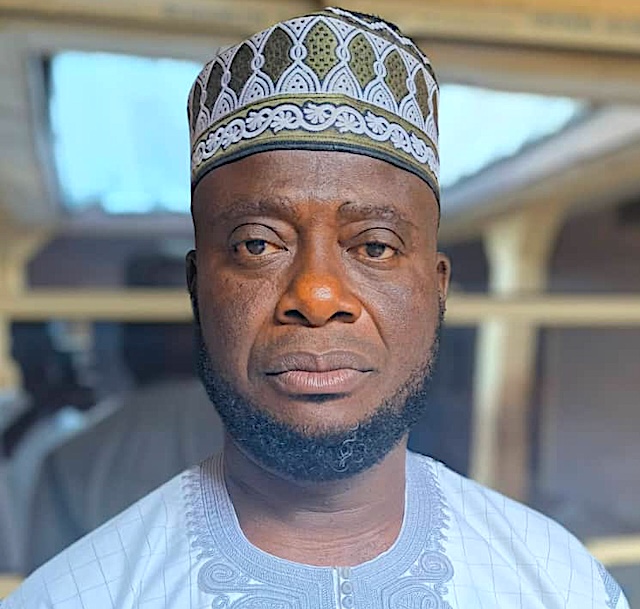

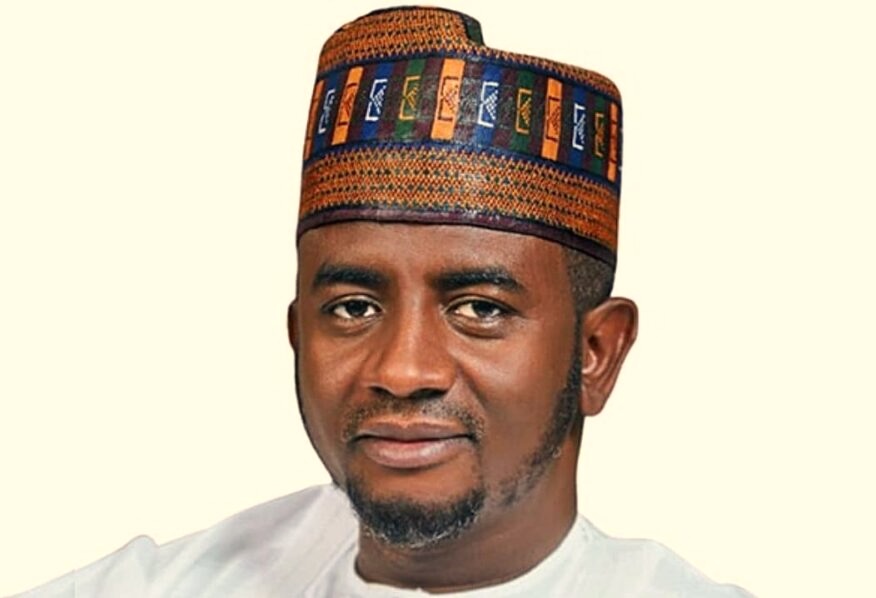
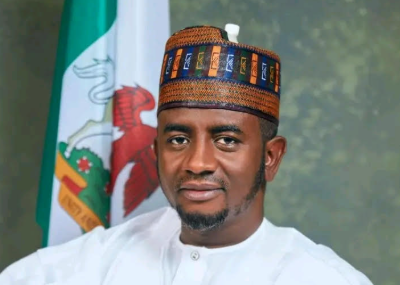
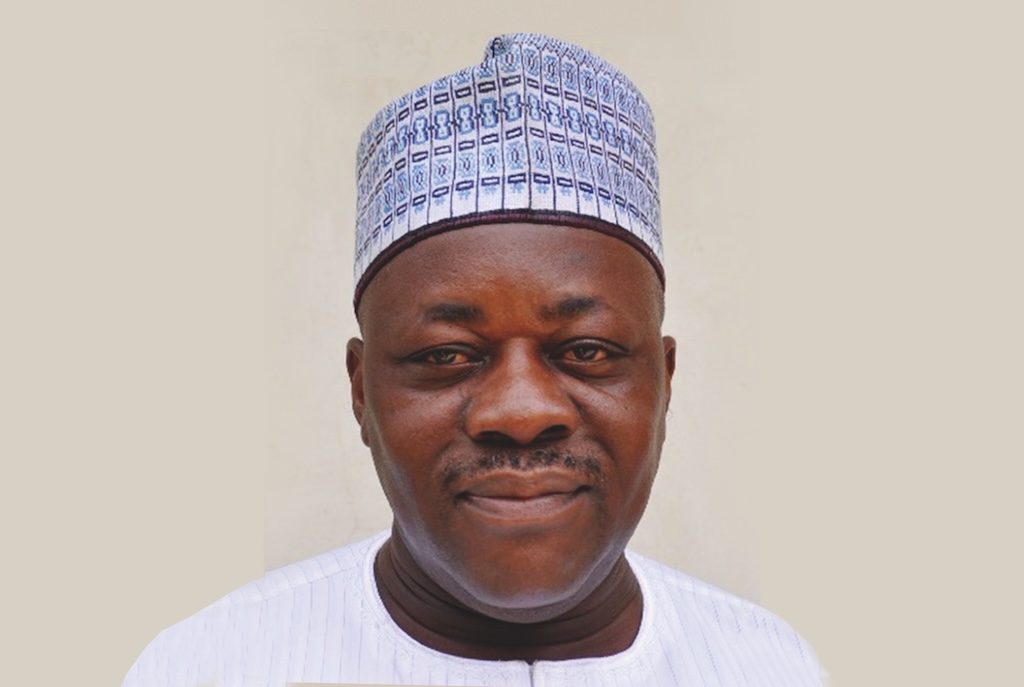
Senator Shehu Umar Buba
In the Name of Allah, the Most Merciful, the Ever-Merciful
All praise is due to Allah, the Lord of all creation, and may His peace and blessings be upon our Prophet Muhammad, his family, and all his Companions.
Dear brothers and sisters! Senator Shehu Buba Umar’s role in relation to armed bandits is a hot topic right now. There are serious accusations from government officials, discussions by security agencies, and strong denials from Umar himself. While some support him, alleging he promotes dialogue rather than violence, new petitions claim he may have more serious ties.
This situation surrounding the senator has many sides to it. The Bauchi State Government has sent a formal complaint to President Bola Tinubu, accusing Senator Shehu Buba Umar, the Chairman of the Senate Committee on National Security and Intelligence, of being involved with banditry.
Several groups, including the Arewa Youth Movement (AYM), have made allegations against him. These allegations include:
1. Providing logistics for bandits, like motorcycles.
2. Helping to treat injured fighters.
3. Having connections to wanted bandit leaders like Bello Turji.
4. Registering people linked to banditry for the annual Hajj pilgrimage.
Supporters and investigation reports claim that Umar’s dealings with these groups are about security strategy, not complicity in crime.
Before joining the Senate, he was part of a Federal Government team that tried to negotiate peace with armed bandits. Reports from intelligence sources, like one from The Cable, say he has a strong understanding of banditry and good connections in the affected areas. He has also been a resource for Nigerian security agencies in counter-insurgency efforts.
Senator Shehu Buba Umar has a Master’s degree in Peace Studies and Conflict Management. His doctoral research focuses on banditry in Zamfara and Kaduna states.
Umar has denied all accusations of sponsoring banditry. He calls them false, malicious, and politically motivated attacks aimed at discrediting him ahead of elections. He insists that he has always supported community-led peace efforts and non-violent solutions to insecurity in Northern Nigeria. He clarified that his support for individuals going for Hajj is based on community recommendations, and he has no personal links to anyone arrested in that context.
Respected brothers and sisters! In Islam, acting as a mediator (Muslih) between conflicting parties is seen as a noble act. The Qur’an, the Sunnah, and Islamic law strongly encourage making peace instead of allowing disputes to grow.
The Qur’an tells Muslim believers to work towards peace among conflicting groups. In Surah Al-Hujurat, Allah the Most High says:
"And if two factions among the Muslim believers should fight, then make settlement between the two…” [Qur’an, 49:9]
The next verse says:
"The Muslim believers are but brothers, so make settlement between your brothers and fear Allah that you may receive mercy.” [Qur’an, 49:10]
Meeting in private to resolve issues is highly regarded in Islam. Allah the Almighty says:
"No good is there in much of their private conversation, except for those who enjoin charity or that which is right or conciliation between people…” [Qur’an, 4:114]
Our beloved Prophet Muhammad (Peace be upon him) often acted as a mediator and encouraged his followers to do the same. He once asked his companions:
"Shall I not inform you of something more excellent than the degree of fasting, prayer, and almsgiving?” They replied, “Yes.” He said, “Coupling, reconciling matters of disagreement…” [Sunan Abi Dawud]
Islam generally forbids lying, but the Prophet Muhammad (Peace be upon him) made an exception for mediation to prevent bloodshed. He stated that someone is not a liar if they share good news to bring peace between people.
Taking on the role of a mediator (Muslih) comes with strict guidelines. A mediator must be fair and not favor one side due to wealth, status, or family ties. The Qur’an says if one party refuses peace, the community must stop the aggressor, but peace must be made justly once they comply. The intention behind mediation must be to please Allah and save lives, not for personal gain or fame. A mediator must also keep the secrets of both sides. Revealing private discussions can ruin trust and worsen conflict.
Resolving deep conflicts takes time. A mediator should handle harsh words or setbacks without giving up.
Dear brothers and sisters! Mediation is key for resolving conflicts, and Islam encourages peaceful reconciliation between individuals, families, and communities. Whether it is about spouses, family members, or nations, mediation (Sulh) is a noble act rooted in justice and compassion.
Remember, the aim of mediation is not to “win” but to restore peace, mend relationships, and uphold justice. The Prophet Muhammad (Peace be upon him) was known for his wisdom in settling disputes, always focusing on fairness and kindness.
Islam also has a clear framework for mediation in family issues, especially in marriage disputes. Allah the Most High advises appointing neutral mediators if conflicts arise. He says:
"If you fear a breach between them, appoint an arbitrator from his family and an arbitrator from her family. If they both desire reconciliation, Allah will cause it between them.” [Qur’an, 4:35]
The Prophet Muhammad (Peace be upon him) acted as a mediator in many family conflicts, promoting patience, understanding, and mutual respect.
He also said:
"The best charity is to reconcile between people.” [Musnad of Imam Ahmad]
Mediation is not just a social duty; it is an act of worship (Ibadah) that brings great rewards. The Prophet Muhammad (Peace be upon him) said:

"Shall I not tell you something more excellent in degree than fasting, prayer, and charity?” They replied, “Yes, O Messenger of Allah.” He said, “Reconciling people, for conflict and hatred sever the ties of faith.” [Abu Dawud]
This teaching shows that resolving conflicts strengthens faith and unity.
In a country and a world full of misunderstandings and disputes, mediation offers a powerful solution. Whether in personal issues, family matters, or community tensions, following Islamic principles of mediation can restore harmony and strengthen relationships.
Respected servants of Allah! The history of international mediation dates back over 4,500 years, beginning with ancient tribal elders handling boundary disputes. The first recorded third-party mediator was King Mesilim of Kish, who settled a land and water dispute between the cities of Lagash and Umma in 2550 BCE.
Throughout history, neutral states, religious leaders, and international organizations like the United Nations have mediated conflicts. Mediation has a rich history, evolving into a structured practice used globally today.
In ancient societies, community leaders often mediated disputes for social harmony. For example, in ancient China, mediation was common, influenced by Confucian philosophy. Respected leaders helped maintain order.
The Greeks and Romans also had mediation practices. In ancient Greece, ‘proxenoi’ mediated disputes between city-states. In Rome, roles like ‘arbiter’ and ‘conciliator’ were similar to modern mediators.
During the medieval period, mediation took shape in various cultural contexts. The Catholic Church had clergy mediating disputes based on canon law.
In the Islamic world, mediation (sulh) was well-known. The Qur’an and Hadith encouraged mediation for peaceful conflict resolution. Islamic mediators, called ‘hakam,’ were respected figures who facilitated dialogue.
Indigenous cultures also have strong mediation traditions. For instance, Native American tribes relied on elders or peacemakers to resolve community disputes, rooted in respect and restorative justice.
The modern era saw mediation become formalized. The 20th century marked advancements due to the need for efficient dispute resolutions.
In the United States, the labour movement in the early 20th century drove mediation development. The United States Conciliation Service was set up in 1913 to settle labour disputes peacefully. The Civil Rights Movement also advanced mediation to address racial tensions.
Internationally, the aftermath of World War II and conflicts like the Taliban-American war highlighted mediation's role in global peace. The United Nations created the position of international mediators to resolve conflicts. Figures like Ralph Bunche and Dag Hammarskjöld were key in these efforts.
Today, mediation is established in many areas, including family law, commercial disputes, and international issues. Organizations like the American Bar Association (ABA) and the International Mediation Institute (IMI) set standards and provide training for mediators worldwide.
Technology has also changed mediation. Online dispute resolution (ODR) platforms allow mediators to negotiate across distances, making mediation accessible and efficient.
Dear brothers and sisters! The history of mediation shows humanity's ongoing search for peaceful conflict resolution. From ancient practices to modern methods, mediation adapts to society's needs. As the world faces complex disputes, the principles of mediation remain relevant and important.
Fellow Nigerians! Senator Shehu Buba Umar was born in Nabordo Village, Toro Local Government Area, Bauchi State, on October 2, 1976. He attended primary school at Newo-Foron in Barkin Ladi LGA in Plateau and then went to Government Day Secondary School in Bauchi. He later studied Adult Education at Ahmadu Bello University in Zaria, Kaduna State.
For his postgraduate studies, he earned a Master’s degree from the University of Jos, focusing on Conflict, Peace, and Resolution Management.
Senator Shehu Buba Umar began his career as a primary school teacher in Bauchi before becoming Senior Special Assistant (SSA) on Nomadic Education to Isa Yuguda, a former governor of Bauchi State.
He was connected to the former governor through family ties, as his sister was married to Abdullahi Yuguda, a relative.
Three years later, he played a significant role in the campaign publicity for Alhaji Atiku Abubakar, the former vice president of Nigeria.
In 2019, Governor Bala Mohammed appointed him as Caretaker Chairman of Toro LGA. In 2022, he won the Bauchi South Senatorial election, defeating Lawal Yahaya Gumau, the incumbent.
A month before the Bauchi Emirate Council accused him, they stripped Umar of his traditional title ‘Majidadin Bauchi’ due to reported disrespect towards the state governor.
Umar claimed the governor had insulted President Bola Ahmed Tinubu during remarks at the 2024 EndBadGovernance protests. He described the governor’s statements as confrontational and abusive.
Umar has changed political parties and is now aiming to be the governor of Bauchi State under the People’s Redemption Party (PRP) after losing the primary elections under the All Progressives Congress (APC).
My beloved people! Up till now, no court or official report has shown that Senator Shehu Buba Umar is linked to banditry or terrorism.
Though he is in a national controversy with serious allegations, these claims are unproven and mostly come from local political rivalries.
Fact-checks from independent media, like Premium Times, confirm that while the federal government and the Department of State Services (DSS) have looked into security links with suspects arrested during Hajj operations, no findings link Umar to terrorism or banditry sponsorship. Civil society groups urge everyone to distinguish verified facts from political attacks.
Anyone still believing the media attacks connecting Senator Shehu Buba Umar to banditry sponsorship is either misinformed or part of a calculated smear campaign.
Let’s have fear of Allah. Senator Shehu Buba Umar should not be a victim of political blackmail. As a civilian, he has worked to support security against banditry and deserves fair judgment.
Political differences are normal, but unfairly vilifying someone who has contributed to fighting insecurity for cheap political gain is wrong and irresponsible. If you cannot praise his efforts, at least do not twist them for political purposes.
May Allah the Almighty protect us and guide us to be peacemakers in our families and communities, ameen.
All praise is due to Allah, the Lord of the worlds. May the peace, blessings, and salutations of Allah be upon our noble Messenger, Muhammad, and upon his family, his Companions, and his true followers.

Drop your comment
No comments yet — be the first to drop the gist 👇