
A few days ago, on 24 November, the House of Representatives’ Committee on Public Service Matters held a public hearing at the Administrative Staff College of Nigeria (ASCON) in Topo, Badagry. The goal was to get opinions from different Nigerians on a bill that wants to change ASCON into the “National School of Government.” I was in Canada, so I could not attend the important event. However, since I am a former director-general of ASCON, I sent someone to present my memorandum to the Committee. I will talk about that memorandum later.
I am glad to say that those who attended the hearing sent me clips of what happened. I was shocked to see and hear claims that were clearly false or based on wrong assumptions.
First, let’s talk about the wrong statements made during the hearing. One speaker confidently claimed that France and Singapore have schools of government. This is not true! It was surprising that this person was not corrected. France has an “Institut National du Service Public/INSP” and an “École Nationale d’Administration/ENA.” Singapore does not have a National School of Government either. They have the Lee Kuan Yew School of Public Policy, which is part of the National University of Singapore.
Realizing her mistake, the promoter of the “National School of Government” quickly switched to talking about Africa. She mentioned how countries like Kenya and South Africa have embraced the National School of Government idea. She then asked if Nigeria would be “left behind” if it does not change ASCON into its own NSG. She argued that it would be better for Nigeria to join this NSG trend soon. But better for whom? She didn’t explain.
Which trend are we talking about? Besides Kenya and South Africa, what other African nations have “National Schools of Government”? In French-speaking African countries, the common term for public service training institutes is not NSG, but “Ecole Nationale d’Administration/ENA” or “Ecole Nationale d’Administration et de Magistrature/ENAM.” Ghana has kept its “Ghana Institute of Management and Public Administration/GIMPA” name since it started. GIMPA has not changed its name, but it has grown and now awards degrees.
ASCON, which they want to rename, has been a model for other training institutions. Robert Mugabe visited the Staff College around 1983 and liked what he saw. When he returned to Zimbabwe, he ordered the creation of Zimbabwe’s own Institute of Public Administration and Management/ZIPAM in Darwendale, a village similar to Topo, Badagry in beauty. Even though ZIPAM was established in 1984, it has not changed its name.
Countries like Botswana, Egypt, Eswatini, Mauritius, Namibia, Tanzania, Uganda, and many others have kept the names of their public service training institutes. If this is true, where is the trend that Nigeria is rushing to join? This reminds me of an article I wrote in 1981 for the Quarterly Journal of Administration. It was called “Social Science and the Myth of Modernization.” I introduced a concept called “selective imitation.” This means taking ideas from abroad that seem appealing while ignoring those that require hard choices. The push for NSG is an example of selective imitation. It aims to make the NSG seem “trendy” without addressing important questions about reforming institutions. NSG is all talk, no action.
What good will changing ASCON’s name do? The NSG hype suggests that the ASCON Act of 1972 is outdated. The law needs to be updated. The problems facing Nigeria and ASCON cannot be properly solved just by replacing the name with NSG.
Let’s look at this closely. ASCON was set up as a corporate body on 1 June 1972. Its goals listed in Section 1 (2) of the 1972 Act include: (a) providing advanced management training for senior executives in both public and private sectors; (b) organizing studies to compare management principles and techniques; (c) researching management problems in various areas; (d) awarding scholarships for research in public administration; (e) maintaining a library; (f) organizing courses, conferences, and seminars; and (g) publishing journals and research papers.
Even if we think these goals are outdated, is changing ASCON’s name the answer? Why not update the objectives to fit current needs? Shouldn't we ask former Directors-General of ASCON for their opinions before making this change? Some of these ex-DGs are Professor Adele Jinadu, former INEC commissioner; Professor Sheikh Abdullahi, former minister of Health; Mr Ajibade Peters; Mrs Cecilia Gayya; and myself. Even without being invited, the ex-DGs informally agreed that the name change should be paused for more discussions.


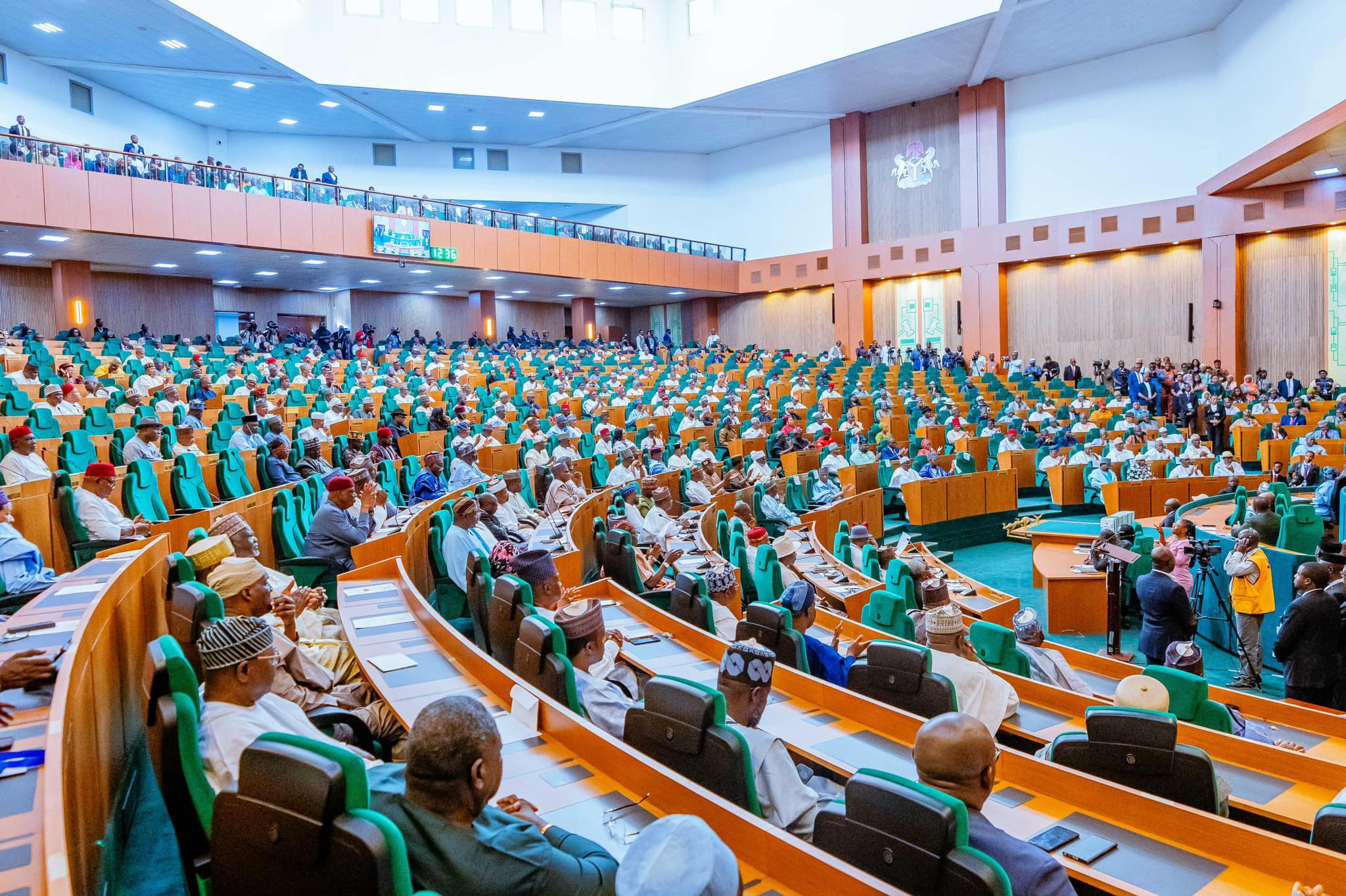
In a memorandum to the Chairman and Members of the House of Representatives Committee on Public Service Matters, I shared the ex-DGs’ views on the proposed name change. I also pointed out that the draft NSG Bill did not introduce new ideas but simply rehashed the 1972 ASCON Act. The ex-DGs all agreed that changing a name will not affect an institution’s ability to achieve its goals. For example, Oxford University has kept its name for centuries. Cambridge has not changed its name since 1209. Harvard has been known by that name since 1780. So, what does changing ASCON’s name accomplish?
What is the value of the name “National School of Government”? An institution’s name grows along with its achievements over time. “ASCON” has been the name and brand of the Staff College for more than fifty years. Changing this name is like starting from scratch.
ASCON can still achieve the goals that the NSG was supposed to achieve without changing its name. What we need is not a name change but a thorough review and analysis of the Staff College’s strengths, weaknesses, opportunities, and challenges. Setting new strategic directions will bring more benefits than a quick name change.
I have noticed some areas where the 1972 Act needs adjustments to better position the Staff College for today’s challenges and to align it with similar institutions globally. The goals of the School should be adjusted to: (a) serve as the leading public service institution where policymakers and members of the Higher Civil Service can share ideas on governance and best practices; (b) provide a platform for leaders and experts to discuss solutions to national issues; (c) promote public service reform strategies and ethical leadership; (d) apply effective teaching methods to develop the skills of public servants; (e) offer tailored capacity-building programs for state and local governments; (f) provide executive training for senior officials in the private and non-profit sectors; and (g) serve as a center for public administration research and consultancy services.
To achieve these new goals, the Staff College should: (a) organize policy retreats for leaders and experts; (b) hold workshops on public service values and accountability; (c) provide training for officials seeking promotion; (d) offer orientation courses for all new civil servants; (e) give ongoing education for senior officers; (f) work with the Head of the Civil Service to revise career advancement criteria; (g) conduct studies on public administration to improve service performance; (h) publish research and policy papers; (i) maintain libraries and digital resources; and (j) perform other functions consistent with its goals.
The Governing Board should include: (a) a Chairman with experience in public service or academia; (b) the Permanent Secretary responsible for career management; (c) one representative from the Federal Civil Service Commission; (d) two public administration scholars; (e) one representative from the private sector; and (f) the Director-General of the Staff College, who will also act as Secretary.
Another part of the 1972 Act that needs changes is how the Director-General of the Staff College is appointed. The process and terms should be clearly stated. Given the importance of leadership, the Act should require that the highest position is advertised in major newspapers. This position should be filled based on fair competition. This may need a Selection Panel led by the Head of the Civil Service, with members from various sectors. This suggestion aligns with Nigeria's Constitution and the president’s promise to create a “Nigeria that works for ALL.”
I have much more to say about ASCON, but I will stop here for now.




Drop your comment
No comments yet — be the first to drop the gist 👇