---
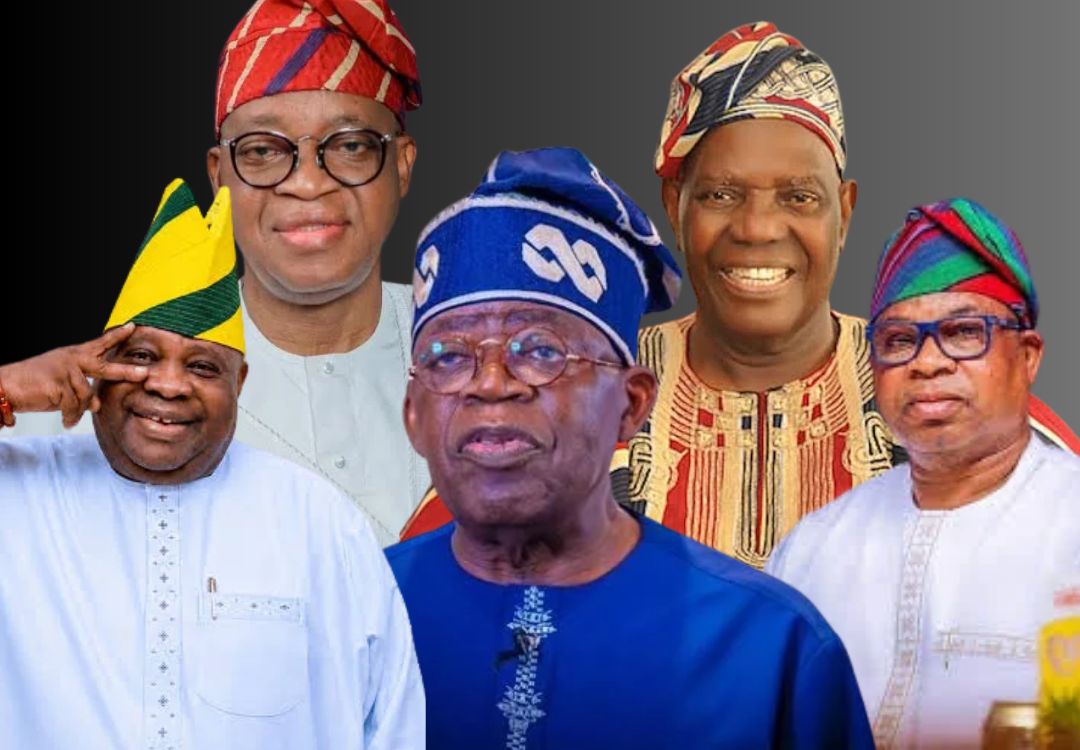
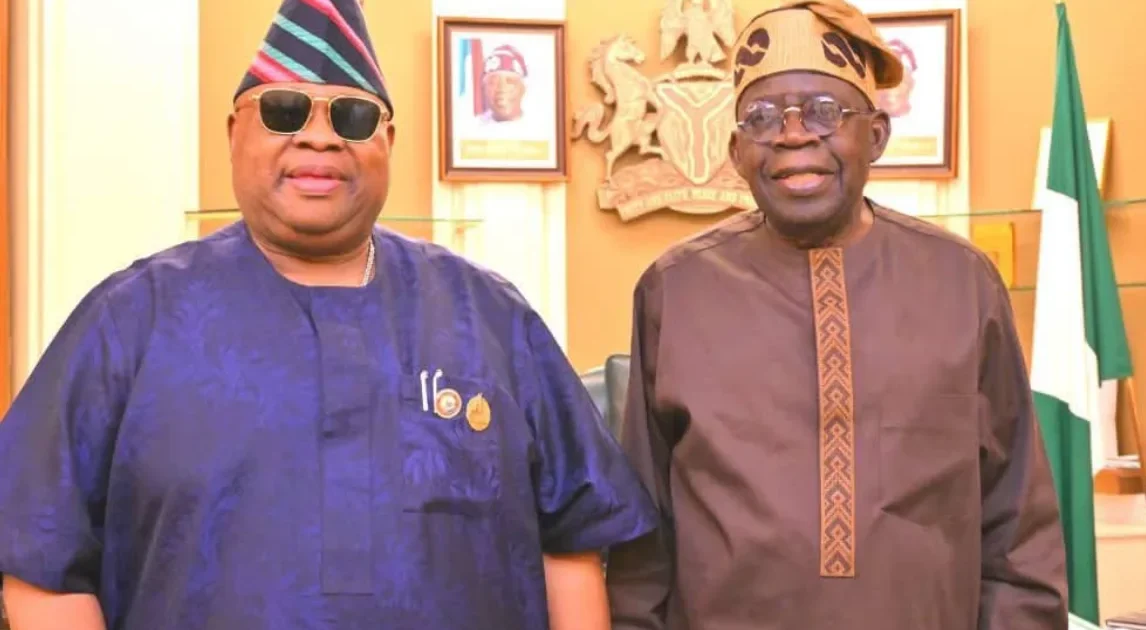
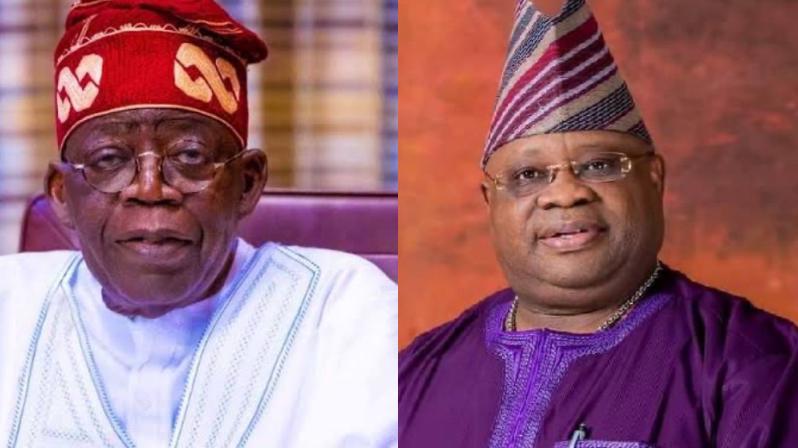
Osun State Governor Ademola Adeleke is now the coordinator of President Bola Tinubu’s re-election campaign in the state. This move has caused a stir within the All Progressives Congress (APC). Some party members are questioning how this will affect their political interests as they look towards the 2027 general elections.
Adeleke’s appointment brings up questions about its impact on the Accord Party, the platform he used to win re-election in August. He was sworn in for his second term on Friday.
The governor is expected to rally support for Tinubu’s presidential campaign. However, candidates from the Accord Party will compete against APC candidates for Senate and House of Representatives seats in the elections set to happen alongside the presidential poll in January 2027. Currently, the Accord Party holds no Senate seats and six House of Representatives seats from Osun State, while APC has two and three seats, respectively.
Beyond the political stakes, there is a bigger question about whether Adeleke’s connection with Tinubu can help settle Osun’s long-standing political disputes. These include issues over local government control, withheld allocations, and conflicts over transport unions and motor parks.
The friendship between Tinubu and Adeleke became clear during Osun’s August governorship election. Tinubu’s intervention helped lift restrictions the Economic and Financial Crimes Commission (EFCC) had placed on the state government’s bank accounts.
On August 5, PREMIUM TIMES reported that the EFCC had gotten a court order to freeze the Osun State government’s accounts just ten days before the election, where Adeleke was seeking re-election against APC candidate Bola Oyebamiji. Tinubu later told the EFCC to go to court and lift the order, calling the timing “embarrassing.” The account was unfrozen on August 22.
After Adeleke won the election against Oyebamiji, he publicly supported Tinubu’s second-term bid, calling the president a son of Osun State. He expressed a desire for Tinubu to finish his development projects in the South-west during his second term.
The political significance of this alliance is highlighted by how Osun voted in the 2023 presidential election. Tinubu lost to Atiku Abubakar of the People Democratic Party (PDP) in Osun. Atiku received 354,366 votes while Tinubu got 343,945 votes. Osun was the only South-west state that fell to the PDP in the 2023 elections.
Adeleke stated that his support for Tinubu was not tied to any agreement with the president. He also expressed readiness to work with APC members, including Oyebamiji and former governor Gboyega Oyetola, to support Tinubu’s re-election.
But his appointment as Osun coordinator of the APC presidential campaign council on October 13 took their relationship into formal campaign territory. This was followed by a 344-member campaign council inauguration in Osogbo on October 22, which included leaders from APC, Accord Party, and PDP.
Yet, some key APC figures, like Oyetola and Oyebamiji, were not present at the inauguration. APC leaders complained they were not consulted or invited, claiming Adeleke sidelined them. This raised concerns among party members about their role in a campaign led by a governor from another party.
Ayodele Fanibe, an APC leader in Osun, blamed the absence of prominent leaders on Adeleke not consulting party leadership. He said, “His failure to do the right thing must have resulted in what happened at the inauguration.”
Adeleke’s spokesperson, Olawale Rasheed, countered that APC leaders had been invited. He claimed the governor personally reached out to Oyetola and Oyebamiji, but they did not answer. He added that the governor also contacted other APC figures and gathered their supporters.
Rasheed stated, “What has the governor done wrong? We are the outsiders. APC owns the project. The directive to inaugurate the council came from Abuja.”
This situation has created a unique political scenario in Osun where Accord is leading the presidential campaign for APC. Yet, the alliance faces challenges from the state’s unresolved political disputes. It raises questions about whether Adeleke’s partnership with APC can help resolve broader issues over political and institutional control.
One major test for Adeleke and Tinubu is the ongoing dispute over Osun’s 30 local governments. This issue has led to withheld council allocations and frequent clashes over access to council secretariats. The crisis began with a local government election on October 15, 2022, during Oyetola’s APC administration.
In November 2022, the Federal High Court invalidated the election in a case marked FHC/CS/OS/103/2022. The Court of Appeal upheld this decision. The situation worsened after Adeleke defeated Oyetola in November 2022, leading to the removal of APC-elected council officials.
On February 21, 2025, the Osun State High Court directed the Osun State Independent Electoral Commission (OSIEC) to hold fresh elections for the vacant local government positions. The elections were initially set for February 22.
After the re-run, OSIEC announced that PDP candidates won all the chairmanship and councillorship positions. Adeleke, a PDP member at that time, swore in the newly elected officials. However, APC argued that their officials elected in October 2022 should remain in office, citing another Court of Appeal decision that favored them.
This disagreement led to security issues, with rival groups fighting for control of council secretariats. In February 2025, clashes between APC members and supporters of PDP chairpersons resulted in at least five reported deaths. Adeleke then ordered the newly elected chairpersons to avoid the secretariats to prevent more violence.
The fight over which officials control the councils has also impacted their access to allocations from the Federation Account. Between March 2025 and June 2026, the federal government withheld about N216 billion designated for Osun’s local councils.
This figure includes N131.5 billion from March to December 2025 and N85.3 billion from January to June 2026. The situation escalated to the Supreme Court after the Osun State Attorney General sued the federal government over the withheld funds.
In December 2025, the Supreme Court dismissed the case, stating that the Osun State Attorney General had no standing to file it on behalf of local governments. However, the court criticized the federal government for withholding the funds, calling it a misuse of power.
The legal battle over local government control continued into 2026. In June, the Federal High Court in Osogbo rejected a suit from APC chairpersons seeking to extend their tenure beyond October 2025, ruling that their claim lacked legal basis. The affected officials later appealed the ruling.
After the court decision, chairpersons elected in February 2025 returned to some secretariats despite APC resistance. The struggle over the secretariats persisted after Adeleke’s re-election in August 2026, with PDP chairpersons trying to occupy council offices and facing pushback from APC members.
The ongoing clashes revealed that a lasting solution to the councils' administration was still absent. Local government workers have also been affected, with their welfare and salaries caught up in the dispute over access to allocations.
On November 9, the Osun State chapter of the Nigeria Labour Congress (NLC) began a three-day sympathy strike to support local government workers affected by the withheld allocations. This action disrupted activities in government offices and schools across the state.
The crisis has grown beyond a simple contest between APC and Adeleke’s administration. It has turned into a lengthy institutional and financial dispute, impacting grassroots governance and public services.
With Adeleke and Tinubu’s relationship getting stronger after the governor’s re-election, talks to resolve the local government crisis have reportedly gained momentum. PUNCH noted in October that Tinubu started a peace process after Adeleke visited the Presidential Villa post-election. A committee led by Chief of Staff Femi Gbajabiamila was created to find a solution.
Rasheed confirmed that both the presidency and state government are working to resolve the local government control crisis. The discussions involve the interests of both APC and PDP elected officials and management of local government funds. Rasheed is hopeful the negotiations will wrap up before the 2027 elections.
He said, “What the governor and the Presidency are doing is to set up a negotiation team to iron out how best we can resolve it. The negotiation is almost reaching the final stage.”
Kola Olabisi, the Osun APC spokesperson, claimed he was unaware of any committee formed to address the local government crisis. He said he could not comment on the matter and that those involved could explain better.
Experts believe that a political relationship between Tinubu and Adeleke alone won’t resolve the legal issues regarding council leadership or release the withheld allocations. Adebola Bakare, a political science expert, called the local government control crisis a complicated issue needing careful legal review.
He emphasized that while the alliance between Adeleke and Tinubu could help, it depends on both sides agreeing to settle the matter out of court. Otherwise, he warned that the legal battles could continue to hinder local government administration.
The struggle for control of motor parks also shows the limits of political influence in resolving disputes in Osun. Rival factions in the National Union of Road Transport Workers (NURTW) have been fighting over leadership and control of motor parks, leading to violence and even deaths.
In July 2026, the state government suspended NURTW activities in motor parks after a violent clash between factions. The government supported the state executive led by Nurudeen Alowonle, accusing a faction led by Kazeem Oyewale of attempting to seize control.
The national leadership of NURTW opposed the suspension, arguing that the state government had no right to stop its activities. They set up a caretaker committee for Osun’s chapter, which the state government rejected.
Despite efforts to restore order, violence persisted. In August, two people were shot dead during a confrontation in Ikire over control of a motor park. In September, Olalekan Oyeyemi, a top Accord Party member close to Adeleke, was shot dead. Police are investigating the killings.
Following this, Adeleke again banned NURTW activities in the state and ordered rival groups to vacate motor parks. He also announced a plan to reintroduce a Park Management System to restore order.
The government later pursued a legislative solution. The Osun State House of Assembly passed the Integrated Transport, Traffic and Park Management System Bill in September, which Adeleke signed into law on October 5. However, this law sparked another political dispute, with APC challenging the authority of the legislation.
The APC argued that the state government lacked constitutional authority over motor parks, citing relevant sections of the Nigerian constitution. The assembly countered that the constitution allows state legislatures to provide legal frameworks for local government administration.
The disagreement is significant because the current local government crisis has left local councils and their finances in a state of uncertainty. While the new law aims to regulate parks and revenue collection, the underlying issues remain unresolved.
Adeleke’s role in Tinubu’s campaign has also highlighted divisions within the Osun APC. His appointment is sensitive since he is from the Accord Party, while APC has its own leaders in the state.
Former governor Oyetola is seen as a key APC figure in Osun and was not included in the campaign council list. This has unsettled some APC members who expected an APC leader to coordinate the president’s campaign.
Some members worry that Adeleke’s role could give Accord Party an advantage in the political landscape, possibly affecting their chances in legislative elections against APC candidates. This concern grew after Adeleke announced a 344-member campaign council, inviting members from APC, PDP, and Accord, while Oyetola and Oyebamiji were absent.
The unhappiness within APC led to a rival campaign structure being formed. On November 2, the Osun APC launched a 168-member campaign council to support Tinubu and APC candidates in the 2027 elections, with Oyebamiji as director-general.
This move created a separate structure to challenge the national campaign council that appointed Adeleke. Four APC state executive members triggered this development by accusing the leadership of excluding key officials.
They also questioned the legitimacy of the council given Adeleke’s appointment. Facing backlash from the national body, the state chapter renamed the council to Osun State APC Parliamentary Campaign Council and expanded its membership to include all state executive committee members.
Though this change removed the immediate duplication of campaign structures, it did not solve the underlying tensions over Adeleke’s influence within the party’s campaign framework.
It raises questions about how much authority Adeleke will have over reluctant APC members during the campaign for Tinubu.
Olabisi dismissed claims that the relationship between Adeleke and Tinubu would impact APC’s legislative seats contest. He stated both parties are campaigning separately for their respective candidates and have set up their own campaign committees.
“The only connection between Accord and APC in this election is the presidential contest,” he said. “We are campaigning for our own candidates.”
He emphasized the need for voter education so supporters can identify and vote for their candidates. “Voter education is one of our priorities to ensure potential voters are well informed.”
Bakare noted that earlier signs showed Tinubu was willing to accept Adeleke into APC when PDP faced internal issues. Yet, he said opposition from APC’s state leadership blocked this move.
“From indications at the time, when the governor wanted to join APC, he met with President Tinubu. The president seemed ready to accept him. Unfortunately, local political factors prevented this.”
Bakare added that Tinubu’s decision to appoint Adeleke to lead his campaign shows trust in the governor and reflects their ongoing relationship. This could pressure APC leaders who opposed Adeleke to align with the president’s choice.
“Now that the president has appointed him to lead his campaign, it shows confidence in him. Whatever resentment APC members have will have to be set aside as he is the one in charge,” he said.
For Adeleke, this situation is both an opportunity and a risk. His role in Tinubu’s campaign might strengthen ties with the federal government and provide a chance to address the local government crisis and secure federal cooperation.
But he must also protect the interests of the Accord Party, the platform he used to win re-election and which is contesting for legislative seats in 2027.
Both presidential and National Assembly elections are scheduled for January 16, following the timetable released by the Independent National Electoral Commission (INEC).
This means Adeleke will campaign for Tinubu while Accord candidates compete against APC candidates for Senate and House of Representatives seats.
The governor has made it clear that his support for APC is only for the presidential election and he will campaign for Accord candidates in the legislative elections. “I urge all political parties to campaign for their candidates, as I will do for Accord candidates,” said Adeleke in a statement by Rasheed.
Experts believe managing this arrangement will become more challenging as the campaigns heat up, with both parties facing a delicate balancing act.
Bakare expressed that both parties must educate their supporters to understand the differences between the presidential, senatorial, and House of Representatives ballots. “The main issue for both parties is how to educate their supporters to ensure the alliance does not harm their candidates,” he said.
With proper voter education, Bakare believes both parties can safeguard their candidates’ chances in the legislative elections.
Drop your comment
No comments yet — be the first to drop the gist 👇