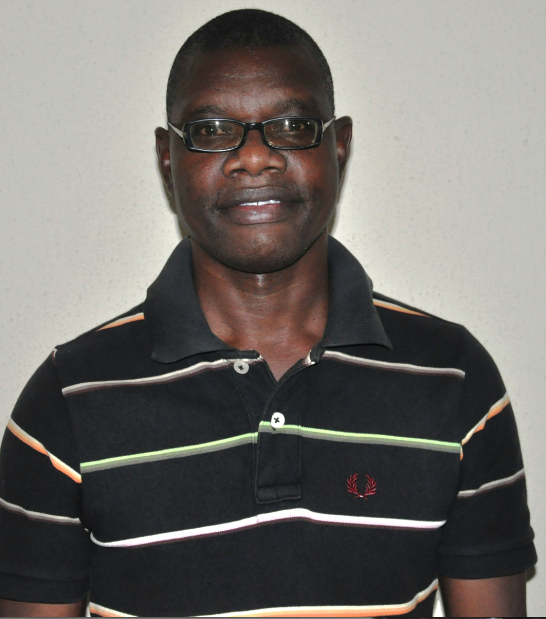
IGP Tunji Disu and retired DCP Stella Okuyiga
As a memoir, the book tells the amazing story of a woman who joined the police as a young recruit and retired over 30 years later as a deputy commissioner. It encourages young women thinking about careers in policing and public service. It shows that institutions become better when chances depend on ability and hard work, not gender.
In Nigeria’s early police history, the uniform was mostly for men. Women could be policed, questioned, or protected, but they could not work as police officers.
Things started to change in the 1940s and 1950s. Women’s rights activists like Oyinkansola Abayomi, Funmilayo Ransome-Kuti, Margaret Ekpo, and Elizabeth Adekogbe pushed for women's roles in public institutions and decision-making.
These women used petitions, protests, and political advocacy to confront a colonial system that felt policing was not suitable for women. Their fight was part of a larger struggle for political representation, equality, and recognition of women in Nigeria’s public life.
In 1954, Margaret Ekpo, who was a member of the Eastern House of Assembly, took the argument directly to the legislature. She argued that women should be recruited into the police because they would be less likely to engage in the bribery that some policemen were known for at that time.
By the next year, the colonial authorities had given in to the pressure. Newspapers began to invite qualified women to apply to join the Nigeria Police Force.
Among those who applied was Stella Opuiyo, a brave and adventurous 25-year-old from Okrika, in Rivers State. She later became Stella Okuyiga after marriage.
In October 1955, she joined 19 other women at the Southern Police College, now known as the Police College, Ikeja, for six months of training. Together, they became the first women officially recruited into the Nigeria Police Force.
Their entry came almost a century after formal policing started in Nigeria in 1861 and 25 years after the northern and southern regional police forces merged into a unified Nigeria Police Force in 1930.
Now 96 years old, retired Deputy Commissioner of Police Stella Okuyiga has documented this historic journey in her book Origin of Policewomen in Nigeria and My Journey in the Nigeria Police Force (1955, 1986).
The book is more than just a personal story. It gives an eyewitness account of a key moment in the history of policing, gender equality, and public service in Nigeria.
A Pioneer Writes History
From her first day on the parade ground as a recruit, Okuyiga knew she was part of something bigger. She was entering a field where women had no clear path, little experience, and few guarantees of acceptance as equals.
This awareness stayed with her throughout her career, which lasted just over 30 years. By the time she retired in 1986 at age 56, she had reached the rank of deputy commissioner of police. This was a remarkable achievement for one of the first policewomen.
She was also the first woman from the old Rivers State to join the Nigeria Police Force.
Her book shows her determination to preserve the experiences of women who joined the police when female officers were still seen as an experiment. With the detail of a police officer and the honesty of a trailblazer, she shares their recruitment, training, early assignments, and gradual acceptance in the Force.
For many years, the story of Nigeria’s first policewomen survived through bits and pieces: old files, fading photos, and stories in police barracks. Okuyiga has now brought those pieces together into a record told by someone who experienced it all.
"I was there, and I witnessed everything firsthand," she says.
This statement shows the book's strength. Okuyiga does not write as a distant historian. She tells her story as someone who lived through it, shaped by the policies and challenges of that time.
Using official documents, her diaries, and personal experiences, she connects the recruitment of women to Nigeria’s broader social and political growth. She looks at the challenges the pioneers faced, the rules that defined their duties, and the changes that allowed women to take on more responsibilities in the Force.
History Preserved Against Loss


The importance of Okuyiga’s story becomes clearer when you see how fragile Nigeria’s historical records are.
Some materials she carefully saved were lost during the Nigerian Civil War from 1967 to 1970. When the conflict grew in the Eastern Region, she tried to move her things to Port Harcourt, but valuable records and photographs vanished.
Among the lost items was a cherished photo of the 20 pioneer policewomen proudly standing in their khaki uniforms during training.
"The loss of those materials remains one of my greatest regrets," she writes.
This regret adds a sense of urgency to the book. It shows how easily personal and institutional memories can fade without proper preservation. By documenting her memories and combining them with surviving records, Okuyiga has saved an important part of Nigeria’s history from being forgotten.
The book also shows the human side of institutional change. It does not just list policies and dates; it reveals what it meant to be a woman in uniform when that idea was new to society.
Okuyiga shares stories of prejudice, doubt, and unfair treatment. But she also talks about friendships, mentorship, and successes that affirmed women’s roles in policing. Her story shows that progress is often slow and built by those willing to step into spaces where their presence is questioned.
From 20 Pioneers to Nearly 50,000 Officers
The change has been huge. What started in 1955 as a small group of 20 women in khaki skirts has grown into a female police population of nearly 50,000 officers, making up about 15 percent of the Nigeria Police Force.
Women now work in police stations, state commands, specialist departments, intelligence units, and operational teams. They investigate crimes, lead teams, manage public order, take part in peacekeeping, and contribute to almost every area of modern policing.
This progress makes Okuyiga’s book timely and important. It reminds readers that today’s opportunities were created by women who joined the Force when there were no role models to follow.
Inspector-General of Police Olatunji Disu recognized this broader significance when he read the manuscript. He believed its importance went beyond Okuyiga’s personal story and related it to a police project.
In his introduction, the Inspector-General notes that this story belongs not just to Okuyiga but to every woman who wore the uniform when chances were few and expectations were low. It also belongs to those who challenged stereotypes and to the male officers who supported women’s growth.
"The journey began with 20 women in khaki skirts," he says. "It continues today in every police station, command headquarters, and operational unit where Nigerian women serve with honor."
Tribute, Testimony and Institutional Archive
As a historical work, Origin of Policewomen in Nigeria and My Journey in the Nigeria Police Force (1955, 1986), published by the African Centre for Media and Information Literacy (AFRICMIL), fills an important gap in the literature on policing and gender in Nigeria. It gives researchers, historians, police officers, and students a rare first-person account of how women joined one of the country’s key security institutions.
As a memoir, it shares the remarkable life of a woman who joined the police as a young recruit and retired over 30 years later as a deputy commissioner.
As an inspirational work, it speaks to young women thinking about careers in policing and public service. It reminds them that institutions get stronger when chances depend on ability and commitment, not gender.
Most importantly, the book brings back names, experiences, and sacrifices that could have been lost to time. The story of women in the Nigeria Police Force is not just a small part of the institution's history. It is part of the larger story of Nigerian women’s fight for recognition, representation, and equality.
Seventy years after 20 young women first stepped onto the training grounds of the Southern Police College, Okuyiga has made sure that their bravery will not fade away.
She has written the history, giving the country both a tribute and a testimony: a tribute to the women who broke the blue ceiling and a testimony from one of the pioneers who was there when it all began.

Drop your comment
No comments yet — be the first to drop the gist 👇