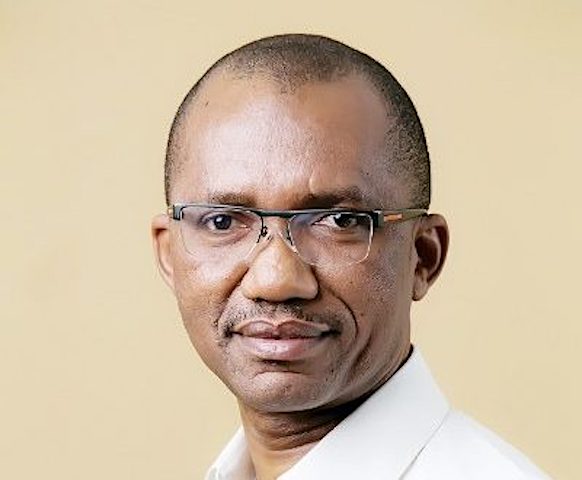
It has been five years since I wrote about the Sultan of Sokoto, Muhammadu Sa’ad Abubakar III, who was 65 then.
I first met him after he became Sultan following the sad death of his brother, Muhammadu Maccido, in the 2006 ADC plane crash that killed 93 people.
Along with his brother, Brigadier Abubakar (as he was known then) also lost his nephew, Senator Badamasi Maccido, in that crash. It was clear that tragedy struck without warning and it came with its own burden.
On Monday, 24 August, Sultan Abubakar III turned 70. He will celebrate 20 years on the throne on 2 November. The last five years of his reign have shown a lot about him, the Sultanate, and the country.
Two days after his 65th birthday in 2021, the Sultan openly said things were not getting better and that religious leaders must tell the government the truth.
He went further. He stated that anyone who incited violence, whether they were religious leaders, traditional rulers, or politicians, should face the law. He said this during a time when Plateau State was facing serious ethnic violence and threats of revenge.
He does not hold back. When Boko Haram and their affiliates kill, rape, and destroy in the name of Allah, claiming they will get many brides in Paradise if they die, some religious leaders stay quiet. Not Sultan Abubakar III. He told these violent people clearly, which he repeated to me some time ago, that "They'll go straight to hell!"
No one can kill in Allah's name and expect to go to Paradise. The Arabic version of Surah Al-Ma’idah 5: 78-79 warns those who do not stop others from wrongdoing.
One year after his 65th birthday, his role as an interfaith leader was tested when Deborah Samuel, a student at Shehu Shagari College of Education, Sokoto, was killed over blasphemy claims. The Sultanate Council condemned the killing and demanded that the suspects face justice.
That was significant, even though the civil authorities under Governor Waziri Tambuwal ignored the call, and a former Vice President, Atiku Abubakar, deleted his tweet after condemning the act.
Abubakar III has done more for interfaith unity than any Muslim leader I have known in a long time. As co-chairman of the Nigeria Inter-Religious Council, he has worked hard, using his strong connections with other faith councils globally, to mend relationships and fight religious intolerance.
Sultan Abubakar III is a moderate social champion, which is surprising since he comes from Sokoto, known for its conservatism. He has spoken out for education for all children, boys and girls, reminding those who look down on education in the name of Islam that the Caliphate was built on education.
And he is correct. Much of the history of the Caliphate is due to Nana Asmau, the younger half-sister of Sultan Mohammed Bello, who spoke four languages, according to the book by Fola Fagbule and Feyi Fawehinmi, called Formations: The Making of Nigeria from Jihad to Amalgamation.
Sultan Abubakar has also discussed how rising insecurity, poverty, hunger, and social exclusion are linked. He once said, "hunger knows no religion," while urging the government to address rising inflation and the high cost of living instead of making excuses.
When the Buhari government ignored court orders, including one to release publisher and activist Omoyele Sowore from detention, the Sultan said that not obeying court orders was "a recipe for chaos and disaster." He said this at a meeting of the inter-religious council in Abuja, where Buhari was often present.
The 2023 coup in Niger was a big challenge for President Bola Ahmed Tinubu’s new government. When Nigeria and ECOWAS took a hard line, the government sent a team led by General Abdulsalami Abubakar, along with the Sultan, to find solutions when other leaders had failed.
This showed that sometimes, quiet diplomacy can succeed where force has failed. Although Niger, Mali, and Burkina Faso formed the Alliance of Sahel States (AES), the mediation by the committee led by General Abubakar helped avoid a worsening crisis in the area.
Yet one of the Sultan's regrets as he turns 70 may be the troubling rise of insurgency in Nigeria’s North-West. Borno (in the North-East) remains the center of this issue, but groups like Lakurawa show that Kebbi and Sokoto are becoming jihadist hotspots in the North-West. What the Sultan warned about when he was 65 has now reached the Caliphate's doorstep, as a threat from the Sahel region.
This means his role as a moral guide and stabilizing voice is still needed.
The world is paying attention. The Sultan and Cardinal John Onaiyekan were nominated for the Nobel Peace Prize. This nomination shows that the important work both men are doing has not gone unnoticed. They previously shared the LEADERSHIP Persons of the Year 2012 prize, proving they are recognized both at home and abroad.
Still, there have been tough times in the last few years. Two years ago, the future of the Sultanate seemed uncertain. Governor Ahmed Aliyu proposed changes to the Sokoto Local Government and Chieftaincy Law that could limit the Sultanate Council's power to appoint district and village heads. Under the planned changes, now on hold, the council could only suggest candidates.
Whatever the law intended, coming five years after Kano State weakened Emir Muhammadu Sanusi's powers, it was an attack on another key traditional institution in the North.
The Sokoto State government wanted to diminish the Sultanate's power, highlighting a major issue with modern Nigerian traditional institutions: a man can be a spiritual leader for millions, recognized by presidents, yet his position is still subject to state laws at the governor’s discretion.
As the Sultan turns 70, I have tried to understand his complex journey. He was a member of the 18th Regular Combatant Course of the Nigerian Defence Academy (the same class as former Chief of Army Staff, Lt General Azubuike Ihejirika) and the first military officer to become Sultan.
His long service in both combat and non-combat roles, including as a defense adviser to Pakistan, may have shaped how he sees the world.
To adapt Kipling’s words, at 70 and nearly 20 years on the throne, Sultan Muhammadu Sa’ad Abubakar III has faced both wins and losses and treated both equally.
Long may you live and reign!
Drop your comment
No comments yet — be the first to drop the gist 👇