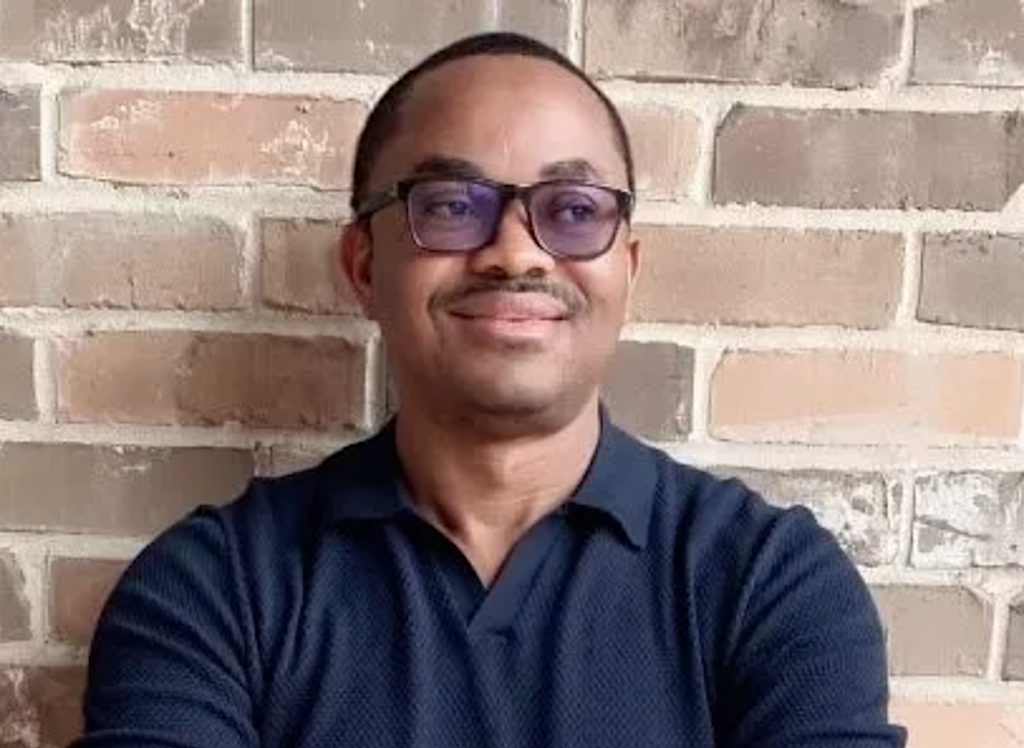
He smiled, reached out his hand and shook mine firmly. “My name is Kweku,” he said, with a calm confidence. The name rang a bell. I was sure I had heard it before, but I could not remember where or how. I thought of my Ghanaian friends and acquaintances, but none was named Kweku. For a moment, I wondered if I was having some strange déjà vu.
After a few hours, the memory came back. I remembered where I had heard about Mr. Kweku Amafegha. The reason it was hard to recall was that we had not met in the usual way. I had come across a name, a corporate identity, on paper. But that simple name was tied to something far more significant: one of Nigeria’s most valuable assets, located 150 kilometers off the coast of the Niger Delta. That is where the story gets interesting.
Every Nigerian, no matter the age, needs to know the story of Kweku Amafegha, Malabu Oil & Gas, and OPL 245. This is not just because of the massive wealth linked to the oil block, but because the tale shows how Nigeria’s greatest natural resource has become a never-ending source of profit for the political and economic elite. But before we go on, let’s take a step back.
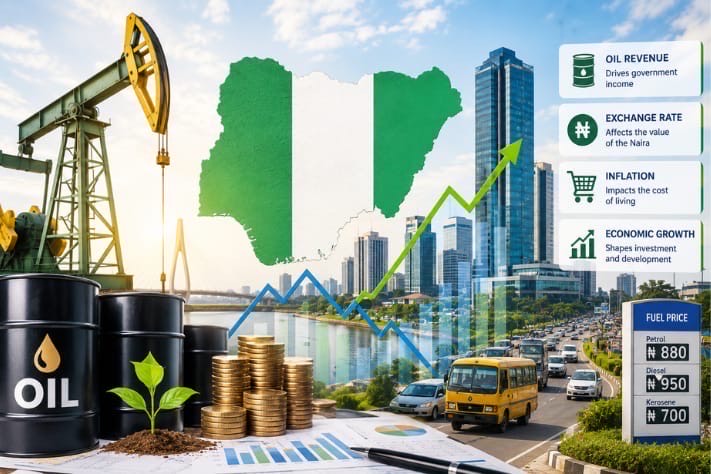
Nigeria first found crude oil in commercial quantities in 1956 when Shell BP discovered it at Oloibiri, in what is now Bayelsa State. By 1958, oil exploration and export were underway. This changed Nigeria into a petro-state, where the country's fortunes became heavily tied to the oil beneath its land and waters.
But there was a twist to this newfound wealth. Although the oil belonged to the Nigerian people, the expertise and technology to extract it mostly came from abroad. NNPC, which was set up later, mainly served to manage Nigeria’s interests in joint ventures and other oil arrangements. Nigeria gained independence, but the oil industry still depended on foreign expertise.
Then came General Ibrahim Babangida’s military rule. In 1993, he introduced the Indigenous Exploration Programme (IEP) to encourage Nigerians to take part in oil exploration and production. This plan aimed to lower the entry barriers for local operators, introducing a concessionary signature bonus of about $20 million for Nigerians looking for Oil Prospecting Licences.
This idea was, at least on paper, a good move to give Nigerians a stake in the oil industry. Some early beneficiaries became billionaires in Nigeria. They included Mohammed Ndimi of Oriental Energy Resources, Mike Adenuga of Consolidated Oil, and Folorunso Alakija of Famfa Oil. You might notice that no Igbo names are on that list. But I digress.
When General Sani Abacha took over, he continued the policy of encouraging local participation and awarded several oil blocks. Among the beneficiaries was Sapetro, linked to General Theophilus Danjuma.
Then came OPL 245. This name became well-known for one of the most complex and controversial oil deals in Nigeria’s history. On April 29, 1998, Abacha’s government gave OPL 245 to a new and unknown company called Malabu Oil & Gas Limited.
The details of that award later led to investigations and legal battles in different countries. The real question was: Who really owned Malabu? Enter Kweku Amafegha.
Kweku Amafegha was said to be the main shareholder of Malabu Oil & Gas, but there was a problem: he did not exist. He seemed to be a ghost. The name was only on paper, while the real identity behind many names would later be revealed.
According to the CAC records from the time OPL 245 was awarded to Malabu Oil in 1998, the reported shareholders were Mohammed Sani, also known as Mohammed Abacha, with 10 million shares (50%); Kweku Amafegha, also known as Dan Etete, with six million shares (30%); and Wabi Hassan, identified as Alhaji Adamu Hassan, then Nigeria’s Ambassador to the United States, holding four million shares (20%). Just think about that arrangement for a moment.
A sitting petroleum minister, working with the son of the head of state, allegedly overseeing the grant of a huge national asset to a company whose true ownership was hidden behind a mysterious name? Did Minister Etete, in effect, give a large piece of Nigeria’s wealth to himself and his associates under a corporate disguise? I cannot say for sure. But I do know that Mohammed Abacha, son of the late military ruler, has long claimed that Etete, using the name Kweku Amafegha, fraudulently changed the CAC filings and took over his share in Malabu Oil & Gas.
At this point, I will not connect the dots that the reader can easily connect. Instead, let’s look at the prize.
OPL 245 is about 150 kilometers offshore in the Niger Delta. By 2006, estimates suggested that this block held roughly one billion barrels of recoverable oil. A 2018 estimate by Resources for Development Consulting predicted potential earnings of between $9.8 billion and $15.6 billion for Nigeria’s Federation Account over the life of the project. At full production, the block was expected to add as much as 150,000 barrels of crude per day to Nigeria’s output. This was not just any asset. It was a national treasure beneath the Atlantic.
Yet Malabu Oil & Gas Limited acquired this block for about $2.2 million, which was just a small part of the signature bonus that local operators usually paid. Years later, the deal involving Shell, Eni, and others would lead to about $1.3 billion being paid for the settlement and acquisition of interests in the block. That is the kind of math that should make an oil-producing country sit up. But Nigeria did not.
Instead, the story became a long cycle of approvals, cancellations, lawsuits, and political moves that continue until today. Successive governments, from Olusegun Obasanjo to Umaru Musa Yar’Adua, Goodluck Jonathan, and Muhammadu Buhari, became involved in one way or another with this issue. Courts in Nigeria, Italy, the UK, and other places were drawn into the mess.
The OPL 245 saga is not just about one oil block. It tells a bigger story about a country that keeps discovering the same truth: that the closer you look at the management of its oil wealth, the harder it is to see where public wealth ends and private gain starts. And that brings us back to NNPC.
There is nothing wrong with a state-owned oil company. Saudi Arabia has one. Norway has one. Brazil has one. The real question is whether the body in charge of that responsibility is open, disciplined in business, and accountable to the citizens whose resources it controls. This is where Nigeria’s record falls short.
For many years, NNPC worked behind a thick curtain of secrecy. PremiumTimes reported years ago that the corporation went 43 years without publishing audited financial reports. Its first public audited accounts covered 2018 and came out in 2020. Even after it became NNPC Limited, questions about money, cash-flow problems, deductions, and the company’s financial duties have continued to stir controversy.
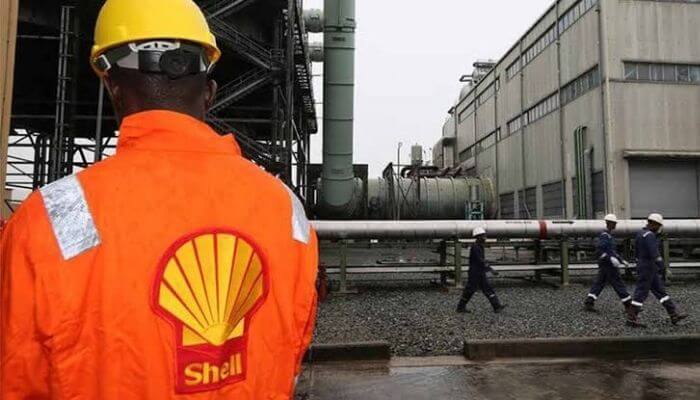
Then there is the refinery issue. For decades, Nigerians were told that our refineries were undergoing Turnaround Maintenance, or TAM. Billions were repeatedly set aside for repairs. Port Harcourt, Warri, and Kaduna became familiar names in a national ritual of promises, contracts, ceremonies, and commissioning announcements. Yet the refineries stayed unreliable or closed for years.
One widely cited estimate put the total spent on refinery repairs at about $25 billion over roughly 25 years, even as the facilities remained mostly inactive as recently as 2020. Think about the absurdity of that.
This is why Nigeria’s oil story cannot be seen as just the wrongdoings of a few people. The deeper issue is institutional. It is the lack of consequences.
It is the ability to take public resources, let investigations drag on for years, fight cases across the world, change governments, change policies, and wait for the public to tire.
This is why Saudi Arabia offers an interesting, though not perfect, contrast.
On the night of November 4, 2017, Saudi authorities, under Crown Prince Mohammed bin Salman, arrested many of the kingdom’s most powerful princes, businessmen, and former officials at the Ritz-Carlton in Riyadh. Among those arrested were billionaire investor Prince Alwaleed bin Talal, Prince Miteb bin Abdullah, then head of the Saudi National Guard, and Prince Turki bin Abdullah, former governor of Riyadh, along with other prominent businessmen and former officials.
The Saudi government called the purge an anti-corruption campaign.
Critics said it was also a way for the young crown prince to remove competing power centers and solidify his control. Both views could be correct.
Regardless of the methods, the Saudi state eventually announced that the campaign had brought in about $100 billion worth of assets and funds for the kingdom.
Now compare that with Nigeria. Where are the similar settlements? Where is the accountability? Where are the recovered billions? Where are the seized properties, offshore accounts, corporate interests, and other assets taken through the systematic looting of public resources? More importantly, where is the system that can make such recovery common instead of rare?
Of course, Saudi Arabia has much more oil than Nigeria, and that is acknowledged. But Saudi Arabia turned Aramco into a global commercial corporation that is state-owned. Nigeria built a complicated oil bureaucracy that, for decades, operated in a way that made public scrutiny almost impossible. Perhaps that is the real tragedy.
But why should any of this matter to you or to anyone? After all, another scandal will come, another committee will be set up, another report will be made, another investigation will start. And eventually, Nigerians will move on. I do not believe that Nigeria will change fundamentally in my lifetime.
So why bother writing about stories like OPL 245? Maybe these Igbo proverbs can help explain.
Nwa okuko egbe bu n’isi anaghi ebe ka ihe ji ya hapu ya kama na obu ka oha nu olu ya (The chick taken by a hawk cries, not because its cries will save it, but so that everyone can hear its voice).
That might be the duty of those who write. We may not be able to stop the hawk. We may not have the power to save the chick from its grip. But we can make enough noise to ensure that no one can later claim that the chick died quietly.
There is another Igbo saying:
Arụ gbaa aro, ọ ghọọlu omenala (When a crime is allowed to go on for years, it eventually stops being seen as a crime and becomes part of the culture).
That is the bigger danger facing Nigeria.
Not only that public wealth is stolen, but that repeated theft eventually feels normal. That corruption becomes a story. That impunity becomes a way of governing. That citizens stop being outraged because outrage itself has become tiring.
So we will keep telling these stories.
We will name the deals, question the institutions, trace the money, and remember the past. Not because we think the powerful will suddenly have a conscience, but because history remembers well, even when citizens do not.
Our generation has let Nigeria down.
Maybe the system of impunity will be too deeply rooted for us to change. But someday another generation will inherit this country. And when that generation finally finds the courage to confront the system we have built around our national wealth, it should not have to start from scratch.
Let them know where the bodies are buried. Let them know who built the mausoleum. And, most importantly, let them know that someone was watching. Someone was asking questions. Someone remembered Kweku.
Drop your comment
No comments yet — be the first to drop the gist 👇