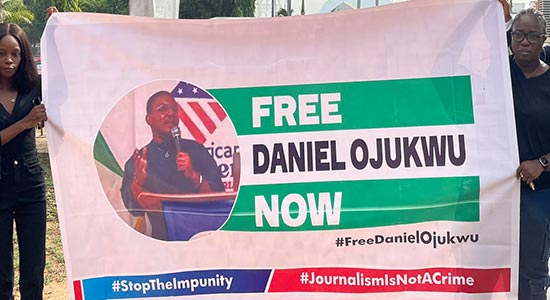
On 10 November 2026, a Federal High Court in Abuja ordered Daniel Ojukwu, a reporter with the Foundation for Investigative Journalism (FIJ), to stay at Kuje Correctional Centre until 1 December. This is when his bail application will be heard. He pleaded not guilty to twelve counts of cyberstalking and criminal defamation from investigations he published nearly three years ago. In November 2023, Ojukwu revealed that the Office of the Senior Special Assistant to the President on Sustainable Development Goals reportedly paid N147.1 million to a restaurant to build classrooms in Lagos. In May 2024, during World Press Freedom Day, police arrested him for ten days over this investigation. Now, two years later, he is back in custody for the same reporting.
Ojukwu asked a question that should matter to every Nigerian: why was public money meant for classrooms given to a restaurant? One would think this revelation would make the authorities look into the contract and check if the classrooms were built correctly. Instead, the journalist who raised these concerns is now facing criminal charges for allegedly cyberstalking a public official. The court has not yet ruled on his guilt, so he is still presumed innocent. But the impact has been heavy. He spent ten days in police custody in 2024, is now in prison in 2026, and has carried the financial and personal weight of this case for over two years.
Daniel Ojukwu is not the only Nigerian journalist to face criminal charges over his reporting. On 6 February 2024, less than three months before Ojukwu's arrest, police arrested Salihu Ayatullahi and Adisa-Jaji Azeez, the editor-in-chief and managing director of The Informant247, after they showed up for questioning. The rector of Kwara State Polytechnic complained about the newspaper's reporting on the school’s finances and construction projects. Rather than investigate these claims, the police charged the two journalists, along with the newspaper's publisher and a reporter, with conspiracy, cyberstalking, and defamation.
The case lasted for eleven months until January 2025, when a magistrate dismissed it for abuse of court process and lack of proper prosecution. During this time, the prosecution did not push its case, leaving the journalists to use their time and money to defend themselves against charges that went nowhere. For a small independent newsroom, eleven months of court visits, legal costs, and uncertainty can be devastating. One has to wonder what the complainant aimed to achieve with a case that was never properly pursued. Regardless of the intention, the legal battle put a huge strain on journalists whose job is to question how public institutions use their resources.
The cyberstalking charges against Ojukwu and The Informant247 journalists came from Nigeria’s Cybercrimes Act, passed in 2015 to deal with internet fraud and other online crimes. Section 24 of the original law made online messages seen as annoying, insulting, or offensive a crime, giving the police a lot of power to act against people whose reports upset others. After the ECOWAS Court ruled that this section went against freedom of expression, Nigeria changed the law in 2024. The amendment removed vague terms and limited the offence of false information to statements meant to disrupt public order or threaten someone’s life. But Section 24 still kept provisions about threats, harassment, and bullying, while criminal defamation remained under other laws. This means the law lessened some grounds for prosecuting online expression but did not remove the risk of criminal cases against journalists. Whether a publication is an offence should depend on the specific law used and evidence for the charge, not just if someone finds the reporting offensive.
The effects of prosecution under the Cybercrimes Act were clear even before the 2024 amendment. In June 2022, CrossRiverWatch, run by Agba Jalingo, reported that the sister-in-law of Ben Ayade, then governor of Cross River State, had arranged for someone else to take a law school exam for her. Jalingo was arrested in August, charged under the Cybercrimes Act in December, and spent a week in jail in March 2023. It was not until 8 July 2024, nearly two years after his arrest, that a court found him not guilty because the prosecution could not prove its case. By then, he had already faced arrest and a long legal process because of his reporting.
The cases of Ojukwu, Jalingo, and The Informant247 journalists show a broader trend of arrests and prosecutions. CJID’s Press Attack Tracker has noted hundreds of violations against journalists in Nigeria, including arrests, detention, intimidation, and harassment. The Committee to Protect Journalists says at least 29 journalists have faced prosecution under the Cybercrimes Act since it started in 2015. Even after the February 2024 amendment, Reporters Without Borders recorded at least eight journalists arrested, detained, or prosecuted under this law within the next seven months. For a law that was changed partly due to concerns about its use against free speech, these numbers raise doubts about how much has really improved for journalists. But this issue is not just a Nigerian problem.
Ghana got rid of criminal libel in 2001, but Section 208 of its Criminal Offences Act still makes it a crime to publish false news that could scare the public. Samuel Amadotor was charged under this law in November 2025. Togo decriminalised certain press offences in 2004, yet Ferdinand Ayité and Isidore Kouwonou were prosecuted under different criminal laws for contempt of authority and spreading false information on social media. In March 2023, a court in Lomé sentenced both journalists to three years in prison shortly after they fled the country. Nigeria's 2024 reform was different because it limited some parts of the Cybercrimes Act without getting rid of cyberstalking offences or criminal defamation laws in other areas of Nigerian law. For journalists in Ghana, Togo, and Nigeria, these changes have given little confidence. Despite changes to the law, the threat of arrest and prosecution over their reporting remains.
In December 2019, Beninese journalist Ignace Sossou went to a workshop on false information where a public prosecutor spoke openly about the country’s Digital Code. The prosecutor called the law a tool that could be used against journalists. Sossou did what any reporter would do: he tweeted the prosecutor’s remarks. But the prosecutor was not pleased with the attention and accused him of taking his comments out of context. Two days later, police came to Sossou’s home and arrested him. Within a week of tweeting, he was sentenced to eighteen months in prison for harassment through electronic communication, under the same law the prosecutor discussed. Recordings from the workshop later confirmed that Sossou quoted him accurately, but that did not save him from six months behind bars until an appeal got him released. A United Nations working group later found his detention arbitrary. It is troubling that a journalist lost six months of freedom just for sharing what a government official said at a workshop.
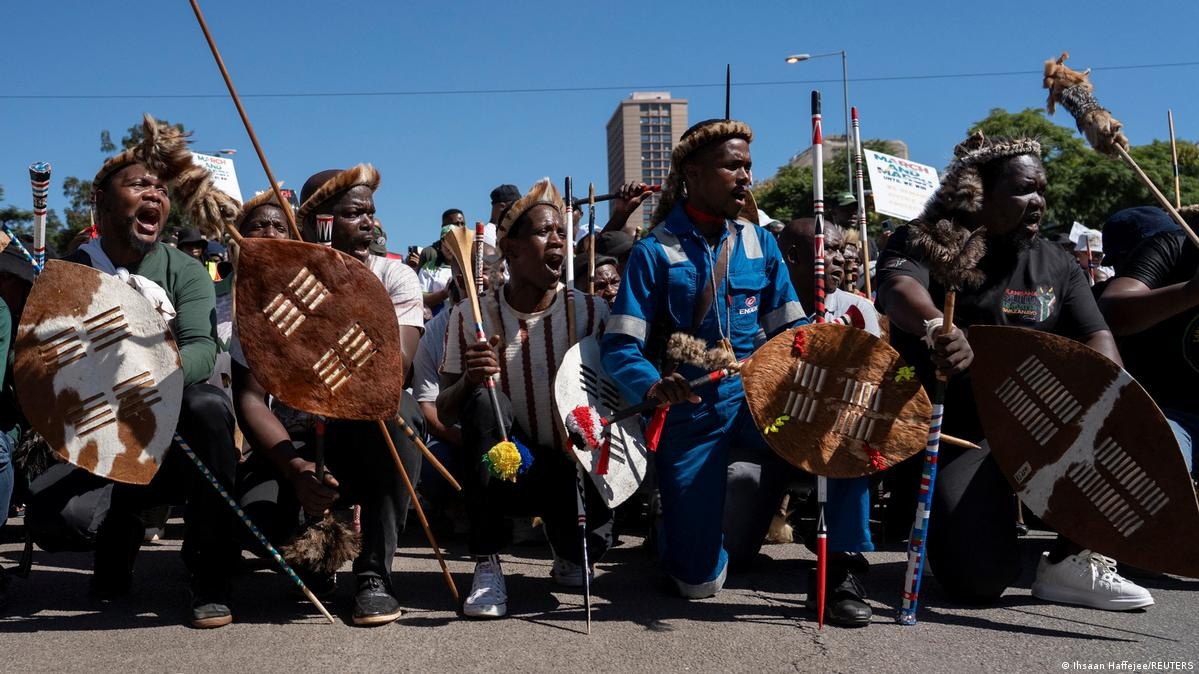

The situation is even worse in Niger and Burkina Faso, where military leaders have detained journalists without revealing where they are held. In Niger, military leader Abdourahamane Tchiani reversed a previous reform that had removed prison sentences for online defamation and insults. On 31 August, Moussa Kaka, the director of Radio Télévision Saraounia, went missing in Niamey. Weeks later, the justice minister admitted he was in custody, but his location remained unknown. In Burkina Faso, Atiana Oulon, editor of L’Événement, was taken from his home in June 2024 and is still in secret detention. For their families and colleagues, the uncertainty goes beyond when these journalists might be free. They do not even know where they are kept. In Nigeria or Ghana, a journalist facing charges can at least challenge those charges in court and seek bail. Kaka and Oulon have not even had that chance.
The use of criminal law against public expression has also affected political critics and everyday citizens. In September 2025, Kwame Baffoe, a regional chairman of Ghana’s opposition New Patriotic Party, was arrested after answering a police invitation about comments he made regarding the Inspector General of Police. He spent about a week in custody and was charged with publishing false news and offensive conduct. Two months later, on 20 November, police arrested blogger Samuel Amadotor after a complaint by a traditional ruler who was also a lawyer and former board chairman of the National Communications Authority. He was charged with publishing false news. Just six days later, police arrested activist Wendell Yeboah after he accused three regional ministers of illegal mining during a radio interview. The complaint against him was made on behalf of the ministers. These arrests raise serious concerns about citizens' freedom to question public officials. When criticizing those in power leads to police detention and criminal charges, it affects everyone who might speak out against wrongdoing.
In Nigeria, even regular consumers have faced police action over complaints about products. In September 2023, Chioma Okoli posted on Facebook that a tomato paste from Erisco Foods tasted overly sweet and asked others if they noticed. The company got upset and reported her to the police. She was arrested, charged under the Cybercrimes Act, and spent three nights in prison before a judge granted her bail of N5 million. The case dragged on for years, with the prosecution only closing its case in February 2026 after calling two witnesses.
A similar situation happened in April 2026 when Love Dooshima, a shop owner in Abuja, posted a video questioning why a loaf of bread stayed fresh on her shelf for nearly two months. She did not name any manufacturer, but Bon Bread filed a complaint, and the police invited her for questioning over cyberstalking, fraud, and mischief allegations. She was detained until after midnight. There are proper ways to look into food quality complaints and solve issues about negative product reviews, but it is hard to see why either woman’s experience needed police detainment. They were not journalists investigating anything. They were just sharing their experiences as consumers, yet both had to deal with the criminal justice system because businesses were unhappy with what they said. If a customer can be arrested for questioning the quality of a product she bought, it should worry everyone who talks publicly about powerful institutions.
What makes these cases more alarming is how quickly the police act on complaints against journalists and regular citizens, while allegations of misconduct found through investigative journalism often get little attention. At the Media and Development Conference in Abuja this November, Dayo Aiyetan, executive director of the International Centre for Investigative Reporting, expressed frustration that journalists had uncovered questionable public spending running into billions of naira, yet anti-corruption agencies did not show much interest in looking into their findings. He also questioned why public funds should be used to defend individuals who target journalists over their investigations. This is a serious concern. When the police act fast against a journalist after a public official's complaint, but the claims made in the journalist’s investigation get little scrutiny, it raises uncomfortable questions about who justice really serves.
Fixing this issue needs more than just changing laws or removing defamation and insult provisions. The police must also be held responsible for how they handle complaints about publications. Before arresting someone over a news report, social media post, or consumer review, investigators should show what exact crime may have occurred and what evidence backs that suspicion. Prosecutors should look at that evidence independently before bringing charges, while courts must ensure bail applications are heard quickly so that people are not stuck in detention for weeks waiting for trial. If a publication has mistakes or harms someone’s reputation, corrections, rights of reply, and civil suits should normally be the avenues for redress. Press freedom groups must also track these cases beyond the initial arrests, recording who made the complaints, the laws used, how long detentions last, and the final results. Without this record, it is hard to see if reforms really change how journalists and citizens are treated.
Daniel Ojukwu’s bail hearing is set for 1 December, nearly three weeks after he was sent to prison. Whatever the court decides, the effects of cases like his go far beyond the people directly involved. Every journalist who hesitates to investigate a public official, every whistleblower who decides not to share evidence of misconduct, and every citizen who stays silent for fear of arrest represents information that the public may never know. This is why the growing use of criminal law against journalism and public expression across West Africa should worry us all. A society cannot hold its leaders accountable if the people asking questions have to first think about possibly ending up in a police cell.

Drop your comment
No comments yet — be the first to drop the gist 👇