The All Progressives Congress Presidential Campaign Council has reassured Nigerians that President Bola Tinubu is still committed to his promise of providing stable and reliable electricity. This is despite ongoing issues in the country's power sector.
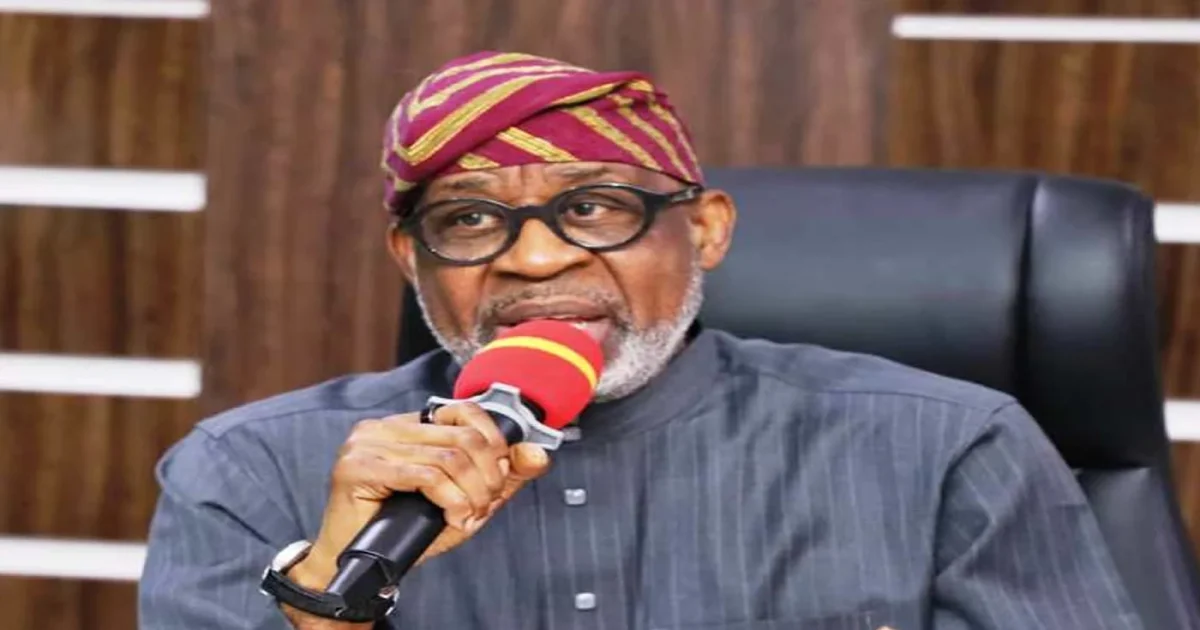
In a statement made on Sunday by its spokesperson and Minister of Solid Minerals, Dele Alake, the council asked Nigerians to consider Tinubu’s electricity promise in full. This includes his vow to explain any failure to deliver before running for re-election.
During the campaign for the 2023 presidential election, Tinubu promised to ensure steady electricity across Nigeria. He also challenged Nigerians not to vote for him again if he did not keep this promise without giving good reasons.
More than three years into his presidency, electricity supply is still unreliable in many areas. This has led opposition figures, including Atiku Abubakar from the African Democratic Congress, Peter Obi of the Nigeria Democratic Congress, and Seyi Makinde of the Allied Peoples Movement, to criticize Tinubu's government as the 2027 elections approach.
The opposition leaders are urging Nigerians to hold the President accountable for his electricity promise. They want voters to reject his second-term bid, claiming he has not kept his commitment to provide stable electricity.
The APC PCC, on the other hand, said that Tinubu has taken steps to fix long-standing issues in the power sector. They encouraged Nigerians to look at his promise to explain any shortcomings before seeking re-election.
Alake noted that Tinubu identified estimated billing as a key problem for households and businesses. He promised to fix it along with other issues in the power sector to ensure stable and reliable electricity.
He stated, “His exact words at the event were: ‘Whichever way, by all means necessary, you will have electricity, and you will not pay for estimated bills anymore. A promise made will be a promise kept. If I don’t keep the promise and I come for a second term, don’t vote for me, unless I give you adequate reasons why I couldn’t deliver.’
“Some recent public commentary has reproduced the campaign pledge without its concluding qualification: that should he fall short, he would owe Nigerians an adequate explanation before seeking their support for a second term. A fair assessment of the pledge should consider the full statement alongside the administration’s record since 2023. This record should be assessed against measurable improvements in electricity supply, metering, infrastructure and market stability.
“While fixing the power sector crisis remains unfinished, the President is working consistently to deliver on his promise to Nigerians, and his commitment to face the challenges head-on has never diminished.
“Within two weeks in office, President Tinubu signed the Electricity Act, 2023, on June 9. With the new Electricity Act, President Tinubu effectively liberalised and deregulated the power sector, moving it away from the Exclusive List so that states, as subnationals, can participate in power generation, distribution and transmission. Lagos, Enugu, Abia, Ekiti, Oyo, Kaduna and Niger have started taking advantage of the law to maximise its benefits by setting up their own electricity regulatory agencies and driving private capital into their states.”
The APC PCC said that the Tinubu administration has taken on over N6 trillion in legacy debts that built up between 2015 and 2025. They also launched the Presidential Metering Initiative to help with the country’s metering gap affecting more than seven million customers.
The government also adjusted electricity tariffs towards cost-reflective rates to improve market liquidity while introducing measures to protect low-income consumers. The council disclosed that over 1.5 million customers had been metered under the initiative in the last three years.
They added that the Rural Electrification Agency had connected universities, hospitals and rural communities to solar power. Plans are also in place to upgrade the over 60-year-old Osogbo Grid Control Centre and build an East-West super grid.
Alake said the administration set up a N4 trillion bond programme to pay verified legacy debts owed to 21 power-generating and gas companies.
The statement added, “The first and second tranches of the bond programme have raised over N1.2 trillion to settle part of the N4 trillion verified legacy debt. President Tinubu has repositioned the power sector and reduced market risk for future investment. The impact of this intervention is becoming clear in Gencos’ ability to invest in upgrading power plants. Just a few days ago, Geregu Power Plc announced investments in new power transformers to enhance operations at the Geregu 1 Power Plant. Other firms are making similar investments.
“President Tinubu inherited many power-sector initiatives, including the Presidential Power Initiative, which his predecessor, the late President Muhammadu Buhari, started. Upon assuming office, President Tinubu reviewed the existing agreement and signed an Acceleration Agreement in December 2023 to enable the FGN’s PPI and the German partners to move quickly to execute projects in the transmission network grid. By December 2024, the FEC approved the contract for the first batch of five TCN substations in key load centres to be upgraded to enhance electricity supply to industrial and private consumers in the areas. These projects are now being completed and will be commissioned before the end of the administration’s first term.
“In addition, in June 2026, the Federal Executive Council approved the contract for the second batch of projects to build eight new substations and upgrade four existing ones in targeted load centres. Power project implementation requires equipment that is a long-lead item and, thus, cannot be achieved overnight.
“President Tinubu quickly identified that unlocking the power sector requires resolving commercial challenges: operators need to charge cost-reflective tariffs, while electricity must remain affordable for most of the population. Marrying these two contrasting objectives requires careful planning and policy formulation. A first step was creating service bands with different tariffs to improve the financial viability of the distribution companies and improve cash flow in the sector. This has also reduced the government’s financial burden related to tariff subsidies. The administration will continue to explore ways to improve the commercial situation of the power sector while protecting access to electricity for the less privileged in society.”
The APC PCC insists that efforts to reform the power sector are still ongoing. They added that Tinubu will present the government’s achievements and challenges in the sector to Nigerians as he seeks re-election in 2027.
Drop your comment
No comments yet — be the first to drop the gist 👇