Nineteen-year-old Adamu Isah thought 17 September would be like any other day. But it turned out to be a nightmare as he witnessed terrible deaths in a small detention cell in Minna, Niger State.
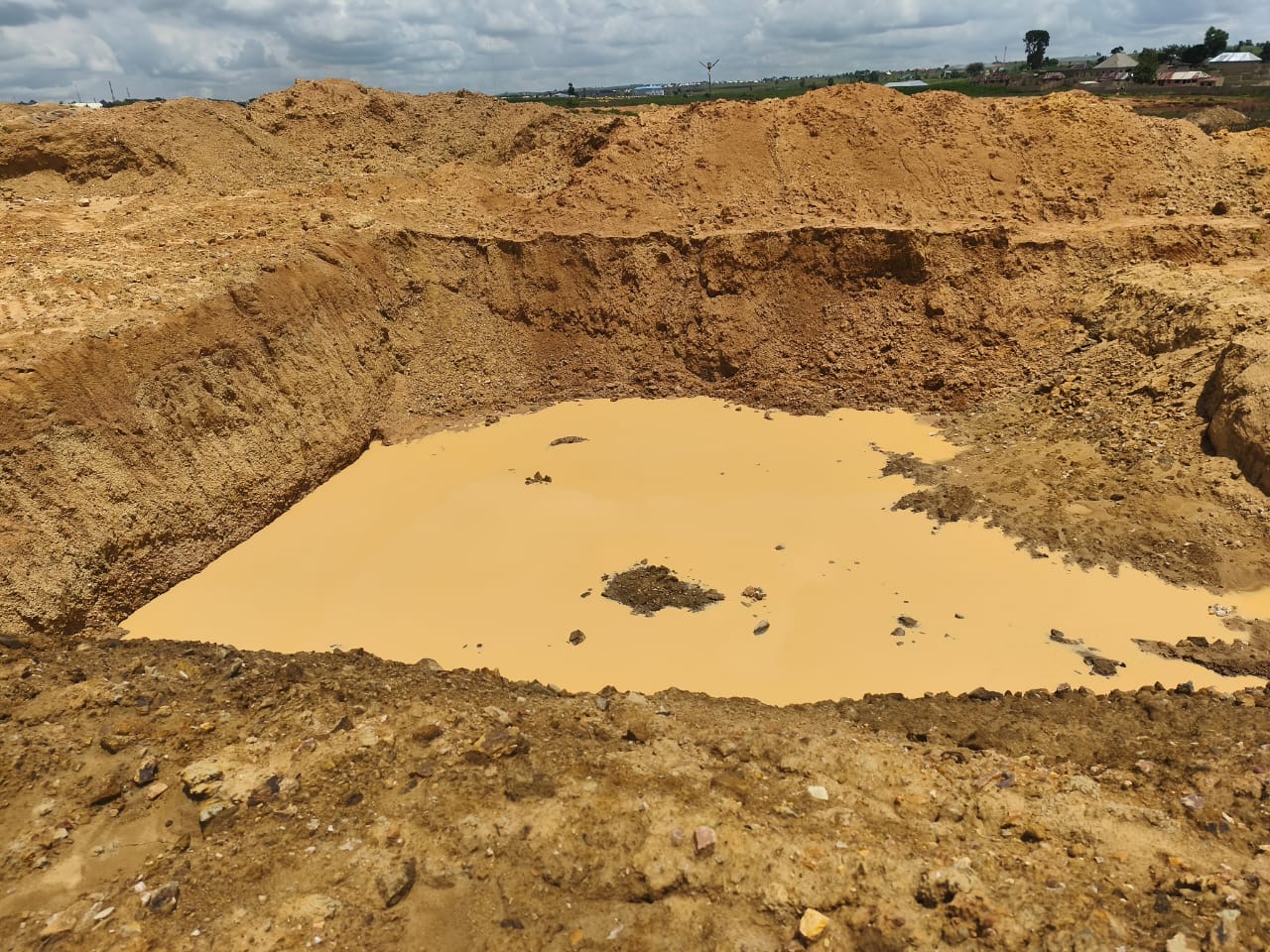
Mr Isah was one of many suspects arrested by the Nigeria Security and Civil Defence Corps (NSCDC) for alleged illegal mining near the M.I. Wushishi/Lukoto area of the state capital.
Days after their arrest, 37 suspects died in the detention center under terrible conditions. Almost a week later, Mr Isah still bears bite marks on his arm from a cellmate struggling to survive in his last moments.
In a chat with PREMIUM TIMES on Thursday, he shared his story about his arrest, the detention experience, and the events leading up to the tragic deaths. His tale raises serious questions about what really happened inside the NSCDC detention facility while authorities search for answers.
The Arrest
Mr Isah explained that he and several others were picked up in the M.I. Wushishi area while going to work at the mining sites. They were taken to a detention center near the PDP Secretariat, in the Bloodson Hospital area of Minna.“They took us to their cell around the PDP Secretariat,” Mr Isah said. He mentioned that there were about 20 detainees at first, but some were released on bail later.
“After two days, around 20 people were taken out for bail. That left about 17 of us inside the cell.” As more people, including women, arrived, the detainees were split into separate cells for men and women. The cells were small, badly ventilated, and overcrowded.
‘It Smelled Like Perfume’
Mr Isah recalled that on the third day of their detention, officials sprayed a strange chemical at the entrance of their cell.“It smelled like a fragrance or perfume, but it felt damp, so we knew it wasn’t a normal spray,” he remembered. The detainees quickly became desperate for fresh air.
Within an hour, one inmate began to show severe symptoms. “One Gwari man among us started struggling, foaming at the mouth and passed out,” he said. “After that, people started dying.” Mr Isah noted that some detainees became violently agitated before their deaths.
“Some went mad, biting others. Some were banging their heads against the wall.” He showed the reporter his arm, with bite marks still visible.
‘They Told Us to Die’
In the chaos, Mr Isah said detainees shouted for help. “We called out to them to open up, but they told us to just die,” he said. “About 17 of us made it out, but only 11 of us were rushed to the hospital.”He added that those who survived received medical care. “I was affected. Even now, my health is not fully restored.”
‘Men Were Screaming for Water’, 15-Year-Old Survivor
Fifteen-year-old Zuwayra Aliyu was arrested around the Titin Kutum area while heading to a mine. At the NSCDC facility, officials recorded the names and details of the arrested individuals.Zuwayra described the women’s cell as hot, poorly ventilated, and filled with mosquitoes. “Our cell had no window. There was just a small hole near the ceiling with a little mesh,” she said.
From their cell, the women could hear the men’s cries. “They were shouting that the heat was killing them,” she recalled. “They were begging for water.”
According to Zuwayra, their cries turned into loud banging on the walls. “We thought they wanted to break out,” she said. The next morning, they learned that many men had died.
“One of the NSCDC officers came out and said, ‘Women, the men have all died.’ When they opened our door, we saw corpses piled on top of each other.” Zuwayra noted that no women died, but some fainted.
‘It Was Mosquito Repellent’
She agreed with the idea that something was sprayed in the men’s cell. “We heard them asking, ‘Officer, what are you spraying on us?’ They said it was mosquito repellent.”Currently, there is no public forensic evidence linking a chemical substance to the deaths.
‘65 Men in One Small Room’
Another survivor, 16-year-old Khadija Mohammed, was arrested with two others on their way to a mining site in Zinari. She said the men were crammed into a tiny room. “There were up to 65 men packed into that single room,” she said.From about 8 p.m., the men started banging on the door asking for water. “If they had let us, we would have helped them because we had water and food,” Khadija said. The banging went on for hours. Some survivors even squeezed into a toilet to get air.
Eventually, the door opened. “We peeked into the room and saw the men piled on top of each other, all dead.”
Substance in the Women’s Cell


A Mother’s Loss
Fatima Sa’adu lost her 14-year-old son, Fahad, in the incident. She said he was the family's main supporter. “He was the one helping me. He provided my food and drink,” she said. His father was away in Zamfara for work.Fatima revealed that Fahad hesitated to go to the mining site because he was unwell, but a friend convinced him to go. She tried to bring him food after his arrest but was stopped.
She later saw him being taken out of a cell. “As he was brought out, he hugged me tightly, crying, ‘Mother, mother!’ I was crying. I wanted to pull him away, but I couldn’t.” Fahad died minutes later.
A Family Still Searching for a Body
Isiaku Usman is suffering another kind of pain. He went to the NSCDC office looking for his nephew, Kabiru Usman. According to Mr Usman, his nephew’s name was on the list of those who died, but the family could not find his body.He visited the mortuary twice and was shown unidentified bodies but did not find Kabiru’s. Now, he wants the authorities to help locate his remains so they can give him a proper burial.
Miners Return to the Pits
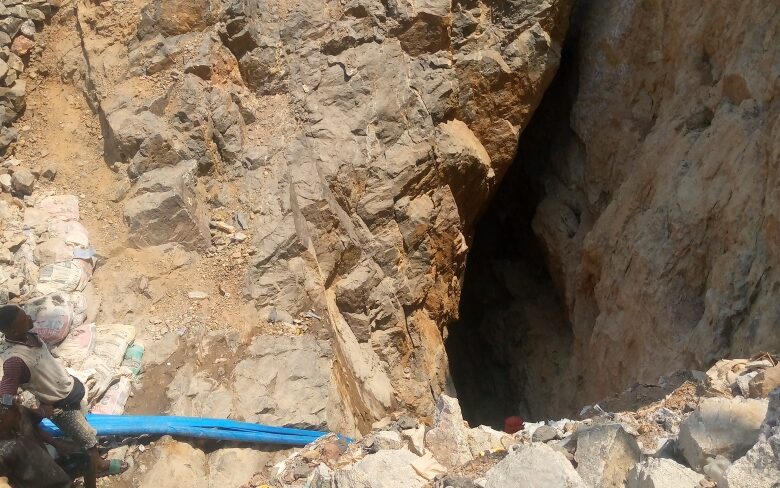
Despite the tragedy, some miners have gone back to work in the affected areas. A miner told PREMIUM TIMES’ correspondent at the site that they have few ways to earn money. “Mining is a hand-to-mouth job,” he said.He explained that miners can spend days at a site without finding enough gold to make money. “It has been two days since we came here. We haven’t even sold five naira worth of gold.”
For these miners, the question is not just about legal or illegal mining. It is also about unemployment, poverty, and lack of other job options. Residents accuse miners of damaging homes and farms.
At MI Wushishi near Always Hotels, residents complained about mining activities creeping into their neighborhoods. “They come every day. Even if we talk to them, they refuse,” a resident, Mal Awwal, said. “They have dug all our backyard and are slowly coming into our compound.”
What Happened on 17 September?
The incident began with an NSCDC operation. PREMIUM TIMES reported that the NSCDC linked the operation to concerns over artisanal miners damaging farmland and homes. The corps arrested many people in the M.I. Wushishi/Lukoto area of Minna.Initially, the NSCDC said some detainees were found dead in the early hours of 17 September. They suggested that a disease might be responsible, but that was not confirmed. The bodies were taken to the General Hospital in Minna for examination.
As survivor accounts emerged, protests and unrest grew in Minna. The state government enforced a curfew as tensions increased. The curfew was later lifted after a period of mourning and a special prayer session for the deceased.
The state government set up a committee of inquiry and ordered forensic examinations and autopsies. As outrage spread, the National Human Rights Commission and the Civil Society Legislative Advocacy Centre called for a thorough investigation.
Probe
President Bola Tinubu ordered a complete investigation. Interior Minister Olubunmi Tunji-Ojo launched a 10-member independent committee on 22 September. The committee has two weeks to finish its work. They will identify the deceased, check their arrest and detention, find out how and why they died, and recommend actions and compensations.The committee’s secretary, Isa Chiroma, said members will visit key locations, interview survivors and witnesses, gather documents, and review other materials related to the incident. A medical team has also started work to determine the cause and manner of death.
The Nigerian Bar Association’s Minna branch formed a 13-member committee to independently look into the deaths.
Officers Sanctioned
The incident led to immediate action within the NSCDC. The federal government suspended 20 officers involved in different roles, including guards, arresting officers, investigators, and legal personnel. This included the state commandant of the NSCDC, Suberu Aniviye. A new commandant, Abdulhamid Kabara, has been sent to the state.The Unanswered Questions
The testimonies collected for this report do not confirm the cause of the 37 deaths. But they raise many questions that the ongoing investigation must address. What exactly was sprayed into the cell? Who approved it? Was the substance tested? What were the ventilation conditions inside the cell? How many detainees were in the men’s cell? Were minors detained? When did the first detainee get critically ill? How fast did security respond? Were medical personnel called? Were detainees given enough water, air, and medical attention? Why did survivors report unusual symptoms before some of the deaths? What do the autopsies and toxicology tests reveal? And most importantly: could the deaths have been avoided?These are questions the independent committee is expected to resolve.
Between Enforcement and Survival
The tragedy in Minna highlights a tough reality beyond the immediate question of what happened inside the NSCDC cell. On one side are government efforts to stop illegal mining, which officials say harms farmland and threatens communities. On the other hand, there are young people who state that mining is one of the few ways they can survive.The deaths have raised a more urgent question about how suspects should be treated after arrest. For the families of the 37 deceased, this investigation is more than just a formal process. It is a quest for answers.
For survivors like Adamu Isah, the memory lingers in the bite marks on his arm, his ongoing health issues, and the screams for water from behind a locked door. For Fatima Sa’adu, the tragedy is the void left by a 14-year-old son who once helped provide for the family. For Isiaku Usman, the pain is not over because his nephew’s body is still missing. And for the miners who returned to work, questions remain about survival when their source of income is blocked.
The government has promised an independent investigation, and the committee is already at work. But until forensic evidence is reviewed, witnesses are heard, and detention records are examined, one question will stay over Minna: What really happened inside the cell where 37 people died? The answer may not only determine how the families of the dead find justice but also change how Nigeria enforces mining laws, manages detention, and protects people held in state custody.



Drop your comment
No comments yet — be the first to drop the gist 👇