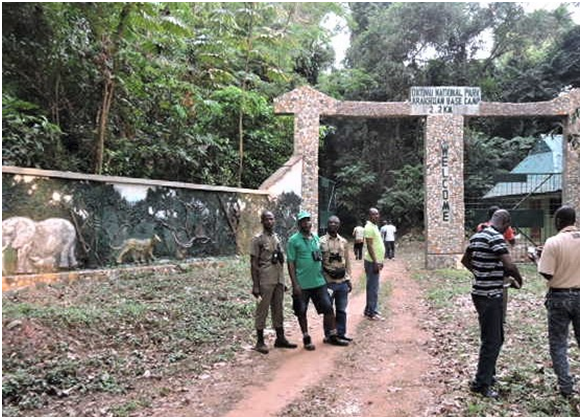
Cross River National Park and Okomu National Park in Nigeria have now been added to the Monitoring the Illegal Killing of Elephants (MIKE) Programme of the Convention on International Trade in Endangered Species of Wild Fauna and Flora (CITES).
CITES announced this on its website, noting that this brings the total number of MIKE sites in Africa to 74.
The group said the network has grown from its initial 39 sites in 2001. They call the new additions a significant move to boost Africa’s ability to monitor elephants systematically.
CITES received financial support from the European Union for this expansion. They highlighted that this shows the commitment of countries with elephants to conservation based on evidence.
The five new sites include Digya National Park and Bia National Park in Ghana, Cross River National Park and Okomu National Park in Nigeria, and Gambella National Park in Ethiopia.
CITES described Digya National Park as one of Ghana’s largest protected areas. It is located along Lake Volta in the forest-savanna transition area.
Bia National Park is part of the Bia Biosphere Reserve, recognized by UNESCO. It shares a border with Côte d’Ivoire and plays a key role in conservation across borders.
CITES noted that Cross River National Park is a major protected area in Nigeria’s southeast. It is mostly covered by moist tropical rainforest and borders Cameroon, which adds to its importance in cross-border conservation. Okomu National Park is in southwestern Nigeria and protects the last piece of lowland rainforest in the Okomu Forest Reserve.
With these additions, CITES believes the MIKE Programme will better track poaching trends and guide conservation efforts where they are needed most.
Nigeria's Elephant Population Under Threat
The inclusion of these two parks comes as Nigeria faces serious threats to its shrinking elephant population.
A detailed investigation by PREMIUM TIMES last year showed that human-elephant conflicts are putting Nigeria’s wild elephants at risk.
Nigeria has both forest and savanna elephant populations, known as Loxodonta cyclotis and Loxodonta africana. It is estimated that about 90 percent of the elephants in Nigeria are located in or around protected areas like national parks and game reserves, while around 10 percent live outside these areas.
Human-elephant conflicts have become a major problem affecting the declining elephant population across different ecological zones in Nigeria.
This issue is worsened by illegal logging, farming expansion, and extreme weather, among other factors.
According to the Natural Resources Conservation Council (NARESCON), the main threats to Nigeria’s elephants include poaching, illegal ivory trade, loss of habitat, grazing by livestock, and legal and institutional problems.
Data from the International Union for Conservation of Nature (IUCN) shows that Nigeria’s elephant population has fallen from about 1,200, 1,500 three decades ago to around 300, 400 today.
Of the remaining elephants, about 200, 300 are forest elephants, while roughly 100 are savanna elephants. The IUCN labels the African forest elephant as critically endangered and the African savanna elephant as endangered.
In August 2024, the Federal Government, with help from the Wildlife Conservation Society (WCS) and the Elephant Protection Initiative, launched a 10-year plan to protect Nigeria’s remaining elephants.
This plan outlines the current state of Nigeria’s elephant population and offers a framework for long-term protection of the species across the country.
Cross River National Park is one of the largest remaining forest areas in the Guinean Forest biodiversity hotspot.

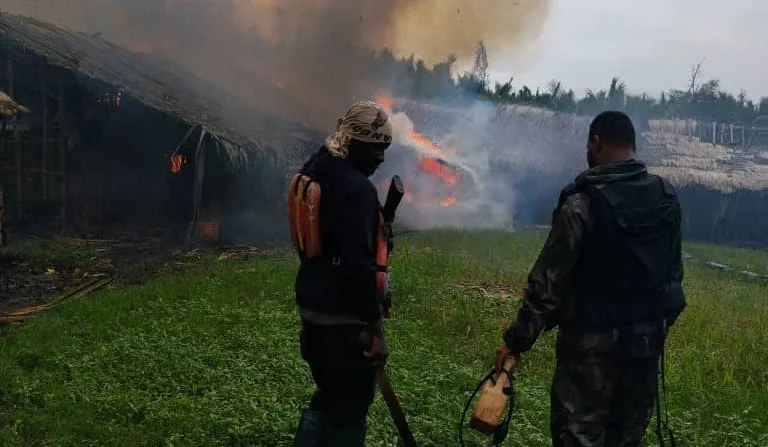

It includes the Oban and Okwangwo divisions, home to threatened wildlife like chimpanzees, Cross River gorillas, white-bellied pangolins, and forest elephants. Its location along Nigeria’s border with Cameroon is also crucial for transboundary conservation. Okomu National Park covers 200 square kilometers of protected lowland rainforest in Edo State.
Boosting Conservation Efforts
CITES explained that for over 20 years, the MIKE Programme has given governments tools to track changes in elephant populations and create focused conservation responses.
They added that expanding the network shows both the growth of the programme and ongoing cooperation among the countries involved.
CITES Secretary-General Ivonne Higuero said the bigger network will help monitor and address elephant killings.
"CITES Parties have remained committed to evidence-based elephant conservation. This expansion of the CITES MIKE network strengthens our collective ability to not only respond to illegal killing through reliable continent-wide monitoring but also to advance our goals for people and wildlife within the 2030 Agenda for Sustainable Development and the Kunming-Montreal Global Biodiversity Framework," she said.
CITES pointed out that the expansion has a strong focus on West Africa.
According to the IUCN African Elephant Database, West Africa has less than three percent of Africa’s total elephant population and accounts for less than five percent of the continent’s elephant range.
The group mentioned that the remaining elephant populations in this region survive in isolated groups, making systematic monitoring very important.
The expansion also includes Gambella National Park in Ethiopia, which CITES says has the largest elephant population in the country and is part of a significant wildlife landscape that extends into South Sudan.
CITES believes the new sites will enhance data collection on the threats elephants face across Africa.
They also said this expansion helps implement CITES Resolution Conf. 10.10 (Rev. CoP20), which calls for choosing monitoring sites and expanding the MIKE network as much as possible.
What’s Next?
CITES mentioned that the next steps will involve integrating the new sites into the MIKE system.
They will work with MIKE National Focal Points to provide training sessions for rangers and site focal points.
This training will ensure that elephant deaths are consistently recorded and reported under MIKE rules, covering all causes of death, not just illegal killings.
CITES noted that adding each site strengthens a continent-wide system for data collection, teamwork, and conservation efforts.
"The MIKE Programme welcomes the commitment of Ethiopia, Ghana, and Nigeria to regular data submission and continued collaboration under CITES," the organization said.
They added that other countries are also interested in nominating sites, and the MIKE Programme is engaging with them to support further growth of the network.




Drop your comment
No comments yet — be the first to drop the gist 👇