
A civil society group, Policy Alert, has urged the Senate and House of Representatives committees to hold a joint hearing on Nigeria’s risk in international investment treaty disputes. They warned that long-term oil commitments might limit future regulations and put public finances at legal risk.
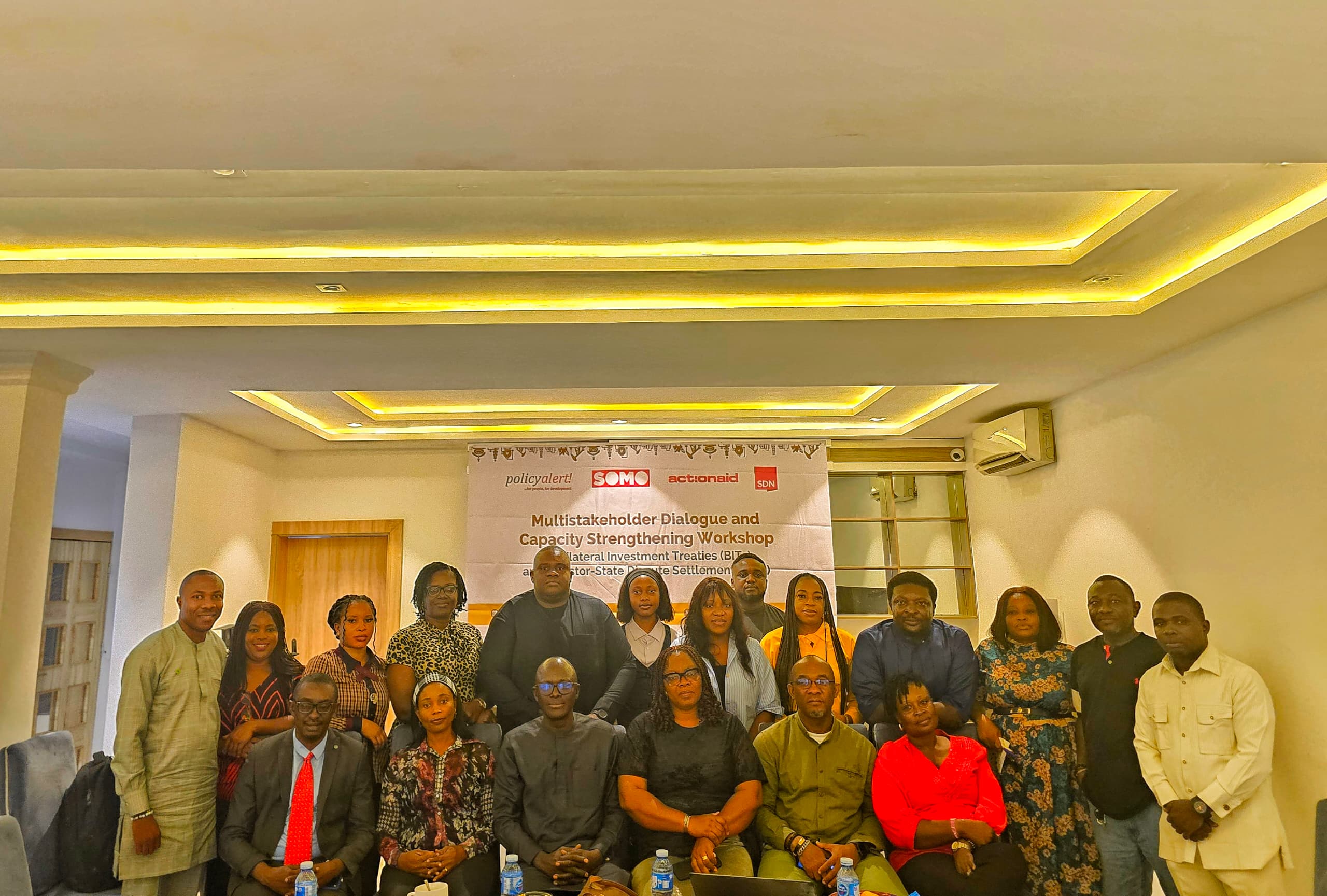
The call was made on Wednesday in Uyo, Akwa Ibom State, during the launch of their report, Investment Protection and Nigeria’s Energy Transition: Implications for Environmental Accountability and Regulatory Space.
Policy Alert asked the National Assembly to look into Nigeria’s investment treaty framework. They emphasized the importance of findings from a federal committee set up in November 2024 to review bilateral investment treaties and recent fiscal incentives for offshore oil investments.
The group expressed concern that Nigeria is attracting foreign investments without properly considering how it might impact public revenue, environmental accountability, and the government’s ability to change policies in the public interest.
The report comes as Nigeria aims to draw in new capital for offshore oil production and enhance gas infrastructure through its Decade of Gas initiative.
In the Niger Delta, where oil-producing communities have suffered from pollution, gas flaring, and damage to their livelihoods, the main question is whether investment agreements will allow the government to hold investors responsible for environmental damage.
Concerns over Treaty Disputes and Regulations
The report discusses how bilateral investment treaties and investor-state dispute settlement (ISDS) provisions could influence Nigeria’s energy policies and environmental regulations.
ISDS lets eligible foreign investors file claims against host governments at international arbitration tribunals for alleged breaches of investment protections.
Policy Alert highlighted three major concerns: the possible costs of future policy changes, lack of solid evidence on the long-term public benefits of tax incentives and gas projects, and unequal access to international remedies for foreign investors compared to affected communities.
The group pointed out two investment arbitration cases involving Shell-related companies and Nigeria, which started in 2007 and 2021 under the Nigeria-Netherlands investment treaty. Both cases were dropped without a conclusion on liability.
These cases show that parties have used treaty arbitration for disputes over Nigerian oil investments, but neither proved that Nigeria broke its treaty obligations.
The report also mentioned the ongoing Jupiter Lithium arbitration as proof that Nigeria’s risk in investment disputes goes beyond just oil to include critical minerals.
Policy Alert warned that treaty protections, like those on fair treatment and expropriation, could become significant if future government decisions affect qualifying foreign investments.
They cautioned that these provisions might make environmental rules, tax reforms, and stricter methane controls more difficult or costly to implement.
The organization admitted that its research has not shown that ISDS has directly led Nigeria to drop any specific environmental reforms.
They expressed concern that the fear of costly arbitration could make governments hesitant to introduce measures meant to protect the public good.
Offshore Investment and Gas Expansion
The report raised critical questions about Nigeria’s offshore investment strategy, including the development of Bonga North, Bonga South West/Aparo, and Ima Gas.
It also looked at the deep-offshore incentive framework introduced in August 2026, which could bring in up to $50 billion in investment.
Policy Alert argued that this projected investment figure should not be seen as proof of economic value for Nigeria.
They called for transparent evaluations of lost revenue due to incentives, expected public benefits, and the impact of long-term commitments on future regulations.
The group raised similar worries about the Decade of Gas initiative, stating that more production does not guarantee affordable domestic energy, industrial growth, or steady demand.
They referenced a 2026 assessment by the Natural Resource Governance Institute that pointed out gaps between gas production goals and actual delivery, weaknesses in domestic gas markets, and uncertainty over future international demand.
According to Policy Alert, committing to long-term gas infrastructure without reliable demand assessments could increase Nigeria’s financial and legal risks while leaving the country with assets whose future value is unclear.
They stressed that the government must determine whether the economic benefits from major projects justify the incentives and commitments involved.
Need for Transparency in Treaty Review
Policy Alert recommended publishing the results of the federal committee set up by the Attorney-General of the Federation, Lateef Fagbemi, to review Nigeria’s bilateral investment treaties and the Nigerian Investment Promotion Commission Act.
The committee was inaugurated on 8 November 2024 to update the country’s investment framework and balance investor protection with national interests.
Policy Alert asked the Federal Ministry of Justice to share the review’s progress, identify treaties that need renegotiation, and publish a schedule for implementing its recommendations.
They suggested an annual Investment Treaty Accountability Scorecard, created by civil society groups, to track treaty changes, arbitration updates, fiscal transparency, legislative oversight, and environmental protections.
Balancing Investment and Accountability
The organization’s executive director, Tijah Bolton-Akpan, said Nigeria needs to evaluate foreign investment not just by the capital it brings in but also by the obligations it creates and the regulatory power the country maintains.
Policy Alert stated that it does not oppose foreign investment, emphasizing that Nigeria needs productive capital and that investors deserve fair treatment.
However, they insisted that promoting investment should not harm public revenue, environmental protection, or the government’s ability to pursue a fair energy transition.
The organization concluded that a more accountable investment framework would help Nigeria attract capital while still allowing it to enforce environmental responsibilities and protect communities affected by extraction activities.



Drop your comment
No comments yet — be the first to drop the gist 👇