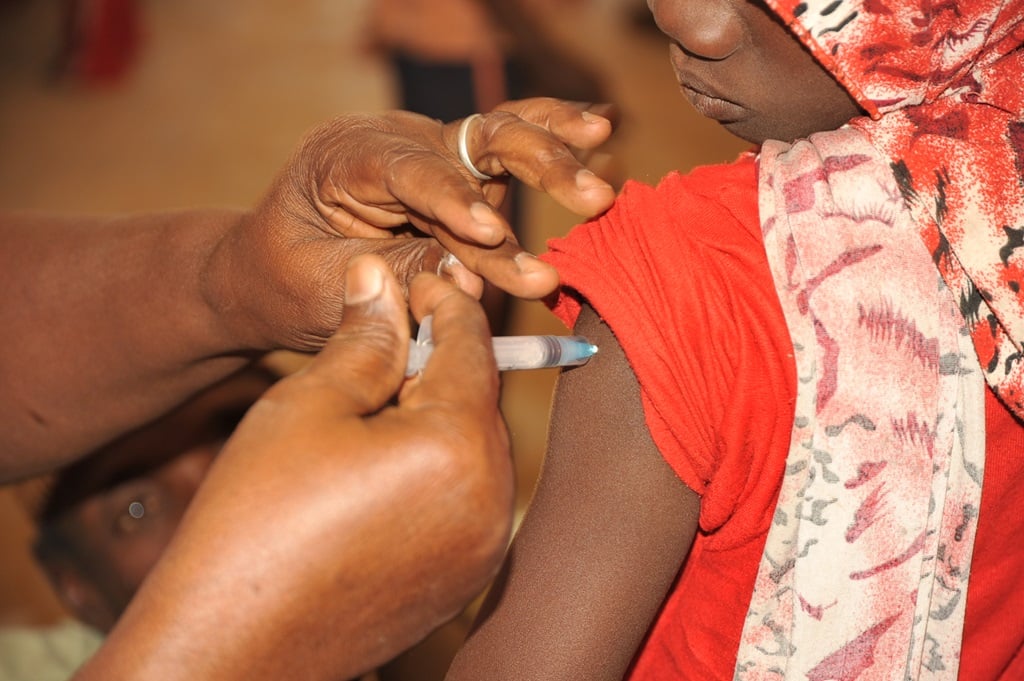
The World Health Organisation (WHO) has urged African governments to improve national hepatitis programs. They want more people to get vaccinated, tested, and treated. Millions of people in Africa are missing out on these life-saving services, even though effective options are available.
In a statement before World Hepatitis Day, the WHO Regional Director for Africa, Mohamed Janabi, said hepatitis is still a big health issue in the region. He pointed out that new hepatitis B infections dropped by 25 percent from 2015 to 2024.
Mr Janabi mentioned that while we have effective vaccines, tests, and treatments, many people are diagnosed too late or cannot get the care they need. This leads to preventable deaths.
"No one should die from a disease that can be prevented, diagnosed and, in many cases, treated," he said.
He urged governments, health workers, and communities to remove barriers that stop people from getting hepatitis services.
"Eliminating viral hepatitis is within our reach, but only if proven interventions are available to everyone who needs them," he said.
Bringing services closer to communities
Mr Janabi said the region already has the tools to tackle viral hepatitis as a public health problem.
He explained that the hepatitis B vaccine, introduced in the early 1990s, offers up to 95 percent protection against infection. Reliable tests help find the disease early. He added that hepatitis C can be cured, and lifelong treatment for hepatitis B can prevent serious issues like liver cirrhosis and liver cancer.
He stressed that adding hepatitis prevention, testing, and treatment to primary healthcare would make services easier to access and cheaper. It would also ease the burden on health systems.
Mr Janabi said the challenge is no longer about science but about political will, funding, and fair access.
He noted that countries in the WHO African Region have made progress by expanding the hepatitis B vaccine at birth. They are also working to remove mother-to-child transmission of HIV, syphilis, and hepatitis B, while finding ways to eliminate hepatitis C.
But he said these improvements need to continue and spread across all 47 WHO African member states.
Late diagnosis



Mr Janabi warned that many people with viral hepatitis do not know they are infected until it is too late and serious liver damage has happened.
He said this is due to poor access to testing and treatment, especially in underserved areas. Stigma and low public awareness also contribute to the problem.
To fix this, Mr Janabi urged countries to include hepatitis services in routine healthcare throughout a person’s life. He also called for investment in research to improve access to new tests and treatments for hepatitis B and hepatitis D co-infection.
He asked development partners to keep providing technical and financial support to help countries meet the global goal of eliminating viral hepatitis by 2030.
World Hepatitis Day
World Hepatitis Day is observed every year on July 28. It raises awareness about viral hepatitis and encourages actions to prevent, diagnose, and treat the disease.
This year’s theme is "Hepatitis: Let’s break it down." It focuses on breaking down financial, social, and system barriers that keep people from accessing hepatitis services and speeding up progress towards eliminating the disease.
According to WHO, viral hepatitis causes liver inflammation and can lead to serious problems like liver cirrhosis, liver failure, and liver cancer if not treated.
Nigeria’s burden
According to the WHO, Nigeria is one of the countries most affected by viral hepatitis in the world. The organization estimates that over 20 million Nigerians are living with hepatitis B, hepatitis C, or both. Yet, more than 80 percent do not know their status. Data from the 2018 Nigeria HIV/AIDS Indicator and Impact Survey (NAIIS) showed hepatitis B prevalence at 8.1 percent and hepatitis C at 1.1 percent among adults aged 15 to 64.
The problem isn’t just in Nigeria. WHO estimates that over 90 million people in the African Region have viral hepatitis, making up about 26 percent of the global burden. Despite efforts to improve hepatitis control programs, challenges remain. These include low testing rates, limited treatment access, and gaps in the uptake of the hepatitis B birth dose vaccine. Many infections go undetected until serious liver issues arise.
In light of the region’s high hepatitis burden, Mr Janabi confirmed WHO’s commitment to helping African countries improve health systems and increase access to hepatitis services.
"Together, we can prevent new infections, save lives and ensure that viral hepatitis is no longer a barrier to healthier lives for the people of Africa," he said.




Drop your comment
No comments yet — be the first to drop the gist 👇