
The ballot will have the name of one person. But the choice can mean much more: what kind of football do we want in ten or twenty years? What role should national associations play in big decisions? What systems should hold football leaders accountable for their actions? Every association will have its own answer. And that’s exactly how it should be.
This will be a presidential election. In the end, FIFA’s member associations will choose one name: that of a man or a woman to lead the organisation.
But behind that name lies much more than just a presidency. It’s about the future of football, how it should grow, be represented, and governed in the coming years. This question affects all 211 FIFA member associations. In Africa, it deserves special attention.
As FIFA’s big decisions approach, people often talk about “the African vote.” This phrase is easy to use. It counts: 54 associations, 54 votes. It also suggests blocs, alliances, and power balances.
But if you say “the African vote” too often, you might forget that there is no single African football.
Just watch the matches. Africa’s 54 football associations each have their own history and resources, and they face different football realities, visible in their leagues, development systems, and even their playing styles.
Morocco, for example, has a well-structured national development strategy, especially around the Mohammed VI Academy. In Ghana, Right to Dream started as an independent effort that combined football training with education from the beginning. Two countries, two histories, and two models that have led to top-level players.
And those are just two examples among 54.
This is part of what makes African football rich, a reflection of the continent’s diversity. Why should this variety, so clear when the game starts, vanish when it’s time to shape the future of world football?
There will be no single African vote. There will be 54 votes.
These 54 votes can come together. They can also go their separate ways. What matters is what they stand for. Before picking a candidate, every association should ask itself: what football do we represent, and where do we want to take it?
In the end, this should all be about football.
International football today is shaped by politics, money, and power struggles. Everyone knows that, and it's not just an African issue. Federation leaders must listen, negotiate, defend their football’s interests, and secure the resources needed to grow. That is part of their duty.
I lived in Bangui for two years, and for over a decade, I worked across the continent. That doesn’t give me the authority to speak for Africa, if anything, the opposite. What it taught me was to be careful of any statement starting with “Africa thinks,” “Africa wants,” or “Africa supports.”
But so is the act of deciding.
When it comes to making a decision, the question becomes simple again: what’s good for the football we represent, and for the football we want to build?
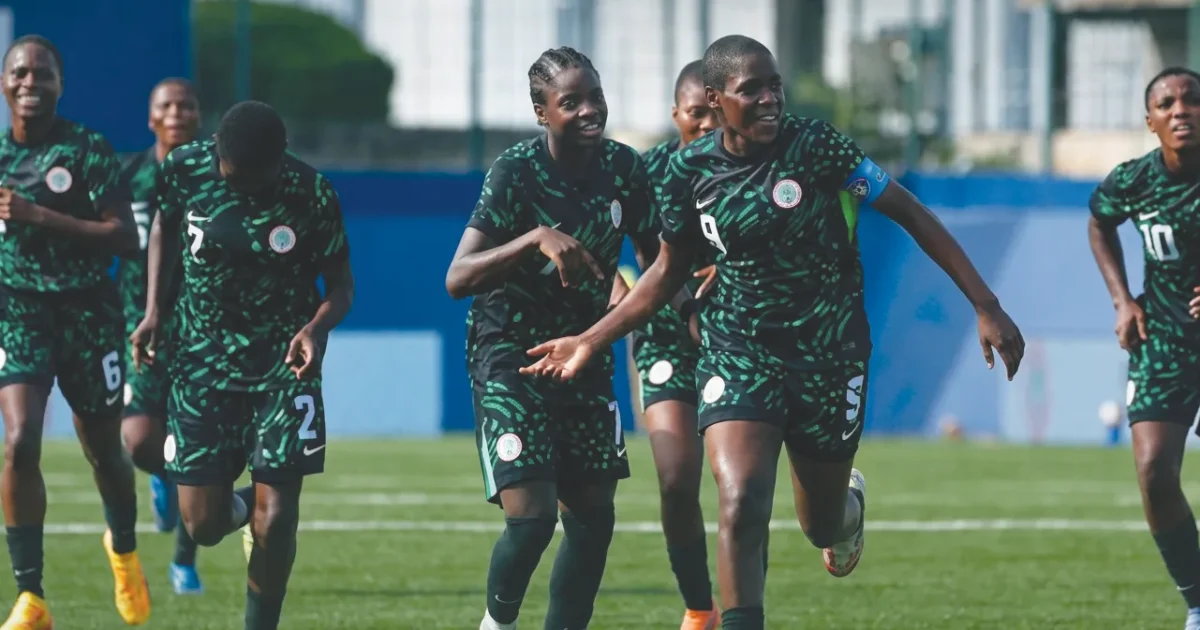
Across the continent, the ambitions are high: growing local leagues, improving infrastructure, strengthening development systems, promoting women’s football, and giving young talents more opportunities. All this needs investment, partnerships, and resources. International programs are important. Relationships with FIFA and CAF matter. It would be unreasonable to ask African leaders to ignore this.
But considering this doesn’t mean giving up on a bigger question: what type of organisation do we want to govern world football tomorrow?
You can appreciate what has been achieved and still ask for more. You can acknowledge a president’s contributions and still want the institution to evolve. This is why this election should be more than just a choice between “for” or “against” Gianni Infantino.
This isn’t about telling African associations who to vote for, that would go against the point of this piece, but about fully recognising that the responsibility for this vote is theirs.
I lived in Bangui for two years, and for over a decade, I worked across the continent. That doesn’t give me the authority to speak for Africa, if anything, the opposite. What it taught me was to be careful of any statement starting with “Africa thinks,” “Africa wants,” or “Africa supports.”
Which Africa?
The continent is diverse. Its societies are diverse. Its football is diverse, and this diversity should be seen as a strength when it’s time to make decisions.
There is also something more basic that institutional debates sometimes make us forget: African football doesn’t start in a FIFA or CAF meeting room.
It starts on the pitches of clubs and academies, in schools, in neighbourhoods, in villages, and even on the streets, on good fields and makeshift grounds, with the best equipment or with whatever kids can turn into a ball.
That’s not a romantic view of Africa. It’s a fact about football. And it reminds us why these institutions exist in the first place: for the game and for the people who play it.
Africa is not just a continent to which world football brings programs and funds. Africa itself contributes a lot to world football. It is one of the main sources of talent in the game. Its players support clubs and leagues worldwide and serve as role models for millions of young people.
Africa’s 54 football associations aren’t just 54 votes in a presidential election. They represent 54 footballs, each with its own realities, needs, ambitions, and futures. And maybe it’s those footballs, before anything else, that the vote should focus on.
Among the children playing today in the streets of Dakar, Kinshasa, Abidjan, Lagos, Johannesburg, Cairo, or in less-known villages, some will one day wear the colours of a big club or a national team.
Their football, too, is part of this conversation.
When a national association casts its vote at a FIFA election, it performs an institutional action that takes only a moment. But behind that vote stand players, clubs, coaches, referees, fans, children, an entire football culture.
This choice should be made for them first.
The ballot will have the name of one person. But the choice can mean much more: what kind of football do we want in ten or twenty years? What role should national associations play in big decisions? What systems should hold football leaders accountable?
Every association will have its own answer. And that’s how it should be.
But it would be a pity if this election came down to just picking a name. Every association also has the chance to express something far more important: what kind of football it wants for tomorrow.
Not first: who do we want to lead FIFA?
But: what football do we want, and what type of FIFA does that football need?
Only then: who is best to lead it?
Africa’s 54 football associations aren’t just 54 votes in a presidential election. They represent 54 footballs, with their own realities, needs, ambitions, and futures.
And maybe it’s for those footballs, before anything else, that the vote should be cast.
Drop your comment
No comments yet — be the first to drop the gist 👇