World leaders have urged for ongoing and fair investment in preventing and preparing for pandemics. They warned that the progress made since COVID-19 requires continued effort to keep countries safe from future outbreaks.
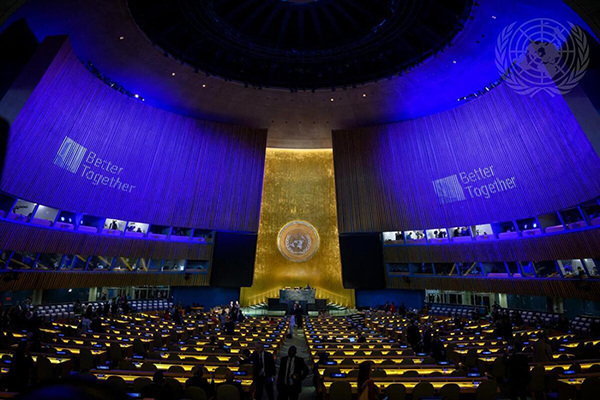
This call came on Friday at the second United Nations General Assembly High-level Meeting on Pandemic Prevention, Preparedness and Response in New York.
The meeting looked at what has happened since the first high-level meeting in 2023. That meeting was held to address the COVID-19 pandemic and the weaknesses in global health security that it revealed.
The World Health Organisation (WHO), in a statement released on Friday, noted that countries acknowledged the progress made over the last three years. This includes the adoption of the WHO Pandemic Agreement and changes to the International Health Regulations from 2005.
WHO Director-General Tedros Ghebreyesus spoke at the meeting. He stressed that countries must keep investing in stronger health systems, local and national capacities, and fair access to vaccines, medicines, and other health tools.
“The COVID-19 pandemic exposed and worsened the gaps in global health security, and taught the world many painful lessons,” Mr Ghebreyesus said.
He mentioned that the political commitments made at the meeting included calls for “concrete, measurable and urgent action” to strengthen health systems and improve access to health products and resources for everyone.
Countries also asked for the completion of talks on an annex to the WHO Pandemic Agreement. This annex would set up a Pathogen Access and Benefit-Sharing system.
According to the WHO, this system aims to help share pathogens that could lead to pandemics in a timely manner. It would also make sure that benefits from their use, like vaccines and medicines, are shared fairly.
WHO stated that adopting this annex at the World Health Assembly in May 2027 is important for member states to start considering ratifying the Pandemic Agreement.
United Nations Deputy Secretary-General, Amina Mohammed, spoke on behalf of Secretary-General António Guterres. She called on countries to speed up the negotiations.
“The Pathogen Access and Benefit Sharing System, under negotiation, is critical to unlocking the full potential of the WHO Pandemic Agreement,” Ms Mohammed said.
Mr Ghebreyesus shared that the COVID-19 pandemic caused over 20 million excess deaths from 2020 to 2023. It also took more than $10 trillion from the global economy.
The meeting also pointed out that pandemic preparedness should not only be seen as a health responsibility.
The WHO stated that countries called for a whole-of-government and whole-of-society approach. This means including communities and other sectors in the effort.
The political declaration also highlighted the One Health approach. This approach recognizes the connections between human, animal, and environmental health.
Khalilur Rahman, the President of the 81st UN General Assembly, said that international cooperation is needed to prepare for future pandemics. This includes fair access to vaccines and other essential medical supplies.
“We have the knowledge, we have the tools, we have the science and expertise, and we have the hard lessons of COVID-19,” Mr Rahman said at the meeting.
“Let us use them for ourselves, our families, and our loved ones. And also in memory of those we lost and in recognition of all those who suffered, needlessly.”
The participants in the meeting emphasized that preventing, preparing for, and responding to pandemics should stay a political priority. This should be the case even between health emergencies, not just when outbreaks happen.
Drop your comment
No comments yet — be the first to drop the gist 👇